How to Dispose of Heavy Construction Debris Safely
Last Updated: November 24, 2026
Quick Summary
To learn how to dispose of heavy construction debris safely, sort rubble, concrete, brick, and other dense waste by material, keep hazardous items out of the load, and move the rest into a rated roll-off dumpster or licensed removal service. Separate materials at the source, contain each pile, and remove the heaviest loads first.
- Mix one bucket of drywall or trash into concrete and the whole container can become landfill waste.
- Put heavy debris in first and spread it flat, and never load above the top rail.
- Paint, solvents, adhesives, treated wood, and anything possibly containing asbestos need a separate path.
- Call the disposal facility before the first haul and ask what they reject.
- Small gut-outs can often go through a junk removal or cleanout crew instead of a full container.
Table of Contents
- How do you dispose of heavy construction debris safely?
- Construction debris disposal: separate, contain, and remove
- Construction debris dumpster: load limits and safe loading
- Frequently Asked Questions
How do you dispose of heavy construction debris safely?
Knowing how to dispose of heavy construction debris safely means sorting rubble, concrete, brick, and other dense waste by material, keeping hazardous items out of the load, and moving the rest into a rated roll-off dumpster or licensed removal service.
Debris often gets piled first and sorted second. That order is backwards, a wrong lift hurts a worker, and an overloaded container hurts the hauler and the budget.
- Identify what you have before you touch it.
- Sort heavy debris by material where it is created.
- Pull out hazardous and contaminated items.
- Choose a disposal method that matches volume and weight.
- Load within limits and secure the site.
- Confirm local rules before the first haul.
Construction debris disposal: separate, contain, and remove
Learning how to dispose of heavy construction debris safely works best as three stages: separate materials at the source, contain each pile so it stays clean, and remove loads in a planned order. Skipping separation is one of the most common and expensive mistakes on construction sites.
Once concrete, brick, and masonry mix with wood, drywall, and trash, the whole load can end up in a landfill.
- Concrete, brick, and masonry go in one pile, free of rebar where you can.
- Wood goes in its own pile, separated from treated lumber.
- Metals go in a scrap pile; rebar, conduit, and flashing all have value.
- Drywall gets its own container, it breaks easily and contaminates other materials.
- Roofing materials stay separate, especially shingles.
- Household trash goes in a closed bin, never in the debris pile.
Contain the piles. Use dedicated containers or marked ground areas with berms, cover light materials so wind does not scatter them, and spray dusty rubble lightly with water to keep dust down without turning the load into mud.
Then remove. Plan the order so the heaviest material leaves first, and keep the path to the container clear. If your site layout is tight, our guide to site logistics planning covers keeping separation and removal organized without blocking access.
Watch out: mixing one bucket of drywall or trash into a concrete load can turn the whole container into landfill waste. Keep the piles physically apart, not just labeled.
Sorting each material into its own pile before anything leaves the site is what keeps a load from becoming landfill waste.
| Material | Where it goes | Note |
|---|---|---|
| Concrete, brick, and masonry | One pile | Free of rebar where you can |
| Wood | Its own pile | Separated from treated lumber |
| Metals | Scrap pile | Rebar, conduit, and flashing all have value |
| Drywall | Its own container | Breaks easily and contaminates other materials |
| Roofing materials | Kept separate | Especially shingles |
| Household trash | Closed bin | Never in the debris pile |
Construction debris dumpster: load limits and safe loading
A construction debris dumpster is a roll-off container rated for a set weight, and the weight limit, not the volume, is what gets crews in trouble. Heavy debris like concrete and rubble fills a container long before it looks full. If you need a container on site, see our dumpster rentals.
That gap between volume and weight drives how dumpsters get hauled and billed. Our breakdown of why dumpsters are hauled half empty explains the weight rules behind it.
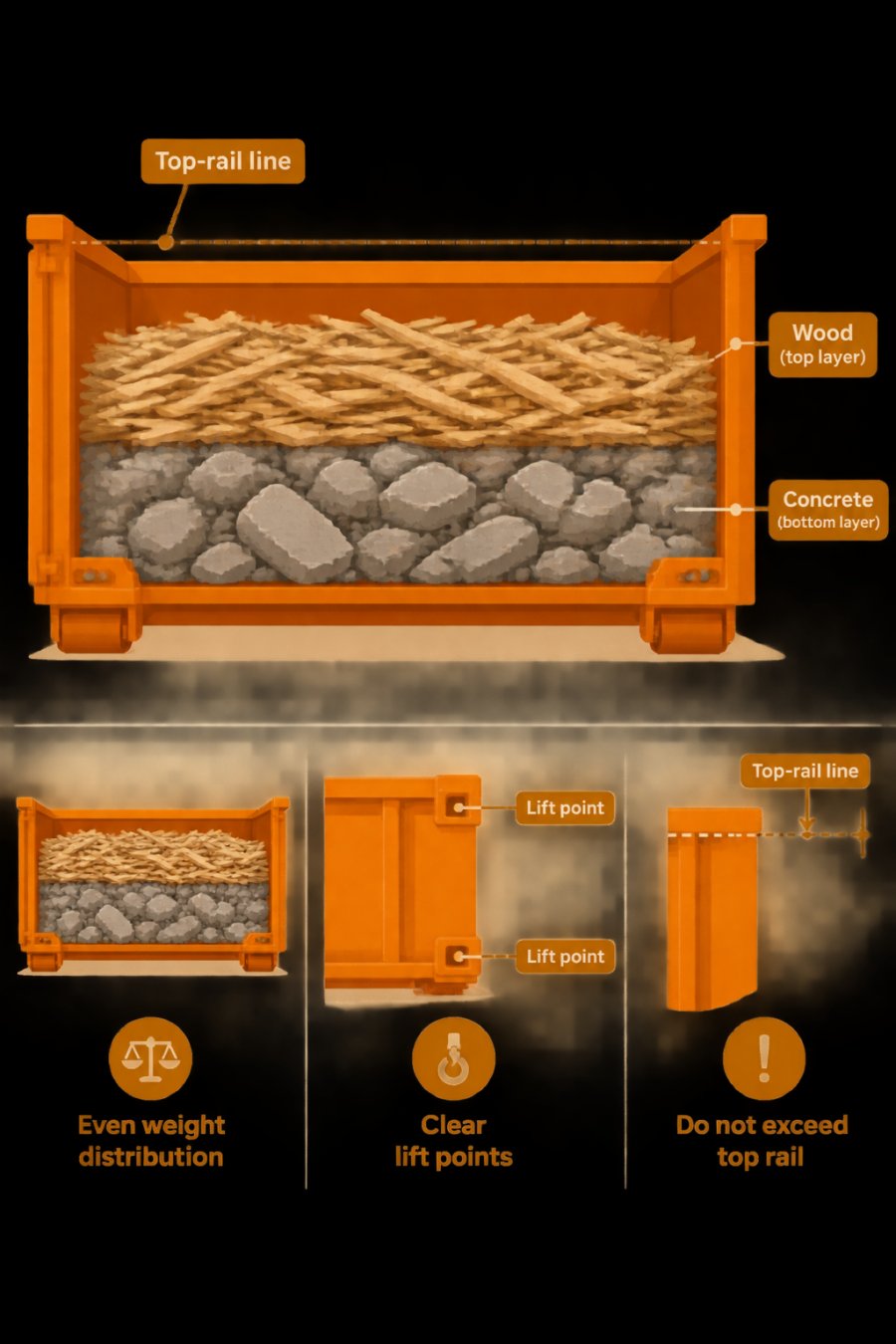
- Put heavy debris in first and spread it flat. Keep the weight low and even across the floor.
- Never load above the top rail. Debris that sticks up can shift or fall in transit.
- Keep the heavy end over the truck's lifting point. Ask the hauler which end that is.
- Do not toss awkward pieces. Two people or a lift for anything you cannot handle cleanly.
- Leave the sides clear so the container can be picked up without snagging.
Hazardous materials need a separate path. Paint, solvents, adhesives, treated wood, and anything that might contain asbestos cannot go in a general debris container. Stop work on that material, isolate it, and confirm handling requirements with your local solid waste authority before it moves. Our guide to managing hazardous construction waste covers identification and escalation.
Small loads still count. A single bathroom gut-out or small renovation can often go through a junk removal or cleanout crew instead of a full container. Bag light waste, keep heavy pieces in a small stack, and confirm what the crew will and will not take.
One more lever: compaction. Our dumpster compaction service crushes debris on site, reducing container volume and the number of hauls, and before you try it yourself, read whether waste compaction is safe for dumpsters. To stretch capacity further, see how to maximize dumpster capacity.
Local rules come last but decide everything. Your municipal rules and disposal facility determine what is accepted, how it must be separated, and where it can go. Call the facility before the first haul and ask what they reject.
Heavy debris does not have to mean constant hauls and rising fees. Junk Crusher brings mobile on-site dumpster compaction to construction sites across Western Pennsylvania, crushing waste in the container so you pay for material, not empty space.
Frequently Asked Questions
What is the best way to dispose of construction debris?
Sort heavy debris by material first: concrete, brick, and masonry in one pile; wood and metals in others; hazardous items set aside. Rent a construction debris dumpster sized to your volume, load heavy pieces low and evenly, and keep the load under the marked limit. For large jobs, on-site compaction can cut the number of hauls. Confirm local disposal rules before the container arrives.
Can I put construction debris in a dumpster?
Yes, most renovation waste and heavy debris can go in a roll-off dumpster, but check the accepted materials list first. Concrete, brick, and rubble are usually fine in limited amounts; paint, solvents, and other hazardous waste are not. Keep the load below the weight limit, because heavy debris can exceed capacity before the container looks full. Ask your hauler about material restrictions and load limits.
How do I dispose of concrete, brick, and other construction rubble?
Break large pieces into manageable chunks, keep them in a separate pile, and load them low in the container to protect the sides. Many facilities recycle clean concrete and brick as aggregate, so ask about recycling before you send it to a landfill. For small amounts, bag the rubble or use a designated collection site. Never mix rubble with wood, drywall, or hazardous materials if you want it recycled.


