
Why Dumpsters Are Hauled Half Empty: Weight Limits
Table of Contents
- Why Dumpsters Are Hauled Half Empty: The Weight vs. Volume Problem
- How Waste Density Decides When a Container Is Full
- The Real Risks of Overloading a Roll-Off Container
- How Dumpster Rental Costs and Tipping Fees Are Calculated
- How Mobile Compaction Improves Waste Management Efficiency
- How to Reduce Dumpster Rental Fees Without Adding Hauls
- Pickup Schedules, Service Frequency, and the Cost of Half-Empty Hauls
- Contract Clauses and Container Exchange Rules Worth Checking
- Conclusion: Sizing and Timing Your Hauls to Stop Paying for Air
- Frequently Asked Questions
Last Updated: September 17, 2026
Why Dumpsters Are Hauled Half Empty: The Weight vs. Volume Problem
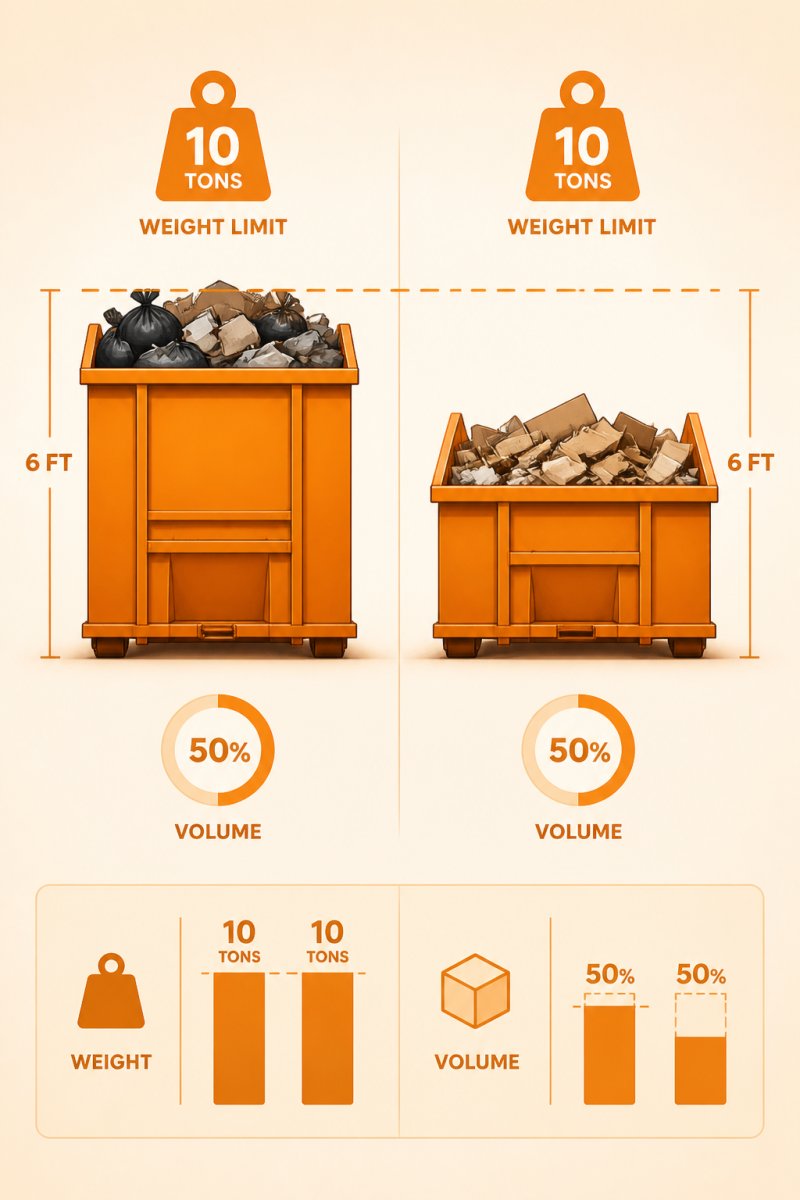
A roll-off container can look nearly empty and still be too heavy to haul. That is why dumpsters are hauled half empty: the truck is not limited by how much space the debris takes up, but by how much the load weighs. This guide from Junk Crusher breaks down the weight versus volume problem and shows you how to stop paying for air.
Every hauler works under a weight limit set by the truck, the road, and the disposal site. Fill a container with heavy debris and you hit that ceiling long before the box looks full. The rest of the space is wasted.
Waste density is the weight of your material packed into a given volume. It decides when a container is truly full. Light, bulky waste fills the box first. Heavy waste hits the scale first.
- Light waste: cardboard, insulation, furniture
- Heavy waste: shingles, concrete, dirt, tile
- Mixed waste: construction debris, pallets, drywall
Most people judge a dumpster by sight. The scale judges it by weight. Those two measures rarely agree.
How Waste Density Decides When a Container Is Full
Waste density is the weight of material per cubic yard, and it is the single number that tells you when to stop loading. A 20-yard container holds 20 cubic yards of space, but it can only carry so many tons.
Consider the difference. Dry cardboard might weigh very little per cubic yard. Roofing shingles weigh far more. Load the same 20-yard box with each, and you get two very different outcomes. The shingle load maxes out the scale at a low fill level. The cardboard load fills the box and stays light.
That gap is the whole problem. You are billed for the haul, not for the air.
How to calculate waste density: weigh a small sample of your debris, then multiply to estimate the full load. If you know a material's weight per cubic yard, you can predict how full the box can get before the scale stops you.
- Weigh one full bucket or bin of debris
- Measure its volume in cubic yards
- Multiply to match your container size
- Compare against your hauler's tonnage limit
A common mistake is guessing by eye. In practice, dense materials surprise people every time.
The Real Risks of Overloading a Roll-Off Container
Overloading a roll-off container is not a minor slip. It creates real safety and cost problems that land on you, not the hauler.
When a container is too heavy, the truck may not be able to lift it. The hydraulic arm can stall, or worse, the load can shift and cause an injury. Roads and bridges have weight limits too, and an overloaded truck can be fined or turned away.
The consequences stack up:
- Refused pickup: the driver leaves it behind
- Extra fees: overweight charges and re-hauling costs
- Safety risk: tipping, dropped loads, and strain injuries
- Delay: your site stalls while you sort it out
Safety compliance is not optional. A hauler who suspects an overload may reject the haul on the spot. Then you pay twice.
How Dumpster Rental Costs and Tipping Fees Are Calculated
Dumpster rental costs usually combine a flat haul fee, a tonnage allowance, and tipping fees charged by the disposal site. You pay for the trip and for the weight, not for how full the box looks. Understanding how each piece works, and how they interact, is the key to spotting when a half-empty haul is quietly draining your budget.
Here is how the pieces fit together:
- Haul fee: a set charge per pickup, full or half empty
- Tonnage allowance: the weight included in that fee
- Overweight charge: billed per ton above the allowance
- Tipping fees: what the landfill or transfer station charges per ton
The key insight is the haul fee. It does not shrink when the box is half empty. You pay the same to move a light load as a heavy one. So a half-empty haul means you paid full price for wasted capacity.
But the real cost story is in the interaction between tonnage allowances and tipping fees. Suppose your hauler includes a 2-ton allowance in the haul fee. If you load only 1 ton of light debris, you still pay the full haul fee, and you leave 1 ton of paid capacity unused. That unused capacity is the hidden cost of a half-empty haul. If you had loaded that second ton with more material, the incremental cost would have been zero because it was already covered.
Now consider the opposite: you load 3 tons of heavy debris.
| Cost Component | What It Covers | Charged Per |
|---|---|---|
| Haul fee | The truck trip | Per pickup |
| Tonnage allowance | Included weight | Per container |
| Overweight fee | Weight above allowance | Per ton |
| Tipping fee | Landfill gate charge | Per ton |
To avoid this, track your fill weight and compare it to your allowance. If you consistently haul well under the allowance, you are overpaying per ton. Adjust your container size, load heavier materials, or add compaction to get more weight into each trip.
How Mobile Compaction Improves Waste Management Efficiency
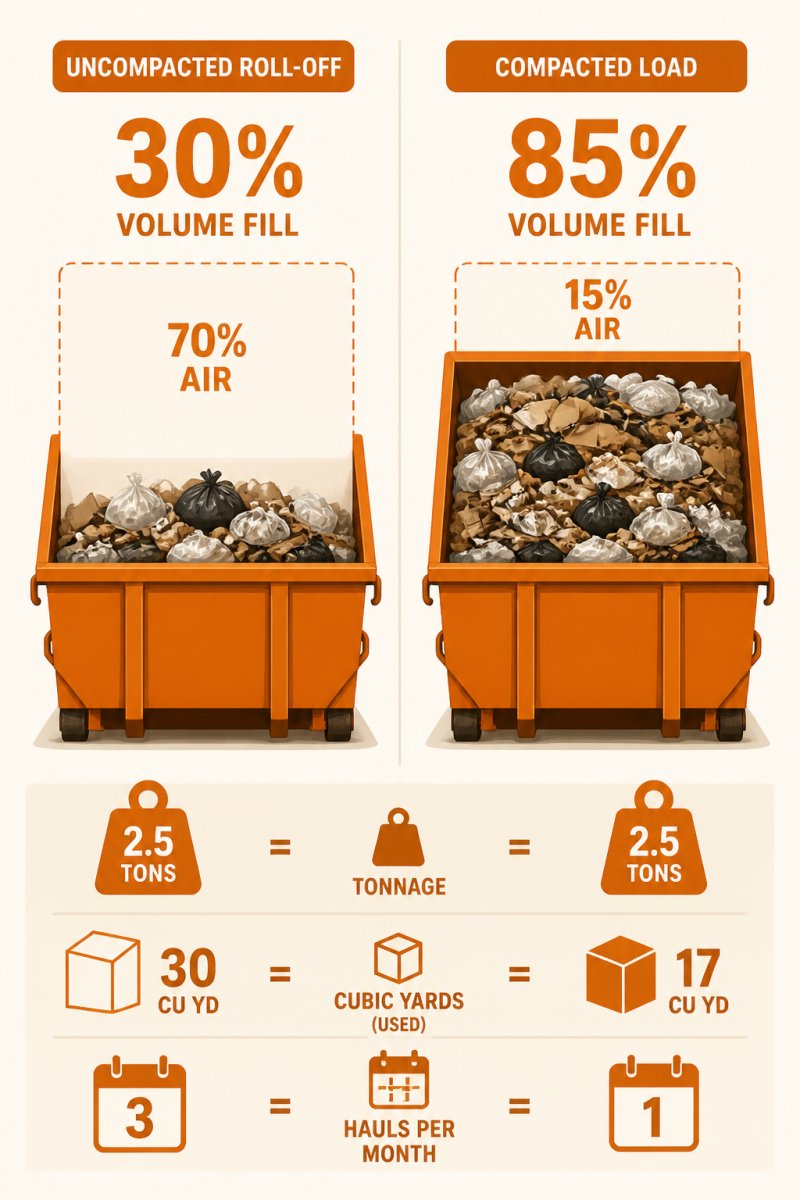
Mobile compaction crushes waste on site so more material fits in the same container. A crusher presses the load down, removing trapped air and empty space. The box holds more tonnage without needing more cubic yards.
How to Reduce Dumpster Rental Fees Without Adding Hauls
You can reduce dumpster rental fees without adding extra hauls by loading smarter, not more often. The goal is to get the most weight into each trip within safe limits.
Then cut volume before it hits the bin.
DIY Waste Reduction Techniques That Cut Volume Fast
These simple methods cut volume before the waste ever reaches your container:
- Break down cardboard and flatten boxes
- Stack and nest similar items
- Separate heavy from light waste streams
- Crush cans and containers by hand
- Cut long items to fit flat
- Keep bulky waste out of the heavy load
Pickup Schedules, Service Frequency, and the Cost of Half-Empty Hauls
Service frequency should match how fast your container actually fills, not a fixed calendar. A set pickup interval that ignores your real fill rate creates half-empty hauls you still pay for.
Tune the pickup interval to your waste stream:
- Track how full the box gets each week
- Note the weight and material type
- Adjust the schedule to match
- Add compaction to stretch each interval
Contract Clauses and Container Exchange Rules Worth Checking
A practical approach is to ask for a copy of the full agreement before signing and highlight every clause that mentions frequency, exchange, or penalties. If the hauler will not budge on minimum pickups, consider whether a different container size or a compaction add-on could make the fixed schedule work for you. The goal is to avoid paying for air, and the contract is where that battle is won or lost.
Conclusion: Sizing and Timing Your Hauls to Stop Paying for Air
The core lesson is simple: dumpsters get hauled half empty because weight, not volume, decides when they are full. Heavy debris hits the scale early. Light debris fills the space. Either way, you pay for the trip.
Frequently Asked Questions
Why are dumpsters often picked up before they are full?
Weight, not volume, usually triggers the pickup. A 20-yard roll-off has a tonnage cap set by the hauler, and dense debris like shingles, dirt, or concrete can hit that cap while the container still looks a third full. Federal road limits also cap how much a loaded truck can legally carry, so haulers pull containers early to stay compliant and avoid overweight fines.
How does waste density affect dumpster rental costs?
Density decides how many tons sit in each cubic yard. Light debris such as cardboard or foam fills the box without nearing the weight limit, so you pay for hauling air. Heavy debris hits the tonnage cap first, forcing extra hauls. Both cases raise your effective cost per ton, which is why density is the number to track before you book a haul.
Does compacting waste save money on dumpster services?
On-site compaction squeezes the same debris into fewer cubic yards, so a container that once held one haul's worth of material can hold two or three. That cuts the number of truck trips, tipping fees, and fuel charges tied to each haul. Savings depend on your waste stream, container size, and how often you currently schedule pickups, so ask for a site assessment before estimating.
What are the risks of overloading a dumpster versus underloading it?
Overloading risks structural damage to the container, hydraulic failure on the truck, overweight fines, and rejected loads at the landfill. Underloading wastes money because you pay a full haul fee for a partially filled box. The middle ground is to know your container's tonnage limit, keep debris below the fill line, and schedule pickups based on weight rather than appearance.
Half-empty hauls are a quiet drain on your waste management budget. Junk Crusher helps commercial sites fix that with mobile on-site compaction that reduces roll-off volume, cuts the number of required hauls, and lowers your carbon footprint by keeping trucks off the road. We serve construction, demolition, manufacturing, and distribution operations that want to stop paying for air. Book a Crush with Junk Crusher and start getting more out of every container.
