
Maximize Dumpster Capacity to Cut Waste Removal Costs
Table of Contents
- Why Maximizing Dumpster Capacity Saves Money
- Choosing the Right Dumpster Size for Your Project
- How to Load a Dumpster Efficiently to Maximize Capacity
- Weight Limits Versus Volume Limits: What Actually Fills First
- Commercial Waste Compaction: Crushing Volume Without Extra Hauls
- How to Reduce Dumpster Pickup Frequency
- Prohibited Materials and Separately Handled Waste
- Rental Pricing Transparency and Fee Prevention
- Frequently Asked Questions
Last Updated: October 21, 2026
Why Maximizing Dumpster Capacity Saves Money
Every cubic yard of empty air inside a roll-off dumpster is money you pay for and never use.
At Junk Crusher, we built our business around that gap. Our mobile on-site compaction service crushes dumpster waste where it sits, cutting roll-off volume by up to 70% and reducing the hauls a site needs.
Here is the math most crews miss:
- Volume is what you pay for. Haulers charge by container size and haul count, not weight alone.
- Air is expensive. A loosely loaded box can sit at 50% usable space and still trigger a full pickup.
- Every extra haul adds cost. More trips mean more delivery charges, rental days, and labor.
Below, we'll show you how to size, load, and manage a container so you stop paying to haul empty space.
Choosing the Right Dumpster Size for Your Project
The right dumpster size holds your waste in the fewest hauls without triggering overweight fees. Too small and you pay for extra pickups; too big and you rent space you never fill.
Matching Cubic Yards to Project Type
Cubic yards measure volume: one cubic yard is a space 3 feet by 3 feet by 3 feet. Dumpster capacity is quoted in these units, so match the container to your debris type rather than the job's square footage.
A common approach is to sort projects by debris weight and bulk:
- Heavy, dense debris (shingles, concrete, dirt) fills a container by weight long before it fills by volume. Smaller boxes work better here.
- Bulky, light debris (cardboard, insulation, furniture) fills by volume fast but weighs little. Bigger boxes or compaction pay off.
- Mixed renovation debris sits in between. Size up slightly to avoid a mid-project swap.
When an Undersized Container Costs More Than a Larger One
An undersized dumpster looks cheaper on the quote and costs more by the end of the job. Each extra haul carries its own delivery cost and rental charge, and a mid-project swap stalls your crew.
Estimate your waste volume before you book. Walk the site, count bulky items, and think in trash bags and truckloads. If your estimate lands near the top of a size bracket, move up one size, the larger container usually costs less than two hauls of a smaller one.
How to Load a Dumpster Efficiently to Maximize Capacity
Efficient loading is the cheapest capacity upgrade you will ever make. A well-planned box holds far more than a tossed-in one and keeps your crew safe and your hauler happy. Here is the step-by-step method.
Step 1: Break Down Bulky Items Before They Hit the Box
The biggest capacity loss is whole-item loading. A sofa, mattress, pallet, or cabinet takes up far more volume intact than disassembled. Break down or flatten everything you safely can:
- Cardboard and packaging: flatten and stack flat. Flat material nests; puffy material wastes space.
- Furniture: remove legs, disassemble frames, and separate cushions from frames. A disassembled couch takes a fraction of the space of an intact one.
- Pallets: break them down or stack them flat rather than tossing them whole.
Crews who break down bulky items first reclaim a meaningful share of usable volume before the box is half full.
Step 2: Load Heavy, Dense Debris Low and Centered
Shingles, concrete chunks, dirt, and dense material go on the bottom. This keeps the load stable, centers weight over the container floor, and reduces tip-overs and rejected hauls. Spread heavy items across the floor rather than piling them in one corner.
Step 3: Build Up in Layers and Fill the Gaps
After the heavy base, work upward in layers. Tuck smaller debris into the voids between larger pieces. Every gap you fill is capacity you reclaim. A practical sequence:
- Heavy, dense material on the floor, spread evenly.
- Bulky light items stacked vertically to use height.
- Smaller debris and bagged waste worked into the gaps.
- A final pass to level the load and keep it below the fill line.
Step 4: Respect the Fill Line and the Rim
Every roll-off container has a fill line marked on the interior. Never load above it or above the top edge. Overfilled containers are unsafe to haul and commonly rejected at pickup, meaning you pay for a return trip and a reload. The fill line is the legal and practical ceiling.
Step 5: Distribute Weight Evenly Across the Box
Weight distribution matters as much as volume. Keep heavy material low and spread across the floor, light material high. If one end is noticeably heavier, rearrange before you call for pickup.
A Quick Capacity Check Before You Call for Pickup
Before scheduling a haul, do a two-minute check: Is the load below the fill line? Is weight distributed evenly? Are bulky items broken down? Are prohibited items kept out? Fix any no before the truck arrives, that check alone prevents most rejected loads and overweight surprises.
Weight Limits Versus Volume Limits: What Actually Fills First
Volume and weight limits are two separate ceilings, and the one you hit first depends on what you throw away. Most people only think about volume, which is why overweight fees catch them by surprise.
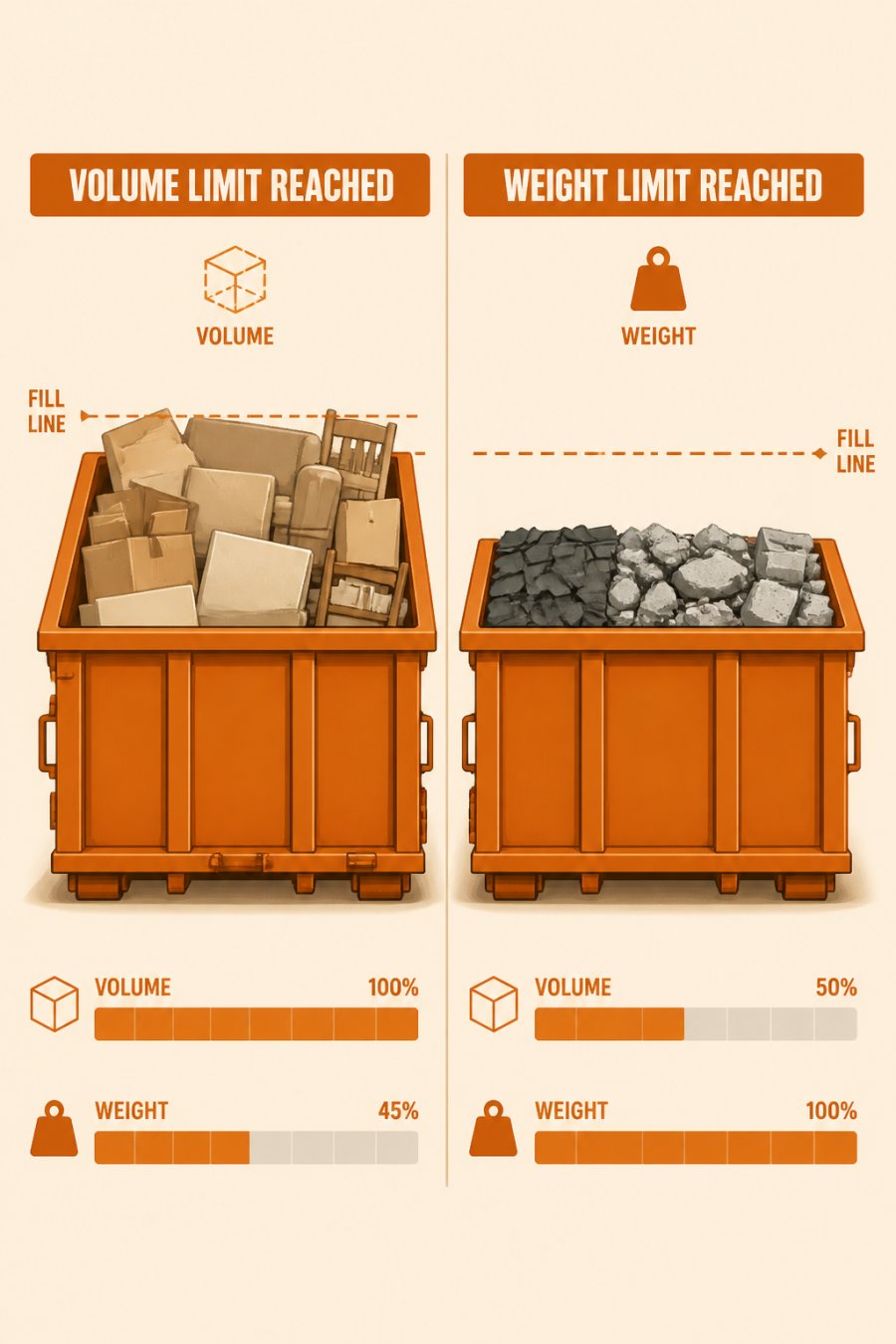
Every roll-off rental comes with a tonnage allowance, the weight included in the base price. Go over it and you pay an overweight fee per ton. Here is how the two limits play out:
| Debris Type | Fills First | What It Means for You |
|---|---|---|
| Cardboard, insulation, furniture | Volume | Compaction or a larger box saves money |
| Shingles, concrete, dirt | Weight | A smaller box avoids overweight fees |
| Mixed renovation debris | Either | Weigh heavy items, load light ones high |
How to Estimate Which Limit You Will Hit
You do not need a scale to get close. Use a simple project-based estimator:
- List the material types you will throw away (shingles, drywall, cardboard, furniture).
- Estimate the volume in cubic yards by counting rooms, truckloads, or trash bags.
- Flag dense materials. Shingles, concrete, dirt, and tile are heavy per cubic yard; cardboard, insulation, and furniture are light.
- Compare to the tonnage allowance. If the load is mostly dense material, assume you will hit the weight limit first and size down or split the load.
A container half full of dense debris can already be at its weight limit, the fill line is not the only ceiling.
How Overweight Fees Are Triggered
Overweight fees are triggered when the load exceeds the included tonnage allowance. The hauler weighs the container at the disposal site, and any weight above the allowance is billed per ton. The scale, not the fill line, determines the charge, so a half-full box of dense material can still generate an overweight fee.
Practical Rules to Avoid Overweight Charges
- Sort by weight before loading. Keep heavy material in a separate, smaller container and let light bulky debris fill the big one.
- Weigh heavy items when you can. A bathroom scale or a site scale gives you a rough total for dense debris.
- Load light material high and heavy material low. This uses volume without concentrating weight.
The practical takeaway: sort your waste by weight before loading, estimate which limit you will hit first, and plan the load around that ceiling. That single habit prevents most overage charges.
Commercial Waste Compaction: Crushing Volume Without Extra Hauls
Commercial waste compaction means crushing or compressing waste on site so it takes up less space before hauling.
This is where Junk Crusher fits. Our mobile unit comes to your site and crushes the contents of your roll-off dumpster in place, reducing volume by up to 70%, one container holds the waste of nearly three.
Compaction works best on:
- Cardboard and packaging at distribution centers and warehouses
- Renovation debris and mixed construction waste
- Roofing shingles and bulky demolition material
It is not a fit for everything. Liquids, hazardous material, and anything that needs separate handling stay out of the box entirely.
How to Reduce Dumpster Pickup Frequency
Reducing dumpster pickup frequency comes down to three levers: fill each container fuller, compact what you can, and schedule pickups around actual fill levels instead of a fixed calendar.
Try this routine:
- Track fill levels. Mark the container and check it daily so you call for pickup when it is genuinely full.
- Compact before you call. Crushing a load before scheduling a haul can free up space for another day or two of debris.
- Batch your hauls. If you run multiple sites, coordinate pickups so trucks service several containers per trip.
Fewer pickups also mean fewer truck trips, which lowers your carbon footprint and keeps your yard clearer, a real win for facility and logistics managers juggling tight space.
Prohibited Materials and Separately Handled Waste
Some waste can never go in a standard dumpster, no matter how well you load it.
Common prohibited materials include:
- Paint, solvents, and other liquids
- Batteries and electronics
- Tires and automotive fluids
These items need separate handling through a licensed disposal option. Check with your local waste authority and confirm what your hauler accepts before you book.
A quick sort at the source saves headaches later. Keep a labeled bin for banned items and brief your crew on what stays out of the roll-off.
Rental Pricing Transparency and Fee Prevention
Rental pricing is where budgets quietly blow up. The base quote rarely tells the whole story, and the extras add up fast.
Watch for these common charges:
- Delivery and pickup fees on every haul
- Rental period overages if you keep the container too long
- Overweight fees when you exceed the tonnage allowance
Ask for a full breakdown before you sign: the rental period, included tonnage, and what triggers each fee.
Pricing for compaction and dumpster service depends on your waste type, site, and schedule. Reach out to Junk Crusher for a current quote tailored to your operation.
Waste removal costs climb fastest when you pay to haul empty space. We also offer dumpster rental in 20 and 25 yard sizes to match the job.
Frequently Asked Questions
How can you fit more waste in a dumpster without overfilling it?
Flatten cardboard and break down pallets before loading, place flat items along the walls, and fill gaps between bulky pieces instead of stacking loosely. Keep everything at or below the fill line so the hauler can safely tarp and transport the container. For recurring commercial loads, on-site compaction crushes the waste in place and can cut the volume in the container by a large margin, which means fewer pickups for the same amount of material.
Can compacting waste reduce the number of dumpster hauls?
Yes. Compaction presses debris down so more material fits in the same container, and that directly reduces how often the dumpster needs to be swapped or emptied. For operations that generate steady waste, fewer hauls mean lower rental cost, less jobsite downtime waiting on trucks, and fewer delivery and pickup trips. Junk Crusher's mobile compaction service crushes dumpster waste on site, so the volume you pay to haul away is closer to the volume you actually generated.
What size dumpster is rented the most?
Mid-size roll-off containers are the most common choice for residential cleanouts and small renovation jobs, while larger containers suit commercial construction and manufacturing debris. The right pick depends on your waste estimate, not on what everyone else rents. Measure your project's cubic yards, check whether the debris is heavy (shingles, concrete) or bulky (cardboard, furniture), and confirm the weight allowance before you book. Choosing the right dumpster size up front avoids both extra hauls and paying for empty space.
What materials should not be placed in a dumpster?
Keep hazardous and separately regulated items out of a standard roll-off: paint, solvents, motor oil, batteries, tires, propane tanks, asbestos-containing material, and electronics all need dedicated disposal routes. Appliances with refrigerants and yard chemicals also fall outside normal debris loads. Mixing prohibited items into a container can trigger rejection of the whole load, additional fees, or a required special handling charge. Sort these out before loading and confirm local disposal options for each.


