How to Manage Hazardous Construction Site Waste
Last Updated: November 4, 2026
Quick Summary
To manage hazardous construction waste, segregate hazardous items at the source in labeled, closed-top containers before debris reaches the general pile. Check labels and safety data sheets, tag each container with the material name and date, and log what leaves the site. Never mix hazardous streams with general debris, since one half-empty solvent can turns an entire load into regulated waste.
- Hazardous construction waste carries a hazard characteristic: ignitable, corrosive, reactive, or toxic.
- A drum that held solvent is never truly empty and still counts as regulated waste.
- Use licensed haulers and send waste to an approved disposal facility.
- Add secondary containment with a spill tray under each drum to catch drips.
- Inspect hazardous storage weekly for leaks, rust, and missing lids, and log the results.
Table of Contents
- Step 1: Identify and Segregate Hazardous Construction Waste
- EPA Construction Waste Regulations You Need to Follow
- Hazardous Waste Storage Best Practices on Active Jobsites
- Frequently Asked Questions
Step 1: Identify and Segregate Hazardous Construction Waste
Managing hazardous construction waste starts with one habit: keep dangerous materials out of the general debris pile. One half-empty solvent can turns an entire roll-off load into regulated waste.
Hazardous construction waste is any jobsite material carrying a hazard characteristic: ignitable, corrosive, reactive, or toxic. Examples include solvent-based paints and thinners, adhesives, sealants, roofing tar, mastic, caulk tubes, aerosol cans, lead-based paint debris, treated lumber offcuts, and used oil or fuel filters.
Segregate at the source, before debris hits the container:
- Spot it. Check labels and safety data sheets before anything leaves the work area.
- Sort it. Keep hazardous items in a separate, labeled container near the point of use.
- Tag it. Write the material name and date on each container.
- Stage it. Move it to one designated spot away from traffic and drains.
- Log it. Record what left the site, when, and who took it.
A common mistake is trusting the word "empty." Roofing contractors can go deeper with this roofing contractor waste disposal guide. A drum that held solvent is never truly empty and still counts as regulated waste, and crews that toss those drums into open-top containers can lose the whole load to special handling. For roofing crews, shingle waste, tar, and mastic need a separate plan.
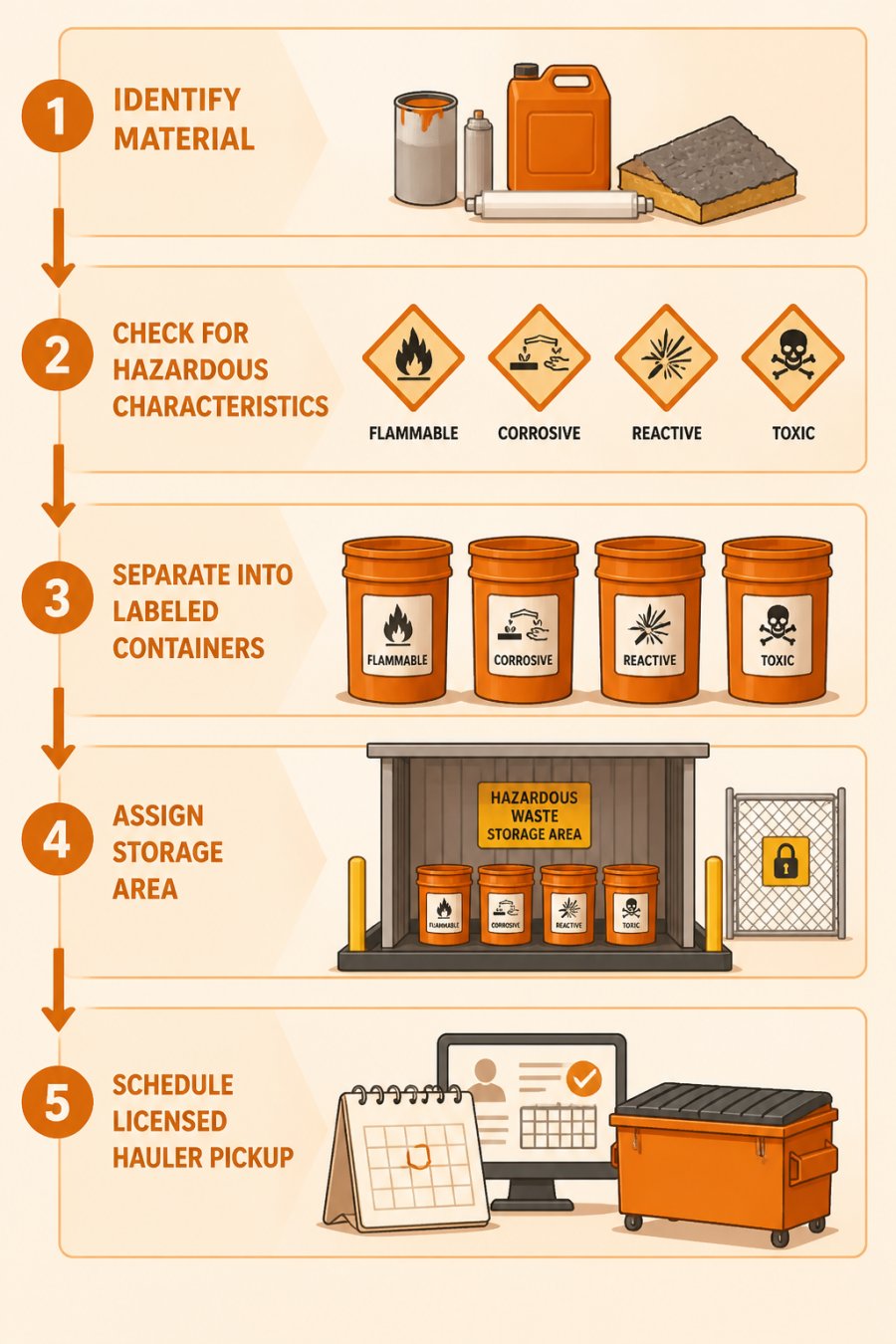
Segregating hazardous waste at the source follows five simple steps.
| Step | What to do |
|---|---|
| Spot it | Check labels and safety data sheets before anything leaves the work area |
| Sort it | Keep hazardous items in a separate, labeled container near the point of use |
| Tag it | Write the material name and date on each container |
| Stage it | Move it to one designated spot away from traffic and drains |
| Log it | Record what left the site, when, and who took it |
EPA Construction Waste Regulations You Need to Follow
Federal rules set the floor, not the ceiling. The EPA regulates hazardous waste under the Resource Conservation and Recovery Act, and construction debris falls under those rules when it carries a hazard characteristic. The EPA also requires construction and demolition debris to be handled carefully under its Construction and Demolition Debris guidance, which covers materials like lead-based paint, asbestos, and treated wood.
What that means on your site:
- Know your waste codes. Generators must classify waste correctly before it ships.
- Use licensed haulers. Waste must go to an approved disposal facility.
- Track the chain of custody. Manifests and shipping records prove the waste arrived where it should.
- Never mix streams. Hazardous waste mixed with general debris becomes a larger regulated load.
Mislabeling a container is a common compliance failure, and it can turn a routine pickup into a citation. Keep a binder with manifests, safety data sheets, and inspection logs. Sites weighing compliance options can explore sustainable waste management alternatives that still meet hazardous waste rules.
Hazardous Waste Storage Best Practices on Active Jobsites
Storage is where most sites get sloppy. Hazardous containers need a covered, labeled, and contained home from day one.
Follow these rules:
- Use closed-top containers for anything with a hazard label.
- Add secondary containment. A spill tray under each drum catches drips before they reach soil or storm drains.
- Label everything. Material name, hazard class, and fill date, every time.
- Keep it covered. Rain turns an open container into a runoff problem.
- Inspect weekly. Check for leaks, rust, and missing lids, and log the results.
Spill prevention and spill response belong in the same plan. Readers planning storage and removal can also compare on-demand vs contract waste management. Keep absorbent socks, pads, and a spill kit within reach of every storage area. If a spill happens, stop work, contain it, and report it per your site plan.
On-site compaction fits neatly into this plan when hazardous items are already pulled out. Our dumpster compaction service crushes general debris in the container, so you haul fewer loads and keep segregated space free.
Frequently Asked Questions
What are the EPA requirements for hazardous waste on construction sites?
Under federal Resource Conservation and Recovery Act rules, construction sites that generate hazardous waste must determine if their waste is hazardous, store it in labeled and closed containers, keep containers in good condition, and arrange disposal through a licensed hauler at an approved facility. Sites must also maintain documentation such as waste manifests and keep records of inspections. Requirements vary by state, so check your state environmental agency for additional rules that apply to your jobsite.
How should flammable materials be stored on a construction site?
Store flammable liquids in approved closed containers, away from ignition sources and out of direct sunlight. Keep them in a designated area with secondary containment to catch leaks, and label each container with its contents and hazard class. Post no-smoking signs, keep a fire extinguisher nearby, and limit the amount stored on site to what the job needs. Inspect containers weekly and move damaged ones off site immediately.
How can on-site waste compaction help reduce hazardous waste handling frequency?
Compacting ordinary construction debris in your roll-off dumpster frees up capacity, which means fewer hauls and less truck traffic on site. That reduces the number of times crews handle and move containers. It also keeps your hazardous waste storage area clear of bulky non-hazardous debris, so segregated containers stay accessible for inspections and pickup.
Hazardous construction waste management rewards the crew that sorts first and stores carefully. Junk Crusher helps Western Pennsylvania contractors and facility teams cut hauling volume with mobile on-site dumpster compaction, fewer hauls, and less time spent on cleanup. Get started with Junk Crusher and book a crush to see how much space your containers can free up.


