High Volume Commercial Waste: Best Practices That Cut Costs
Last Updated: November 4, 2026
Quick Summary
Managing high volume commercial waste starts with a baseline assessment and waste audit of each stream, then working down the waste hierarchy from source reduction to landfill. On-site mobile dumpster compaction is the highest-use step, crushing waste inside your roll-off so each haul carries denser material and fewer truck trips are needed.
- Sort a week's container contents by material type and record contamination rates in recyclables.
- Audit cardboard and scrap streams too, not just the main trash container.
- Right-size equipment first, since an oversized roll-off picked up half full leaks money.
- Train staff at the point of disposal rather than in a quarterly meeting.
- Compacting mixed loads without sorting first can crush recyclables into trash and hurt diversion.
Table of Contents
- Dumpster Waste Management Strategies That Actually Move the Numbers
- Mobile Dumpster Compaction Services: The Volume Fix Most Sites Skip
- Commercial Waste Hauling Cost Reduction Without Cutting Corners
- Frequently Asked Questions
Dumpster Waste Management Strategies That Actually Move the Numbers
Managing high volume commercial waste starts with knowing what you throw away. A baseline assessment of each waste stream is the foundation of every best practice, and it is the step most facilities skip.
Start with a waste audit: sort a week's container contents by material type, note contamination rates in recyclables, and record how full each roll-off is on pickup day.
The waste hierarchy gives a simple order of operations: source reduction first, then reuse, recycling, resource recovery, and landfill last. For practical tactics, see reducing waste hauling frequency. Work down that list before renegotiating a hauling contract.
Watch out: auditing only the main trash container misses the cardboard and scrap streams where the cheapest wins hide.
Mobile Dumpster Compaction Services: The Volume Fix Most Sites Skip
Compaction is the highest-use step for sites generating heavy, bulky waste. A mobile dumpster compaction service crushes waste inside your roll-off on site, so each haul carries denser material instead of empty space. For roofing crews, distribution centers, and manufacturing plants, that means fewer truck trips for the same tonnage.
| Scenario | Container Fill | Hauls Needed | Truck Trips |
|---|---|---|---|
| No compaction | Loose debris, light loads | Frequent | Higher |
| On-site compaction | Crushed, dense loads | Fewer | Lower |
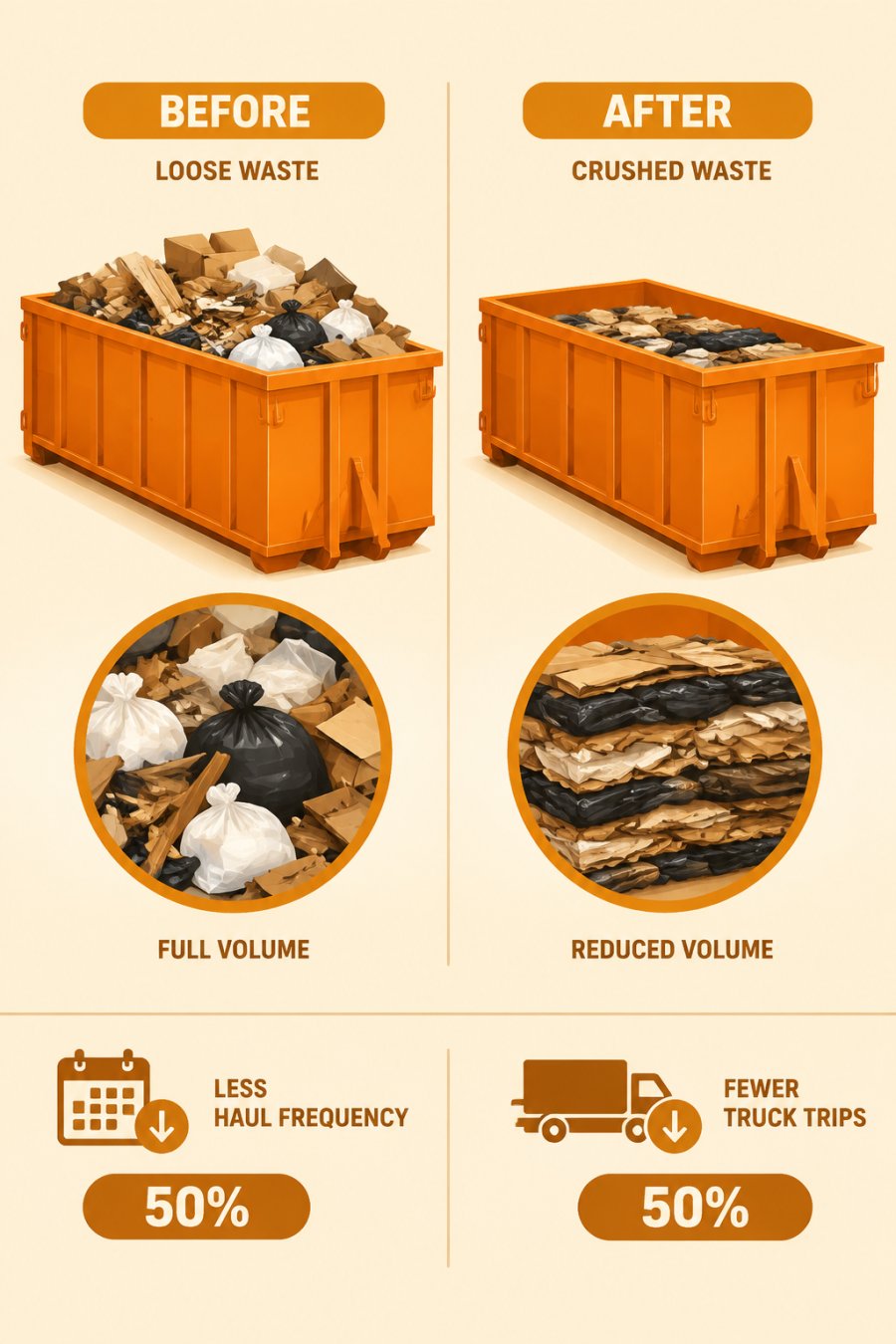
Our service reduces roll-off container volume and the number of required hauls, which can lower disposal fees and the carbon footprint of repeated truck trips. If you are weighing equipment purchases against a service, our guide to traditional versus on-site waste compacting lays out the trade-offs, and the mobile dumpster compaction pricing guide covers pricing models and ROI math. For sites still renting extra containers, dumpster compaction explains what changes.
Watch out: compacting mixed loads without sorting first can crush recyclables into trash, raising contamination rates and killing your diversion rate.
Commercial Waste Hauling Cost Reduction Without Cutting Corners
Hauling costs fall fastest when you attack frequency and fill level together. Commercial waste hauling cost reduction is less about squeezing the hauler and more about shipping fewer, fuller containers. Right-size equipment first: an oversized roll-off picked up half full is the most common money leak we see.
Next, separate streams properly. Train staff at the point of disposal, not in a quarterly meeting.
Seasonal swings deserve their own plan. For more levers, see our guide to waste hauling cost reduction, and if you are deciding between service models, on-demand versus contract waste management breaks down the fit for each.
High volume waste does not have to mean high hauling bills. If your containers leave half full and your invoice keeps climbing, Junk Crusher can help. Our mobile on-site compaction crushes waste inside your roll-off container, reducing volume by up to 70% and reducing the number of required hauls. We serve construction, demolition, manufacturing, and distribution operations across Western Pennsylvania. Get started with Junk Crusher and book a crush to see what your containers can actually hold.
Frequently Asked Questions
How can businesses reduce high volume commercial waste disposal costs?
Start with a waste audit to find where volume and contamination come from, then separate recyclable materials from landfill-bound waste. The biggest lever is often compaction: crushing waste on-site means each roll-off container holds more material, so you pay for fewer hauls. Review your hauling contract for collection frequency that no longer matches actual volume, and track disposal fees against container fill levels. Junk Crusher's mobile compaction service reduces roll-off volume by up to 70%, which directly cuts the number of trips billed.
What are the benefits of mobile dumpster compaction services?
Mobile compaction crushes waste inside your existing dumpster on-site, so you haul material rather than empty space. For high volume commercial waste, that means fewer collection trips, lower hauling fees, and less yard space tied up in containers. Junk Crusher reports volume reductions of up to 70%. Fewer truck trips also shrink the carbon footprint of your waste stream. It suits construction, demolition, manufacturing, and distribution sites where debris is bulky and heavy.
How does on-site compaction impact waste hauling frequency?
Compaction increases the density of waste in each container, so a roll-off fills more slowly in terms of actual material. If your hauler currently empties a container several times a month, denser loads can stretch that schedule out, and you pay for fewer pulls. The exact change depends on your waste stream: shingles, cardboard, and mixed debris compact differently. Ask for a baseline assessment of your current fill rate and haul count so the savings are measured, not assumed.


