
Reducing Waste Hauling Frequency: 7 Tips That Work
Table of Contents
- Why Reducing Waste Hauling Frequency Cuts Costs and Emissions
- Step 1: Conduct a Waste Stream Audit Checklist Review
- Step 2: How to Calculate Waste Hauling Costs Per Pickup
- Step 3: Optimize Your Pickup Schedule and Container Capacity
- Step 4: Implement Waste Compaction Benefits for Businesses
- Step 5: Reduce Waste Volume at the Source
- Step 6: Negotiate a Better Service Agreement
- Step 7: Track Progress and Adjust Your Waste Management Plan
- When to Consider Professional Compaction Services
- Frequently Asked Questions
Last Updated: September 7, 2026
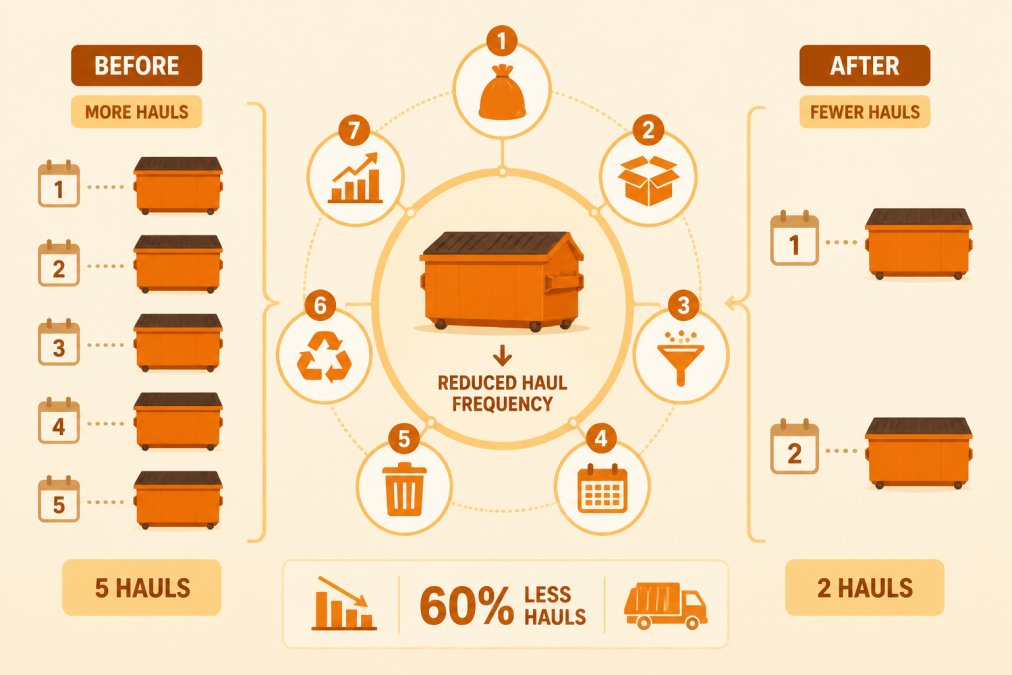
Every time a waste hauler rolls onto your property, you pay for the truck, the driver, and the fuel, whether the dumpster is full or not. Reducing waste hauling frequency is the single most direct way to lower disposal costs and cut your carbon footprint, yet most operations managers treat the pickup schedule as a fixed expense rather than a variable they control. Here are seven practical steps to reduce hauls without risking overflow or regulatory issues.
The core insight is simple: you pay to haul empty space. Most dumpsters leave a site only half full by volume once loose waste is considered.
Why Reducing Waste Hauling Frequency Cuts Costs and Emissions
Every haul generates two costs: the hauling fee itself and the hidden cost of wasted capacity. When a 30-yard container leaves with only 15 yards of material, you have effectively paid double per yard of actual waste. Reducing waste hauling frequency forces you to address this inefficiency directly.
Compress waste on-site so the same material fits in fewer containers, or reduce the volume generated in the first place. Both paths lead to lower disposal costs.
Step 1: Conduct a Waste Stream Audit Checklist Review
Start with a waste stream audit, a systematic inventory of everything leaving your facility. It tells you what you generate, how much, and where it comes from. Without this baseline, every other optimization is guesswork.
Use a waste stream audit checklist to document each waste category across a full operating cycle, typically two to four weeks:
- Material type: cardboard, plastic film, scrap metal, shingles, wood, food waste, or mixed refuse
- Container assignment: which waste stream goes into which dumpster
- Fill level at pickup: estimate how full each container is when the hauler arrives
- Generation source: which department, shift, or jobsite produced the material
- Contamination incidents: non-recyclable items mixed into recycling loads
A common mistake is auditing for a single week, which misses cyclical waste generation. Manufacturing plants often produce more scrap during changeovers, and construction sites generate different debris during framing versus finishing phases.
Step 2: How to Calculate Waste Hauling Costs Per Pickup
Understanding your true per-pickup cost is the foundation of every negotiation and schedule change. Most managers only track the line item on the invoice, but the real number includes more than the base hauling fee.
To calculate waste hauling costs per pickup accurately, add together the hauling fee, any fuel surcharges, environmental fees, and the rental cost of the container divided by the number of pickups in the billing period. Then divide that total by the actual volume of waste in the container, not its rated capacity, to find your true cost per cubic yard.
| Cost Component | Where It Appears | Impact on Per-Pickup Cost |
|---|---|---|
| Base hauling fee | Invoice line item | Fixed per trip |
| Fuel surcharge | Invoice line item | Varies with diesel prices |
| Container rental | Monthly charge | Lower per pickup with fewer hauls |
| Disposal fees | Tonnage-based | Higher with loose, uncompacted waste |
| Overweight penalties | Invoice line item | Avoidable with better sorting |
Step 3: Optimize Your Pickup Schedule and Container Capacity
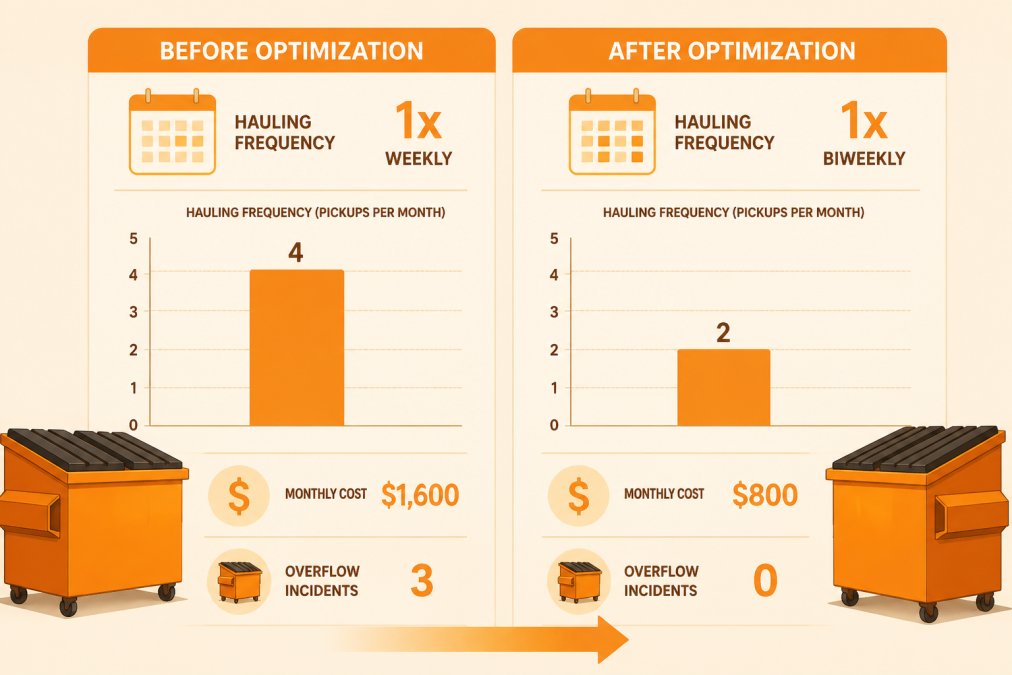
Once you know your waste generation patterns, match your pickup schedule to reality rather than habit. Many facilities keep the same schedule year-round even when production volumes shift seasonally. A biweekly pickup during slow months and a weekly schedule during peak production can cut hauls without risking overflow.
Container capacity is the other half of the equation. If you consistently fill a 20-yard container to overflowing before the scheduled pickup, you have a capacity problem, not a frequency problem. Upgrading to a 25 or 30-yard container may cost slightly more per rental but eliminates the need for an extra haul. Dumpster Rental options in 20 and 25-yard sizes can provide the extra capacity needed to consolidate pickups.
Step 4: Implement Waste Compaction Benefits for Businesses
While source reduction is the ideal, the most direct lever for reducing hauling frequency is increasing the density of the waste you generate. Most haulers charge by the pull, not by the pound, within a set weight limit. A 30-yard container filled with loose cardboard might weigh only 2,000 pounds, while the same container filled with compacted material could weigh 8,000 pounds, still well under the typical 10,000-pound legal limit for a roll-off (the EPA). You are paying for the trip, so you want it to carry as much material as legally possible.
Understanding the Mechanics of Compaction
Compaction works by forcing waste into a smaller volume, eliminating the air pockets that make up a significant portion of loose refuse. Its effectiveness is measured by its compaction ratio, the volume of loose waste divided by the volume of compacted waste. A 4:1 ratio means four cubic yards of loose waste will fit into one cubic yard of compacted space.
Different waste streams have different compaction ratios:
- Cardboard and paper: 5:1 to 10:1. These materials are highly compressible because they are mostly air.
- Plastic film and packaging: 3:1 to 5:1. Film is compressible but can spring back if not baled or compacted with sufficient force.
- Mixed construction debris (drywall, wood, shingles): 2:1 to 3:1. These materials are denser and may contain rigid items that limit compression.
- Metal scrap: 3:1 to 4:1 with a dedicated compactor, but often requires a baler for efficient handling.
Equipment Options: From Compactors to Mobile Services
There are several ways to achieve compaction, each with different capital and operational trade-offs.
1. Stationary Compactors These are permanent units installed next to a facility's loading dock. Waste is fed into a hopper, and a hydraulic ram crushes it into an attached roll-off container. They suit facilities generating a consistent, high volume of waste daily.
2. Self-Contained Compactors These units combine the compactor and the container into a single piece of equipment, often used for wet waste or materials that need to be sealed from the elements. They cost more to rent than a standard dumpster but eliminate the need for a separate stationary unit.
3. Mobile or On-Site Compaction Services This is a newer model that removes the capital barrier to compaction. A service provider brings a self-contained compaction unit to your site, processes the waste already in your dumpster, and then removes the compacted material. This suits construction sites, special events, or facilities that lack the volume to justify a permanent unit.
The Weight Limit Trade-off
Compaction is not without its limits. The primary constraint is the legal weight limit for the truck hauling the container. On public roads, a loaded roll-off truck is typically limited to a gross vehicle weight of 80,000 pounds (fmcsa.dot.gov). The goal is to maximize density without exceeding the legal payload for your container size.
A standard 20-yard container has a legal payload limit of around 10,000 to 12,000 pounds; a 30-yard container can typically hold 12,000 to 14,000 pounds. If you compact dense materials like concrete or brick, you may hit the weight limit before the container is completely full. This is where a waste audit is critical: you need to know the density of your waste stream to choose the right container size and compaction strategy.
Operational Best Practices for Compaction
To get the most out of any compaction strategy, follow these operational guidelines:
- Stage waste for compaction: Do not throw materials into the dumpster randomly. Break down large boxes and lay them flat to maximize the surface area for the compaction ram.
- Time your compaction passes: For stationary compactors, run the cycle until the ram stalls or the container is full. For mobile services, schedule the visit when the container is as full as possible, typically right before a scheduled pickup would have occurred.
- Separate dense materials: If you generate both bulky cardboard and heavy scrap metal, consider using separate containers. This prevents the metal from taking up space that could be filled with lighter, more compressible waste.
- Monitor weight, not just volume: Ask your hauler for weight tickets on each pickup. This data is essential for calculating your true cost per ton and ensuring you are not paying for air or risking overweight fines.
By focusing on waste density, you move beyond simply scheduling fewer pickups and start maximizing the value of each trip. This is the technical gap most general waste-reduction guides miss.
Step 5: Reduce Waste Volume at the Source
Source reduction is the step most facilities skip because it requires changing behavior rather than adjusting a contract. Yet cutting waste generation at the source compounds every other optimization in this guide.
Start with the easiest wins:
- Cardboard recycling: Corrugated cardboard is often 30-40% of a facility's waste stream by volume. A dedicated recycling program with a baler can remove it from the landfill stream entirely.
- Single-use items: Replace disposable packaging, pallet wrap, and office supplies with reusable alternatives where feasible.
- Supplier take-back programs: Many vendors will take back pallets, drums, and packaging materials, keeping them out of your dumpster.
- Composting: For facilities with break rooms or cafeterias, separating organic waste reduces landfill volume and can lower disposal fees.
A waste minimization program is most effective when it has a clear owner. Assign one person to track waste generation metrics and report progress monthly.
Step 6: Negotiate a Better Service Agreement
Your existing service agreement is a starting point, not a final answer. Many waste haulers are willing to renegotiate terms, especially when you demonstrate that your waste generation patterns have changed. The key is to negotiate from data, not from frustration.
Before you call your hauler, prepare your waste audit results and your per-pickup cost calculations. Then target these specific contract terms:
- Hauling frequency: Move from fixed weekly pickups to an on-call or route-optimized schedule.
- Container size: Request larger containers if your audit shows consistent overflow.
- Rate structure: Ask whether disposal fees are itemized separately and whether they decrease with volume.
- Contract length: Avoid auto-renewal clauses that lock you into outdated terms.
The EPA's guide to sustainable materials management emphasizes that waste reduction should be a negotiated partnership, not a one-way transaction. Haulers who understand your operation can often propose route changes that benefit both parties, reducing their fuel costs while lowering your fees.
Step 7: Track Progress and Adjust Your Waste Management Plan
Reducing waste hauling frequency is not a one-time project; it is an ongoing operational adjustment. Track your key metrics monthly and review them quarterly to confirm the changes are holding.
Monitor these indicators:
- Hauls per month: Should trend downward or stay flat as production grows
- Cost per cubic yard: Should decrease as compaction and source reduction take effect
- Overflow incidents: Should remain at zero; if they appear, your schedule is too aggressive
- Recycling rates: Should increase as contamination control improves
Facilities that treat waste management as a continuous improvement process rather than a static contract outperform those that set it and forget it.
When to Consider Professional Compaction Services
If your audit reveals that most containers leave only partially full, or if you are renting extra dumpsters to handle overflow, professional compaction services are worth evaluating. Mobile compaction eliminates the capital expense of buying and maintaining your own compactor equipment while delivering the same volume reduction.
Junk Crusher's mobile on-site compaction service reduces roll-off dumpster volume significantly, which translates into fewer required hauls and lower overall waste management costs. The service suits construction sites, distribution centers, and manufacturing facilities across Western Pennsylvania. We also offer Dumpster Rental in 20 and 25-yard sizes for businesses that need reliable container capacity alongside compaction.
The decision comes down to math: compare your current cost per cubic yard against the cost of compaction plus fewer pickups.
Reducing waste hauling frequency requires looking past the invoice and questioning every assumption about how waste leaves your facility. Start with a waste stream audit checklist, calculate your true per-pickup costs, and pursue the combination of schedule optimization, on-site compaction, and source reduction that fits your operation. Junk Crusher helps businesses across Western Pennsylvania put these principles into practice with mobile dumpster compaction that cuts hauls and costs. Book a Crush to see how much you can save.
Frequently Asked Questions
What are the primary benefits of reducing waste hauling frequency?
The main benefits are lower disposal costs and a reduced carbon footprint. Fewer pickups mean you pay less per haul for transportation and disposal fees. It also cuts fuel consumption and emissions from hauling trucks. For many businesses, this can lead to up to a 56% reduction in dumpster fees. Reducing frequency also minimizes site disruption and frees up yard space, improving operational efficiency.
How does on-site waste compaction reduce hauling frequency?
On-site compaction crushes loose waste into dense blocks, reducing its volume by up to 70%. This means your dumpster fills much slower, so you need fewer pickups to handle the same amount of waste. For example, a site that required three hauls per week might only need one after compaction. This directly lowers your disposal costs and the number of truck trips, shrinking your environmental footprint.
What should be on a waste stream audit checklist?
A waste stream audit checklist should start by identifying all waste types you generate, such as cardboard, plastics, scrap metal, or debris. Quantify each type by volume or weight over a set period. Next, assess your current disposal methods and hauling frequency for each stream. Identify items that could be recycled or composted instead of landfilled. Finally, review your hauler invoices to calculate the true cost of each waste stream, which helps you find reduction opportunities.
How do I calculate waste hauling costs to find savings?
Start by reviewing your hauler invoices to find the base pickup fee and any additional charges like disposal fees or fuel surcharges. Multiply the total cost per pickup by your weekly or monthly service frequency. Then, estimate the average fill level of your dumpster at pickup. If it is often only half full, you are paying to haul empty space. Reducing pickup frequency or increasing container capacity to match your actual waste generation will lower your costs.
