Commercial Trash Pickup vs Compaction for Business Waste
Last Updated: November 6, 2026
Quick Summary
Commercial trash pickup is scheduled collection of business waste in a fixed container, priced largely by container size and emptying frequency. On-site compaction crushes waste inside the dumpster before hauling, so each container holds far more between trips. Pickup suits light, predictable waste, while compaction suits bulky, heavy, high-volume debris.
- Scheduled pickup charges for the container, not the weight inside, so a partly empty dumpster still costs a full haul.
- On-site compaction crushes waste to reduce volume by up to 70% on the same container.
- Track container fill levels the morning of pickup for four weeks before agreeing to a frequency.
- Office waste usually fits weekly service, while retail packaging often needs twice weekly.
- Junk Crusher can reduce dumpster fees by as much as 56% with mobile on-site compaction.
Table of Contents
- Commercial Trash Pickup vs Compaction: How the Two Models Compare
- What a Commercial Dumpster Service Includes
- Setting a Commercial Trash Pickup Schedule That Fits Your Volume
- Frequently Asked Questions
Commercial Trash Pickup vs Compaction: How the Two Models Compare
Commercial trash pickup is scheduled collection of business waste in a fixed container, priced largely by container size and emptying frequency. On-site compaction crushes waste inside the dumpster before hauling, so each container holds far more between trips. At Junk Crusher, we run the second model for plants, warehouses, and jobsites across Western Pennsylvania.
With scheduled pickup, you rent empty space and refill it: every haul charges for the container, not the weight inside, so a two-thirds-empty dumpster still costs a full haul.
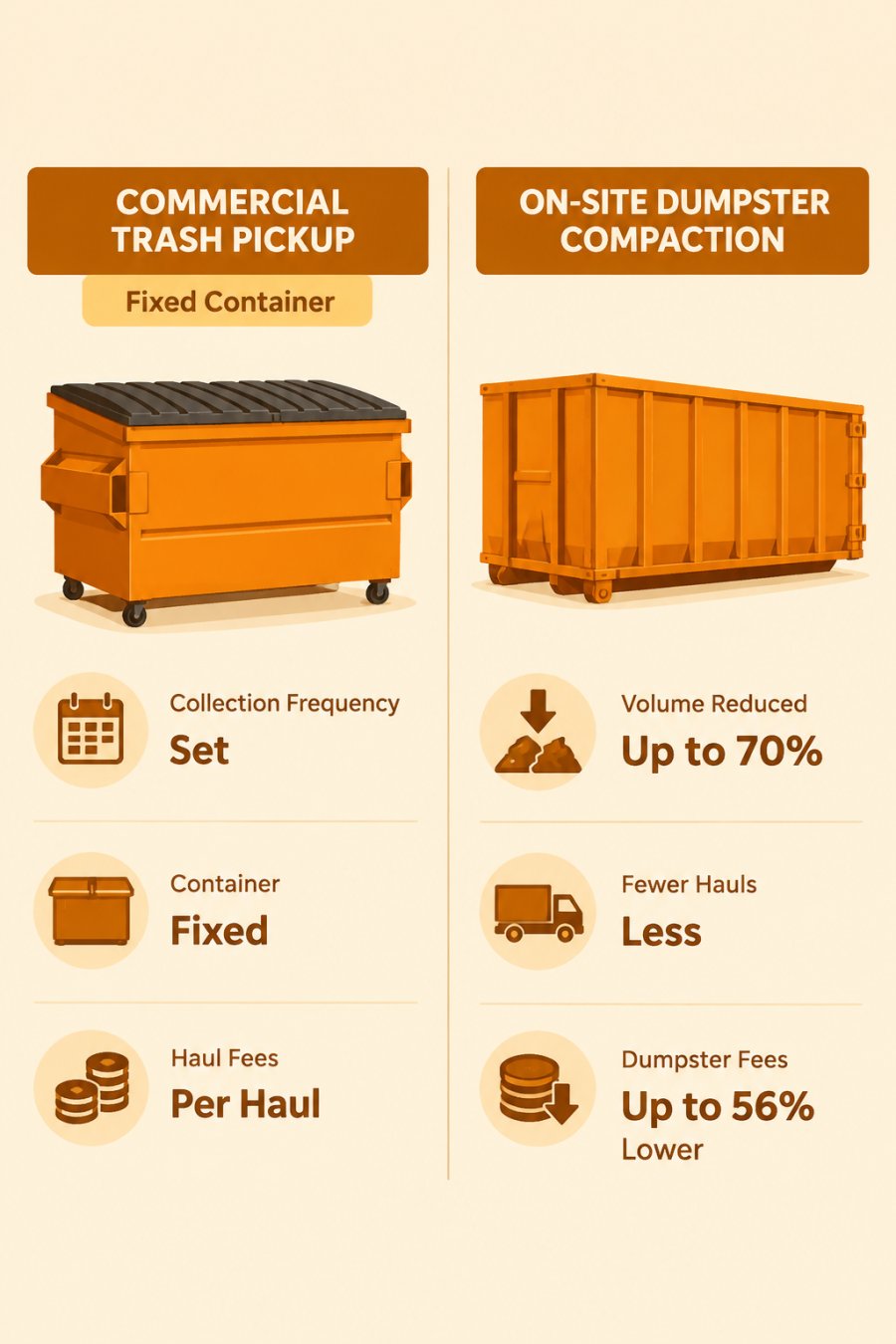
Pickup alone suits offices, retail spaces, and small shops with light, predictable waste. Compaction suits operations generating heavy, bulky debris: shingles, pallets, cardboard, packaging film, demolition scrap. If your container fills in a day and sits half-empty by pickup morning, the pickup model is working against you. Our onsite waste compaction service exists for exactly that situation, and the savings guide breaks down what compaction returns.
| Factor | Scheduled Pickup | On-Site Compaction |
|---|---|---|
| Pricing basis | Container size + haul frequency | Fewer hauls on the same container |
| Container fill | Often hauled partly empty | Crushed to reduce volume up to 70% |
| Best for | Light, steady waste | Bulky, heavy, high-volume debris |
What a Commercial Dumpster Service Includes
A commercial dumpster service includes the container, delivery and placement, scheduled emptying, and disposal, usually under a recurring agreement. What varies is how much is flexible versus locked into a contract.
You get a container sized to your volume, a pickup schedule built around your operation, and a bill reflecting both.
- Signing a multi-year agreement before testing whether container size fits actual volume
- Paying for a consistently half-full container because nobody measured fill levels
- Missing contract terms on rate increases and early termination
A rate that looks competitive at signing can climb through built-in adjustments, so read the escalation clause before you commit. If you suspect you are already paying for empty space, this explanation of why businesses pay for empty dumpster space is worth ten minutes.
Setting a Commercial Trash Pickup Schedule That Fits Your Volume
A commercial trash pickup schedule should match how fast your containers actually fill, not how often a hauler prefers to run the route. Most providers offer weekly, multiple-per-week, or on-call service; the right answer is the slowest frequency that never leaves you with overflow.
Track how full each container is the morning of pickup for four weeks. Consistently under half means you are over-scheduled; overflow means you are under-scheduled.
- Office waste: light volume, weekly service usually fits
- Retail waste: steady but bulky packaging, often twice weekly
- Manufacturing and industrial waste: heavy and constant, compaction changes the math
- Construction and demolition: bursty and dense, schedule around project phases
For high-volume operations, our guide to high-volume commercial waste best practices covers scheduling in more depth, and it helps to know the provider mistakes that raise your bill before you sign, most are baked into the contract, not the container.
Agreeing to a pickup frequency before you have four weeks of fill data is the most common way businesses lock in a rate they cannot justify later.
If your dumpsters keep filling before pickup day, the schedule is not the problem, the model is. Junk Crusher brings mobile on-site compaction to your site, crushing waste inside your existing roll-off so you haul less often. We reduce dumpster volume by up to 70%, cut hauling frequency, and can reduce dumpster fees by as much as 56%, all without changing how your crew handles waste. Get started with Junk Crusher and book a crush to see what your containers look like when they are actually full.
Frequently Asked Questions
How often should a business schedule commercial trash pickup?
Frequency should follow how fast your container fills, not a default calendar. A retail or office site may do fine on one or two collections a week, while a manufacturing plant or roofing crew can overflow a roll-off in days. Track fill level between hauls for a month, then set your commercial trash pickup schedule around the busiest week rather than the average. If you are paying for extra hauls or overage fees, that is the signal to either size up the container or compact on site.
Is commercial dumpster compaction a good alternative to more frequent trash pickup?
It depends on what is filling your dumpster. Bulky, crushable material such as shingles, cardboard, packaging, and demolition debris compacts well, so on-site crushing can cut roll-off volume by up to 70% and reduce the number of hauls you pay for. Heavy, wet, or non-crushable loads gain less. Compare the cost of adding a second weekly pickup against the cost of a compaction visit, and ask for references from sites handling waste similar to yours before switching.
What should businesses compare when choosing a commercial waste service?
Compare four things: the container sizes offered, how flexible the pickup schedule is, what the contract says about early termination and rate increases, and whether the provider reports diversion or recycling volumes. Ask for a written quote that separates haul charges from container rental so you can see what you are actually paying per pickup. Then check whether your waste stream could be compacted to reduce haul count, which changes the math on every quote you receive.


