What Permits Do You Need for On-Site Waste Processing?
Last Updated: November 4, 2026
Quick Summary
On-site waste processing permits are the approvals you must secure before sorting, crushing, shredding, or otherwise handling construction debris on a jobsite. The permits depend on the waste stream, the processing method, and the site's location, and typically involve your state environmental agency plus local zoning and stormwater authorities.
- A construction waste management plan lists each waste stream, how you will separate it, where it goes, and who handles it.
- Hazardous streams need separate containers, labeling, and a qualified contractor, with manifests and chain-of-custody records traveling with the waste.
- On-site processing brings four areas of local review into play: zoning and land use, stormwater pollution prevention, air quality, and solid waste handling.
- Keep waste characterization notes, manifests, chain-of-custody forms, inspection logs, and training records for regulators during audits and after spills.
- Label every container by waste stream, since unlabeled containers can lead to inspection findings.
Table of Contents
- On-Site Waste Processing Permits: What You Need Before You Start
- Building a Construction Waste Management Plan That Satisfies Regulators
- Hazardous Construction Waste Handling and the Permits It Triggers
- On-Site Waste Processing and the Permits It Requires
- Construction Site Best Management Practices for Waste
- Frequently Asked Questions
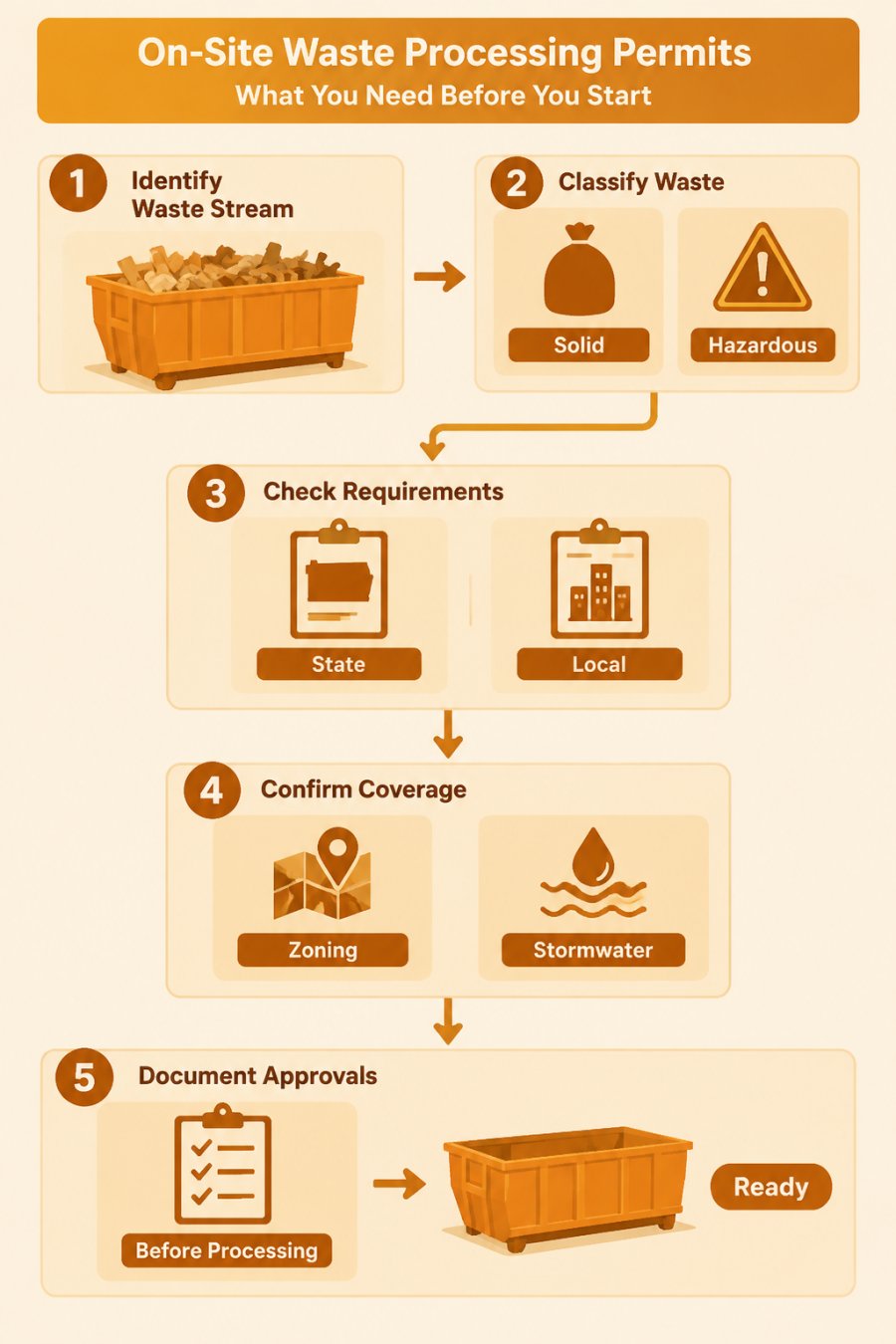
On-Site Waste Processing Permits: What You Need Before You Start
On-site waste processing permits are the approvals a contractor must secure before sorting, crushing, shredding, or otherwise handling construction debris on a jobsite rather than hauling it away. The permits depend on the waste stream, the processing method, and the site's location.
Building a Construction Waste Management Plan That Satisfies Regulators
A construction waste management plan lists each waste stream, how you will separate it, where it goes, and who handles it, regulators want it before work starts. Strengthen it by optimizing dumpster capacity and adopting the best ways to simplify jobsite cleanup.
Watch out: a plan that lives only in a binder may not satisfy inspectors. Post separation rules at each container and walk the site weekly.
Hazardous Construction Waste Handling and the Permits It Triggers
Hazardous construction waste handling carries the heaviest permit burden. Lead paint debris, asbestos-containing material, solvent-soaked rags, and certain adhesives can fall under federal and state rules that treat them differently from ordinary debris.
- Characterize the material. Identify what it contains before it hits a container.
- Classify it. Determine whether it is solid waste or regulated hazardous waste.
- Match the handling. Hazardous streams need separate containers, labeling, and a qualified contractor.
- File the paperwork. Manifests and chain-of-custody records travel with the waste.
For the practical side, follow a safe jobsite workflow for hazardous roofing material disposal and review how to manage hazardous construction site waste before the first load leaves.
On-Site Waste Processing and the Permits It Requires
Processing waste on site changes the permit picture. Crushing, shredding, and compacting reduce volume, but depending on the equipment and material, local rules may call for additional review.
- Zoning and land use: does the site allow processing equipment?
- Stormwater pollution prevention: does runoff from the processing area reach drains?
- Air quality: does the equipment generate dust or emissions above local thresholds?
- Solid waste handling: does the state treat on-site processing as a regulated activity?
Fewer truck trips is the payoff: less road time, lower emissions, and a smaller carbon footprint, which is why many teams cut carbon footprint by minimizing truck trips as part of the same plan. Where processing isn't practical, dumpster compaction can reduce volume inside a closed container.
On-site processing brings four areas of local review into play.
| Review area | Question regulators ask |
|---|---|
| Zoning and land use | Does the site allow processing equipment? |
| Stormwater pollution prevention | Does runoff from the processing area reach drains? |
| Air quality | Does equipment generate dust or emissions above local thresholds? |
| Solid waste handling | Does the state treat on-site processing as a regulated activity? |
Construction Site Best Management Practices for Waste
Construction site best management practices are the daily habits that keep a waste plan compliant between inspections.
- Keep containers closed and covered
- Label every container by waste stream
- Store materials under cover, away from drains
- Inspect containment areas weekly
- Train crews on spill response
- Keep manifests and inspection logs on site
Watch out: unlabeled containers can lead to inspection findings. Labeling them is a quick fix.
Frequently Asked Questions
What permits may be required to process construction waste on-site?
Requirements depend on your state and locality. Common approvals include a solid waste processing or facility permit, hazardous waste identification and generator requirements under RCRA, stormwater construction general permit coverage, and local zoning or land-use approval. Crushing or sorting debris on site can trigger additional review. Contact your state environmental agency and local code office before processing begins, and keep written confirmations on file.
How should hazardous construction waste be handled on a jobsite?
Separate hazardous construction waste handling from general debris from the moment it is generated. Label containers clearly, keep them closed and on secondary containment, and train workers to recognize contaminated materials. Track accumulation dates and volumes, and use a licensed waste hauler and approved disposal facility. Document every shipment with a manifest so the chain of custody stays intact from site to final destination.
Does compacting dumpster waste require a permit?
Compaction alone usually sits outside the permits that govern treatment or disposal, because it changes volume, not the nature of the waste. Your obligations still apply: the waste stays in a permitted container, hazardous materials stay segregated, and hauling goes to an approved facility. Confirm local rules with your code office, then use dumpster compaction to cut haul frequency without adding a treatment step.
Sorting out permits takes time. Cutting haul costs does not have to. Junk Crusher crushes dumpster waste on site, reducing roll-off volume by up to 70% and cutting the number of hauls your site needs. Fewer trips mean lower fees, less downtime, and a smaller carbon footprint. Get started with Junk Crusher and book a crush for your next jobsite.


