
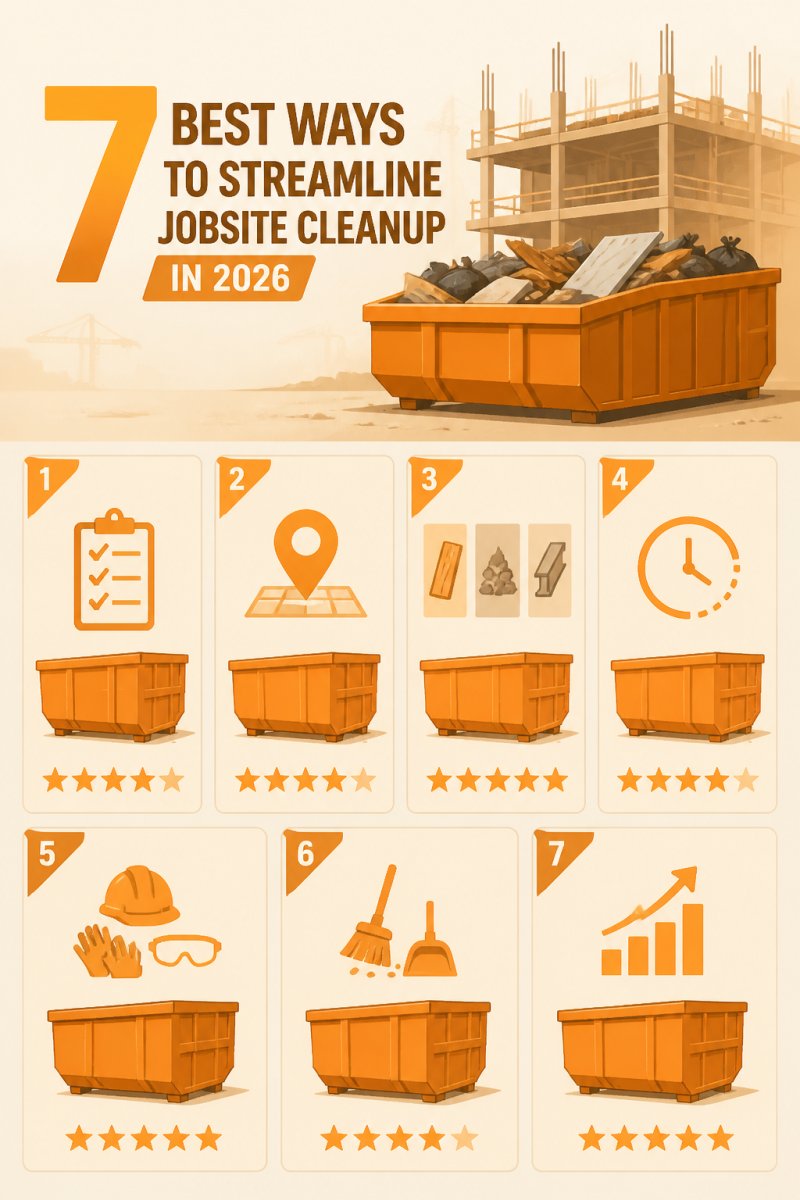
7 Best Ways to Streamline Jobsite Cleanup in 2026
Table of Contents
- Why Jobsite Cleanup Directly Impacts Your Project Timeline and Labor Costs
- 1. Construction Site Debris Management: Segregate at the Source
- 2. Adopt a Clean as You Go Policy That Sticks
- 3. On-Site Dumpster Compaction: Cut Hauls Without Cutting Corners
- 4. OSHA Construction Site Housekeeping Requirements You Cannot Ignore
- 5. Use Digital Tracking and Cleanup Software to Stay Ahead
- 6. Plan Cleanup Stages Around Your Project Timeline
- 7. Cost-Benefit Analysis: Professional Compaction vs. In-House Cleanup
- Frequently Asked Questions
Last Updated: September 16, 2026
Why Jobsite Cleanup Directly Impacts Your Project Timeline and Labor Costs
Jobsite cleanup is the practice of removing, sorting, and managing construction debris throughout a project rather than only at the end, and it directly determines how fast crews can work and how much you pay for waste hauling. This guide from Junk Crusher breaks down the seven best ways to simplify jobsite cleanup in 2026, from source segregation to on-site compaction. The stakes are simple: cluttered sites slow labor, invite citations, and inflate dumpster costs. Below, we'll show you exactly how to fix all three.
A common mistake is treating cleanup as a final phase. In practice, it is a daily workflow. When debris piles up, pathways close, equipment gets blocked, and your most expensive asset, labor, stands idle. The seven methods here address that problem at the source.
1. Construction Site Debris Management: Segregate at the Source
Construction site debris management works best when materials are separated the moment they are created, not sorted later from a mixed pile. Mixed waste costs more to haul and limits recycling options. The EPA guidance on construction and demolition debris treats source separation as the foundation of any recovery program, and it is the cheapest point to sort material.
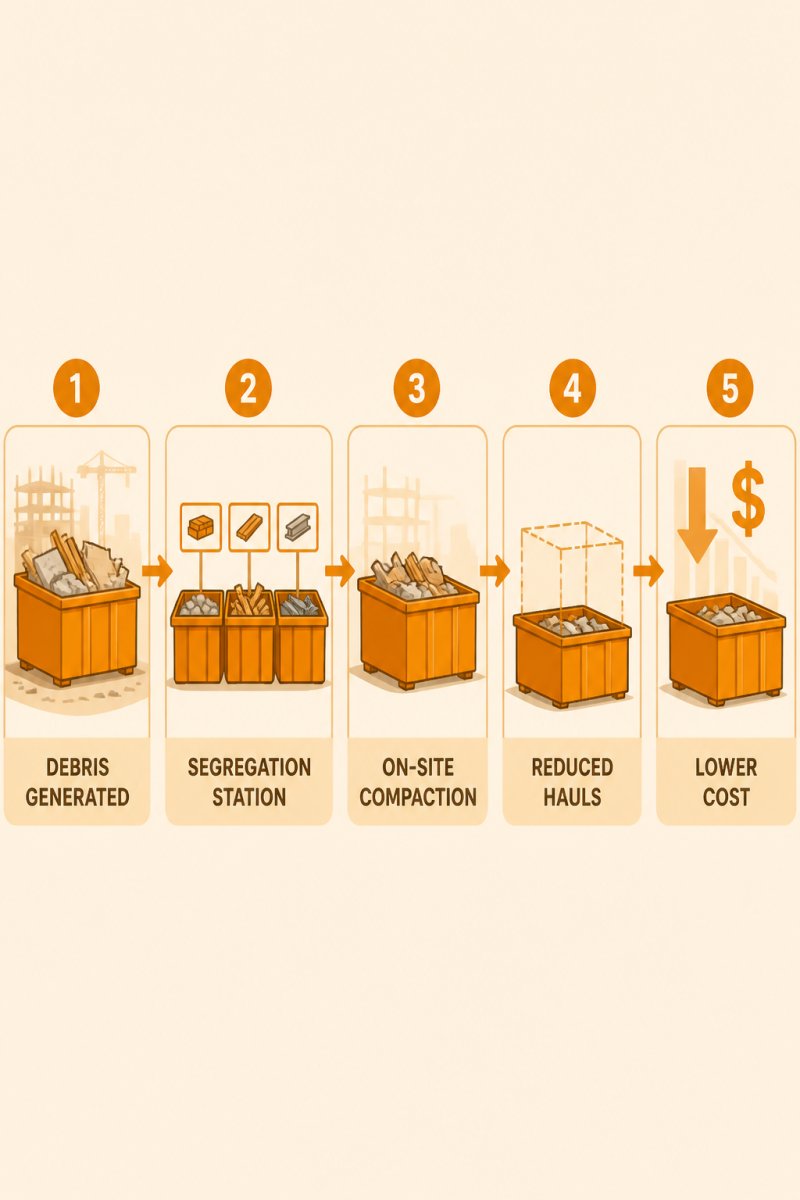
Set up labeled containers for the categories your project actually produces: wood, metal, drywall, cardboard, and general trash. A common pattern on commercial sites is a three-tier station: a roll-off for bulky wood and drywall, smaller tilt trucks or carts for metal and cardboard, and a covered bin for general trash. Keep the station on a gravel or concrete pad so forklifts and skid steers can service it in wet weather.
Setting Up Segregation Stations That Crews Actually Use
- Place stations within 50 feet of active work zones, or crews will not walk to them
- Label bins with pictures, not just words, for mixed-language crews
- Assign one crew member per shift to check fill levels
- Empty stations before they overflow, not after
- Size the station to the phase: a rough-in station needs more metal capacity, a drywall phase needs more bulky capacity
Documenting Diversion for Green Building Credits
Most competitors stop at "segregate your waste." The gap is documentation. If your project is pursuing LEED certification, the waste diversion rate must be tracked and reported, not just performed. The U.S. Green Building Council's construction and demolition waste management credit requires project teams to track the amount of material diverted from landfill by category and provide hauler receipts or weight tickets as evidence.
A practical workflow is to keep a running diversion log at the segregation station. Record the date, material type, container size, and hauler ticket number each time a container is pulled. At closeout, those records become the backup for the credit submission. Without them, even a well-segregated site cannot claim the diversion rate. This is the single most common reason contractors lose green building points they actually earned.
2. Adopt a Clean as You Go Policy That Sticks
A clean as you go policy assigns small cleanup tasks to every shift instead of saving everything for a final push. It is the single highest-return habit on this list.
The 20-Minute End-of-Shift Rule
Reserve the last 20 minutes of every shift for cleanup. Crews clear their own work area, return tools, and stage debris at the nearest segregation station. The next shift starts on a clean site, which protects labor productivity and cuts the risk of trips and falls.
3. On-Site Dumpster Compaction: Cut Hauls Without Cutting Corners
On-site dumpster compaction crushes debris inside the container so each roll-off holds more material before it is hauled away. Fewer hauls means fewer truck trips, lower fees, and less site disruption.
Junk Crusher provides mobile dumpster compacting for commercial sites, reducing roll-off volume by up to 70% and cutting the number of required hauls. For contractors paying per pull, that is the most direct lever on waste spend. If you need additional capacity alongside compaction, roll-off dumpster rental options can cover overflow during peak demolition phases.
| Method | Site Impact | Haul Frequency | Best For |
|---|---|---|---|
| Segregation at source | Medium setup effort | Moderate reduction | Recycling-heavy projects |
| Clean as you go | Low, daily habit | Indirect reduction | All active sites |
| On-site compaction | Low, mobile unit | Largest reduction | High-volume debris |
4. OSHA Construction Site Housekeeping Requirements You Cannot Ignore
OSHA construction site housekeeping requirements are not suggestions, they are enforceable standards covering walking surfaces, debris accumulation, and material storage. The OSHA housekeeping standard for construction requires that work areas, passageways, and stairs stay clear of debris.
Non-compliance shows up as citations, but the bigger cost is the injury. A blocked pathway or loose scrap pile is a workplace hazard that stops production and triggers investigations. Build housekeeping checks into your daily site inspection so problems get logged and fixed before an inspector finds them.
5. Use Digital Tracking and Cleanup Software to Stay Ahead
Cleanup software turns housekeeping into a trackable task instead of a verbal reminder. Field service platforms let supervisors log debris levels, assign pickups, and document compliance with photos.
Tools like Jobber and Housecall Pro handle scheduling and crew dispatch, while Buildertrend stores daily logs and safety checklists in one place. For bidding accuracy on post-construction cleaning, QuoteIQ offers phase-based pricing. The point is not the software itself, it is the audit trail. When hauling disputes or citations arise, dated records settle them fast.
6. Plan Cleanup Stages Around Your Project Timeline
Cleanup stages should mirror your construction phases: rough-in, drywall, finish, and final. Each phase produces different debris and needs different containers. The mistake is treating container placement as a one-time decision. A roll-off that is correctly sized for demolition is usually wrong for finish work.
Map the schedule so a roll-off arrives before demolition starts, not after the pile forms.
Matching Container Size to Phase
A common pattern is to size containers by debris density, not by floor area. Heavy materials like concrete, tile, and dirt fill a container fast by weight, so a smaller container pulled more often is usually cheaper than a large one that goes overweight. Bulky materials like wood, drywall, and packaging fill by volume, so a larger container makes sense.
The Subcontractor Handoff Checklist
Each trade should leave its area clean before the next trade mobilizes. A simple handoff checklist prevents the pile-and-pray cycle:
- Trade clears its own debris to the correct segregation station before demobilizing
- Supervisor signs the daily log confirming the area is clear
- Next trade walks the area and notes any leftover material before starting
- Any disputed debris is photographed and assigned to the responsible trade the same day
Scheduling Hauls Around Production, Not Around Overflow
Set haul days on the master schedule the same way you set concrete pours. A predictable pull schedule lets the hauler plan trucks and lets your crew plan labor. When hauls are reactive, you pay for emergency pulls and your crew stops work to manage a full container. Most practitioners find that a fixed twice-weekly pull during heavy phases and an on-call pull during finish work keeps the site moving without overpaying for empty containers.
7. Cost-Benefit Analysis: Professional Compaction vs. In-House Cleanup
Professional compaction usually wins on high-volume sites because it attacks the cost driver directly: the number of hauls. In-house cleanup saves on service fees but consumes labor hours you are already paying for.
Frequently Asked Questions
What is the most efficient way to manage construction debris?
Segregate waste at the source using clearly labeled bins for wood, metal, concrete, and general trash. Pair that with on-site dumpster compaction to reduce volume by up to 70%. This cuts the number of hauls, lowers dumpster fees, and keeps the site organized. Assign one crew member per shift to monitor bin levels and coordinate with your waste hauler.
How can contractors reduce waste hauling frequency?
On-site dumpster compaction is the single most effective method. By crushing debris inside the roll-off container, you fit more material per load and reduce the number of truck trips. Junk Crusher's mobile compaction service reduces dumpster volume by up to 70%, which directly lowers hauling frequency and associated costs. Combine this with source segregation to maximize the benefit.
What are the benefits of on-site waste compaction?
Compaction reduces the physical volume of debris inside your dumpster, so you pay for fewer hauls and less empty space. Benefits include up to 56% lower dumpster fees, reduced jobsite downtime, fewer truck trips (which lowers your carbon footprint), and better site organization. It also helps you stay ahead of OSHA housekeeping requirements by keeping waste contained and pathways clear.
How do you maintain a clean jobsite during active construction?
Adopt a clean as you go policy: crews clear their immediate work area at the end of each shift, typically using a 20-minute rule. Place segregated waste bins within 50 feet of active work zones. Schedule regular site inspections and assign a cleanup lead per phase. Use digital tracking tools to log daily cleanliness and flag problem areas before they escalate.
Cleanup is where schedules slip and budgets quietly bleed. Junk Crusher solves that with mobile on-site dumpster compacting that reduces roll-off volume by up to 70%, cuts the number of required hauls, and lowers dumpster fees by up to 56%. If your sites are tight on space and heavy on debris, book a crush with Junk Crusher and stop paying to haul empty space.
