

Waste Management Timeline for Large Projects, Phase by Phase
Last Updated: November 19, 2026
Quick Summary
A waste management timeline for large projects maps debris removal, container swaps, and hauling to each construction phase, from preconstruction through closeout. Book waste service 2-4 weeks before preconstruction and 1-2 weeks before site prep, keeping one spare container and an alternate pickup day in the plan.
- Assign one waste lead per site to own container placement, pickup calls, and daily checks.
- Forecast waste volume by material before renting containers, matching container count to volume rather than habit.
- Book demolition service one week ahead and schedule swaps around the heaviest tear-out days.
- Move pickups up when a container hits 80% capacity during framing.
- Book the final closeout haul with a 48-hour buffer and reconcile diversion records before demobilization.
Table of Contents
- Why the Waste Management Timeline Belongs in the Project Schedule
- What a Construction Site Waste Management Plan Must Lock Down Early
- A Construction Waste Management Timeline Template for Every Phase
- Setting Construction Debris Removal Frequency by Phase
- Building the Construction Waste Disposal Schedule and Tracking It Through Closeout
- Booking Compaction Service Into Your Disposal Schedule
- Frequently Asked Questions
Why the Waste Management Timeline Belongs in the Project Schedule
A waste management timeline for large projects is the phase-by-phase plan that ties debris removal, container swaps, and hauling to the construction schedule instead of treating them as cleanup afterthoughts. Waste often gets planned last, then delays the work that pays the bills. When debris piles up, crews slow down, staging areas shrink, and pickups stack against deadlines.
Put waste on the schedule and three things change:
- Crews keep working because debris leaves on time
- Site access and staging areas stay open
- Disposal costs stop surprising the project manager
The rest of this guide lays out a timeline template you can copy, plus the lead times and checkpoints that keep it honest.
What a Construction Site Waste Management Plan Must Lock Down Early
A construction site waste management plan must name four things before work starts: who owns waste decisions, what waste streams the project will produce, where containers sit, and how often they get serviced. Skip any one and the plan falls apart in the field.
Roles, Ownership, and Communication Workflows
Assign one waste lead per site. That person owns container placement, pickup calls, and daily checks. Superintendents flag full containers. Subcontractors sort debris at the source. A short morning huddle covers what's leaving today and what's coming back.
For the housekeeping duties behind these roles, keep an OSHA compliance checklist for construction site housekeeping on hand.
Forecasting Waste Volume Before the First Load Leaves
Estimate before you rent. Walk the drawings and list what each phase produces: excavation spoils, demolition debris, framing offcuts, packaging, and finish scraps. Then match container count to volume, not habit. This is also the moment to see how the whole logistics plan fits together, which is covered in this guide to construction site logistics plans.
A Construction Waste Management Timeline Template for Every Phase
The template below maps waste actions to the phases most large projects share, with lead times and contingency buffers built in. Adjust the names to your schedule, but keep the order and the lead-time logic: waste service is booked before the phase that needs it, not when the container is full.
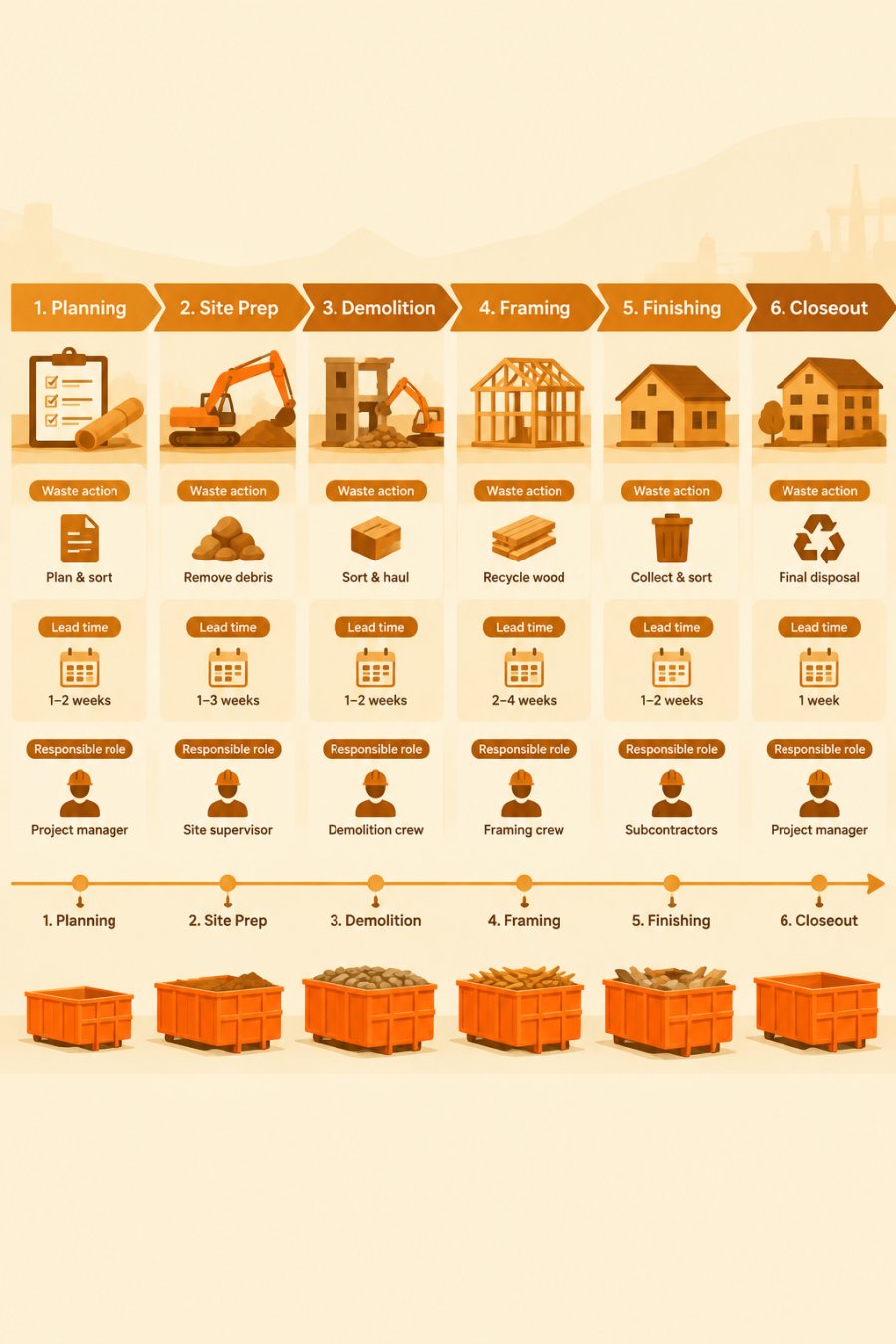
| Phase | Waste Action | Lead Time Before Phase Start | Owner | Contingency Buffer |
|---|---|---|---|---|
| Preconstruction | Set container spots, forecast volumes by material, book recurring service, confirm disposal facility acceptance | 2-4 weeks | Waste lead | One spare container in the plan; alternate pickup day held with hauler |
| Site prep and excavation | Stage spoil containers, schedule first hauls, confirm access for haul trucks | 1-2 weeks | Superintendent | Extra spoil container on call; haul route alternate if weather closes access |
| Demolition | Sort debris at source, run frequent swaps around heavy tear-out days | 1 week | Demolition crew lead | Second container staged; swap frequency increased first before adding containers |
| Framing | Clear offcuts daily, keep staging open, haul as containers fill | 3-5 days | Foremen | Daily walkthrough; pickup moved up if container hits 80% capacity |
| Finishing | Separate packaging and scraps, protect clean areas, fewer pickups with tighter sorting | 3-5 days | Finishing lead | Contamination check before each haul; re-sort before pickup if mixed |
| Closeout | Final sweep, verify diversion records, one final haul plus walkthrough | 1 week | Waste lead | Final haul booked with 48-hour buffer; diversion records reconciled before demobilization |
Lead Times and Contingency Planning
Book service before you need it. Confirm recurring dates at the start of each phase and reconfirm before each scheduled pickup.
Keep one spare container in the plan for surprise debris. If a phase runs long, adjust pickup frequency first, before adding containers, extra containers eat staging space and add rental days.
Watch out: a contingency buffer that exists only in the project manager's head is not a buffer. Write the alternate pickup day and the spare container into the schedule so the crew knows what to do when the first plan slips.
Setting Construction Debris Removal Frequency by Phase
Construction debris removal frequency should match how fast each phase fills a container. Demolition and framing generate debris quickly, while finishing generates less but needs cleaner separation. One fixed weekly pickup rarely fits both ends of a project.
A working rule:
- Demolition: schedule swaps around the heaviest tear-out days
- Framing: clear offcuts at least daily, haul as containers fill
- Finishing: fewer pickups, tighter sorting
- Closeout: one final haul plus a walkthrough
Watch out: letting a container sit half full through a slow week feels harmless, but it eats staging space and invites mixed loads that cost more to sort later.
Building the Construction Waste Disposal Schedule and Tracking It Through Closeout
A construction waste disposal schedule works when it lives where the crew already looks: the daily plan, the site board, or the project tracker. Log every pickup, container swap, and diversion note as it happens. At closeout, that log becomes your proof of proper disposal and recycling.
Measurable Performance Indicators
Track a short list of measures and set acceptance targets before each phase starts:
- Pickup reliability: percentage of scheduled pickups that arrive on the agreed day.
- Waste per project area: containers hauled per 10,000 square feet of floor area, tracked by phase. Compare against the preconstruction forecast to review the volume estimate or sorting discipline.
- Diversion rate: percentage of waste diverted from landfill through recycling or reuse. Track by material stream (wood, metal, cardboard, concrete) so a single contaminated load does not hide a broader problem.
- Contamination rate: percentage of loads rejected or re-sorted at the facility. Even one rejected load can add a day of delay and a re-haul charge.
- Staging area hours lost: hours per week when crews cannot access staging because containers are full or misplaced. This is the most direct schedule-risk metric.
Roles, Ownership, and Escalation Workflow
Assign one waste lead per site who owns the tracker and the pickup calls. Superintendents flag full containers during the morning huddle. Subcontractors sort debris at the source and report unusual materials immediately. The hauler confirms each pickup and reports any rejection or delay the same day.
For compaction trials, this compaction trial acceptance sheet guide shows how to write measurable criteria that fit the same tracking discipline.
Booking Compaction Service Into Your Disposal Schedule
Compaction belongs in the schedule as a recurring service, not an emergency call. Junk Crusher's Dumpster Compaction service crushes dumpster waste on site and reduces how many hauls a project needs. If your plan calls for standard roll-offs instead, Dumpster Rental covers the containers themselves, so the rental dates line up with the phase schedule rather than being booked on the fly.
Fit compaction into the same rhythm as your pickups: schedule it before containers hit full, and confirm timing against your hauler terms. Before you forecast savings, check how a minimum haul commitment can delay them. Then plan rental days around sorting and pickup with this guide on how long to rent a dumpster.
Large projects punish waste plans built on habit. Build the timeline phase by phase, assign owners, and compact on a schedule. Junk Crusher's mobile dumpster compaction, dumpster rental, and on-site crushing cut haul frequency and keep staging areas clear. Get started with Junk Crusher and put your waste schedule to work.
Frequently Asked Questions
When should waste planning begin on a large construction project?
Start during preconstruction, before site preparation begins. That is when you size roll-off containers, forecast waste volume by phase, and write the construction site waste management plan into the project schedule. Waiting until demolition starts usually means rushed hauls, overloaded dumpsters, and schedule delays. A useful rule: if the waste task is not on the schedule before mobilization, it will show up later as a cost or a delay.
How often should construction debris be removed from a job site?
Construction debris removal frequency changes with the phase. Excavation and demolition generate the heaviest volume and often need daily or every-other-day service. Framing produces steady wood and packaging waste that typically supports two to three pickups per week. Finishing slows to weekly or on-call hauls. Set pickup frequency from the forecast volume, not habit, and revisit it at each phase change so containers never sit full while crews wait.
How can contractors estimate waste volumes before construction begins?
Estimate from the scope, not a guess. Break the project into phases, list the waste streams each phase produces, and multiply by the square footage or tonnage involved. Demolition and excavation usually dominate early volume, while framing and finishing produce lighter but bulkier debris. Build in a contingency margin for unusual waste. Then match container count and size to the peak phase rather than the average, so you are not renting extra dumpsters for the whole job.
How do you coordinate dumpster service with a construction schedule?
Treat hauling like any other trade. Put delivery, pickup, and compaction visits on the project schedule with named owners, confirm site access and staging areas before each delivery, and share the construction waste disposal schedule with every subcontractor. Confirm lead times with your hauler early, since container availability and truck routing can add days. On-site compaction between hauls cuts the number of pickups, which makes the schedule easier to hold when access is tight.


