
Industrial Waste Management Cost Reduction: 2026 Guide
Table of Contents
- Why Industrial Waste Management Costs Are Climbing
- Conducting a Waste Minimization Assessment for Your Facility
- Industrial Waste Compaction Benefits and ROI
- Optimizing Commercial Dumpster Hauling Frequency
- Lean Principles and Process Optimization for Waste Reduction
- Material Recovery and Recycling Rate Improvements
- Digital Tools and IoT Integration for Waste Tracking
- Ensuring Environmental Compliance While Reducing Costs
- Frequently Asked Questions
Last Updated: September 29, 2026
Why Industrial Waste Management Costs Are Climbing
Manufacturing facilities, construction sites, and distribution centers face a relentless pressure: waste disposal expenses keep rising while operational budgets stay flat. The culprit isn't always more waste, it's inefficiency embedded in how that waste moves through your facility.
Most operations treat waste like a necessary evil rather than a cost center worth optimizing. Hauling trucks arrive on a fixed schedule whether your dumpsters are full or half-empty. You pay for volume you're not using and for truck trips that haul mostly air. Over a year, that inefficiency compounds into thousands of dollars in unnecessary spending.
Industrial waste management cost reduction isn't about cutting corners or compromising safety, it's about matching your waste removal strategy to your actual waste generation patterns. Facilities that conduct a structured assessment typically find 20-40% in immediate savings just by adjusting hauling frequency and dumpster sizing.
Conducting a Waste Minimization Assessment for Your Facility
A waste minimization assessment is your foundation for identifying cost drivers.
Step 1: Map Your Waste Stream
Walk your facility and categorize every waste type: cardboard, metal scrap, construction debris, hazardous materials, food waste, packaging. Document where each originates and how frequently it accumulates. For a manufacturing plant, track waste from production lines, maintenance operations, and packaging stations separately.
Create a simple log: waste type, volume per week, current disposal method, and associated costs. Most facilities discover waste streams they weren't tracking.
Step 2: Identify Volume Reduction Opportunities
Once you map your waste stream, look for compression points. In construction, schedule material deliveries to reduce packaging waste. In manufacturing, identify process waste that could be eliminated through lean adjustments. In logistics, optimize pallet configurations to reduce cardboard and void fill.
Reducing volume at the source always costs less than paying to haul and dispose of it later.
Step 3: Calculate Current Disposal Costs and Tipping Fees
Pull your waste management invoices for the last 12 months and break down the costs: hauling fees, tipping fees, dumpster rental, and surcharges. If you're sending mixed waste to a landfill versus segregating recyclables, you're likely paying premium tipping fees on material that could be recovered at lower cost.
Calculate your cost per cubic yard of waste hauled as your baseline for measuring improvement.
Industrial Waste Compaction Benefits and ROI
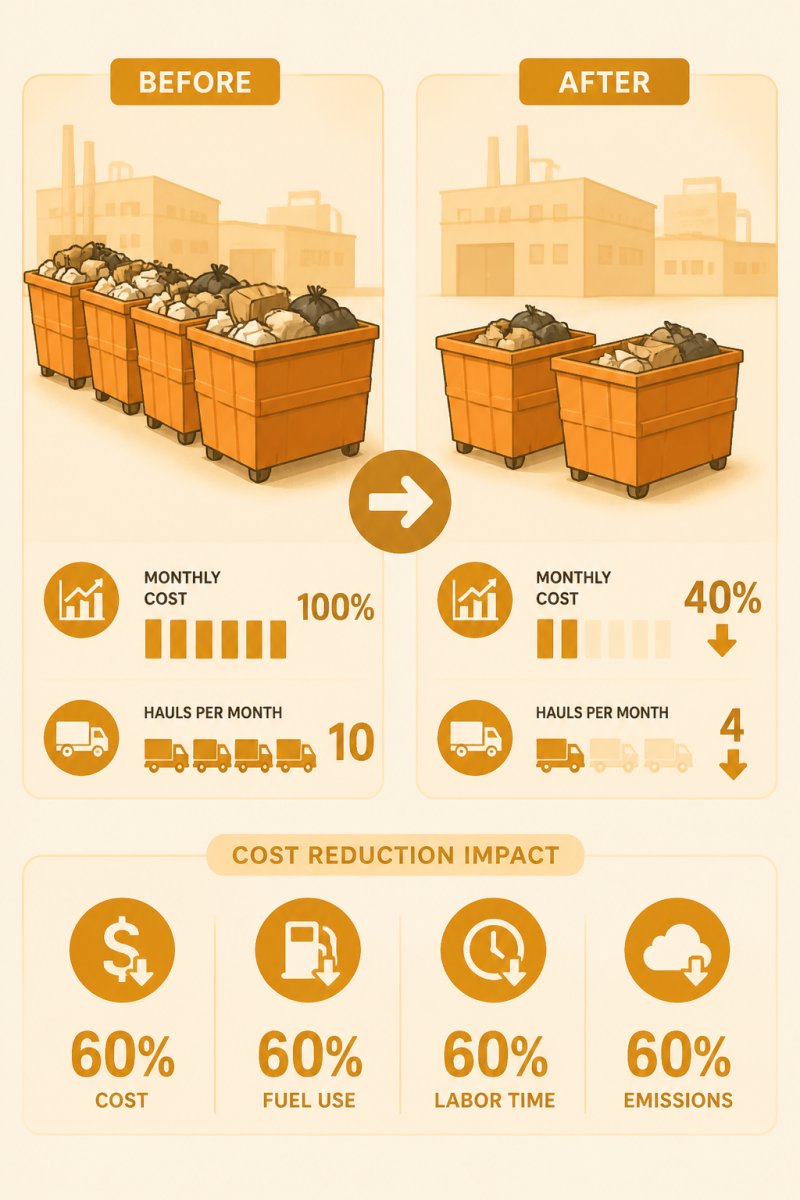
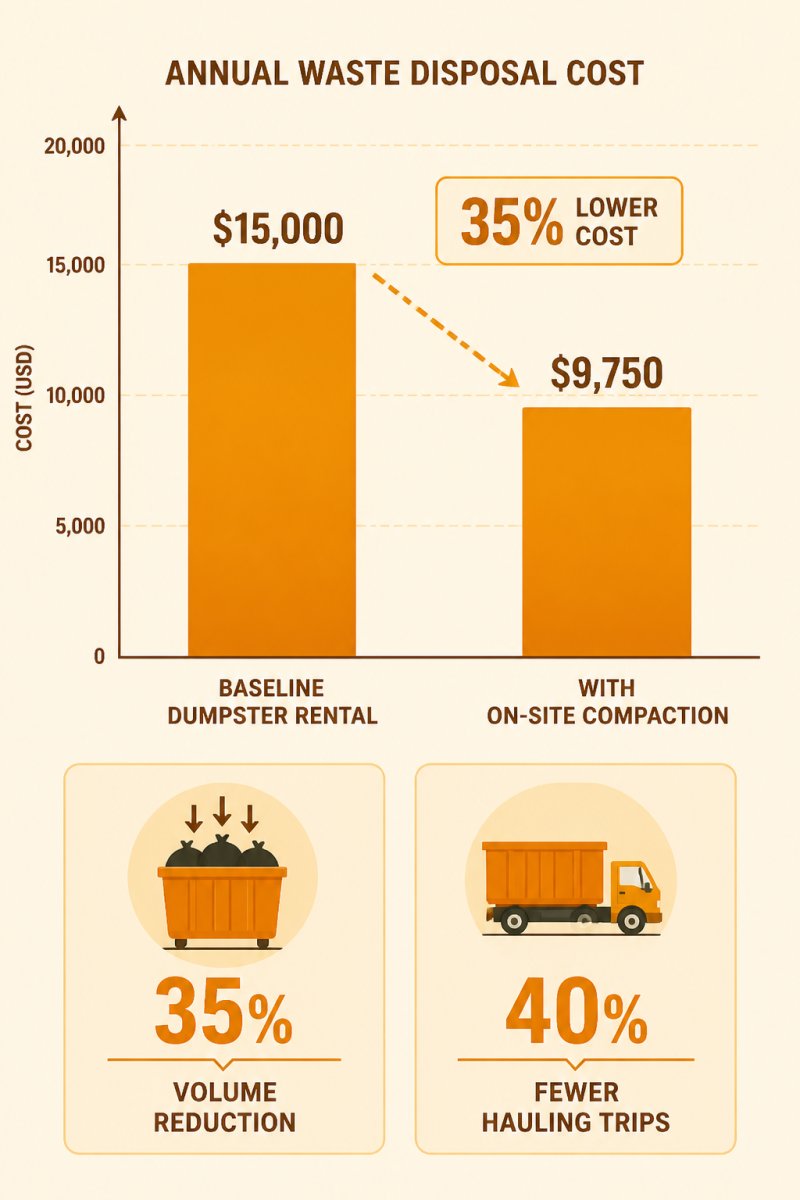
On-site waste compaction reduces the volume of waste in your dumpsters, allowing you to haul less frequently and eliminate the cost of paying for empty space.
How On-Site Compaction Reduces Hauling Frequency
A standard roll-off dumpster holds roughly 20-30 cubic yards of loose waste; with compaction, the same dumpster can hold 50-70 cubic yards of compressed material. This directly reduces hauling frequency. If you currently need three pickups per week, compaction might bring that down to two, eliminating one truck trip, one tipping fee, and freeing yard space.
Compacted waste takes up less space on your site, freeing room for equipment and material staging.
Calculating Your Return on Investment
To evaluate industrial waste compaction benefits and ROI, compare your current annual waste disposal cost against the investment required for on-site compaction service. Most operations see payback with ongoing savings accumulating year after year.
Optimizing Commercial Dumpster Hauling Frequency
Your hauling schedule should match your waste generation, not your vendor's convenience.
Right-Sizing Your Dumpster Capacity
Many facilities rent dumpsters that are too large for their actual waste generation. Audit your waste generation over a full operational cycle to right-size capacity. Over-sizing costs money; under-sizing creates operational friction.
For facilities with variable waste, consider multiple smaller dumpsters on different schedules to match capacity to actual demand.
Understanding Waste Hauling Contract Structure
Most waste management contracts bundle three distinct cost components, and understanding each one is essential to negotiation:
Dumpster rental fees are charged per month per container, regardless of pickup frequency. This is a fixed cost that doesn't change based on your waste volume.
Hauling or pickup fees are charged per trip and vary by distance and truck type. Frequency optimization delivers immediate savings: reducing pickups from three per week to two eliminates significant hauling charges.
Tipping fees are per-ton charges assessed at the disposal facility and vary by waste type and destination. By reducing volume through compaction or source reduction, you lower total tipping fees.
Your invoice should itemize all three. If it doesn't, request a detailed breakdown.
Negotiating Hauling Schedules and Contracts
Document your actual waste generation. Before any conversation with your vendor, collect 4-6 weeks of data: dumpster fill level at each scheduled pickup, actual waste volume, and any pickups where the dumpster was less than 75% full. This data is your negotiating foundation. It shifts the conversation from "we want cheaper service" to "here's the actual demand; what's the right schedule and price?"
Timing Your Renegotiation
Contract renewal is your leverage point. Most waste management contracts renew annually. Begin renegotiation 60-90 days before renewal, giving yourself time to solicit competing bids if needed. The threat of switching vendors, backed by documented waste data and a competing quote, is your most powerful negotiating tool.
Lean Principles and Process Optimization for Waste Reduction
Waste reduction at the source outperforms any hauling optimization. Lean manufacturing principles apply directly to waste management.
Applying Six Sigma to Waste Generation
Six Sigma methodology identifies process variation and eliminates waste. In waste management, this means analyzing where waste is generated and why.
Employee Training and Culture Change
Your team generates the waste. Without buy-in and training, even the best optimization strategy fails.
Material Recovery and Recycling Rate Improvements
Not all waste is landfill-bound. Material recovery and recycling reduce both disposal costs and environmental impact.
Digital Tools and IoT Integration for Waste Tracking
Modern waste management relies on data. Digital tools and IoT sensors transform waste from an invisible cost into a measurable, optimizable metric.
Ensuring Environmental Compliance While Reducing Costs
Waste reduction and regulatory compliance aren't in conflict, they align.
Frequently Asked Questions
How can industrial waste compaction actually reduce my hauling costs?
On-site compaction crushes waste volume by up to 70%, meaning fewer truck trips are needed to haul the same amount of material. Fewer hauls directly lower your hauling fees and tipping fees. For facilities generating 5-10 loads per week, compaction can reduce that to 2-3 loads, cutting disposal costs significantly while freeing yard space and reducing operational downtime.
What should I include in a waste minimization assessment?
A waste minimization assessment maps your entire waste stream: types of waste generated, volumes per day or week, current disposal methods, and associated costs including hauling and tipping fees. Document where waste originates in your process, identify which streams are recyclable or hazardous, and calculate the cost of each. This baseline reveals which waste reduction efforts will deliver the highest ROI and helps prioritize investments in process optimization or equipment.
How do I calculate the ROI of waste reduction investments?
Calculate current annual disposal costs (hauling plus tipping fees plus downtime). Then estimate savings from your chosen strategy: fewer hauls, reduced volume, or recycling revenue. Subtract the cost of the solution (equipment, labor, or service fees) from annual savings. For on-site compaction, most facilities see payback due to immediate reductions in hauling frequency and the elimination of paying to haul empty space.
What's the difference between reducing waste volume and reducing hauling frequency?
Volume reduction means generating less waste through process changes, material recovery, or lean manufacturing. Hauling frequency reduction means consolidating the waste you do generate so fewer truck trips are needed. Both lower costs, but they work differently. Volume reduction requires operational changes; frequency reduction through compaction is faster to implement and provides immediate savings while you work on longer-term waste minimization strategies.
How do I know if my commercial dumpster hauling schedule is optimized?
Review your past 12 months of hauls. If your dumpster is frequently picked up less than full, you're paying for empty space. If hauls are delayed and waste overflows, you need larger capacity or more frequent service. The optimal schedule matches your waste generation rate so dumpsters are full (or nearly full) at each pickup. Compaction allows you to fit more waste in the same dumpster, extending time between hauls without overflow risk.
Why are industrial waste management costs rising faster than other operational expenses?
Tipping fees at landfills and waste facilities increase annually due to environmental regulations, equipment maintenance, and land scarcity. Hauling costs rise with fuel prices and labor. Additionally, many facilities generate more waste than necessary through inefficient processes, paying for volume they could eliminate. Waste diversion requirements and hazardous waste handling add complexity and cost. Cost reduction strategies focus on reducing the volume you generate and the frequency you pay for hauls.
Can waste reduction strategies work for construction and demolition debris?
Yes. Construction sites generate high volumes of shingles, wood, metal, drywall, and concrete. On-site compaction reduces volume significantly, cutting the number of hauls needed. Material recovery (separating recyclables like metal and wood) lowers disposal costs and sometimes generates revenue. Waste audits identify which debris streams are recyclable versus requiring landfill disposal, allowing you to negotiate better rates and reduce overall hauling frequency.
What role does employee training play in waste cost reduction?
Employees generate waste daily. Training them to segregate recyclables, minimize packaging waste, and follow lean processes reduces waste generation at the source. When staff understand the cost impact of waste and how their actions affect hauling frequency, they become waste reduction advocates. Culture change around waste minimization often yields reductions in waste generation without capital investment, making it one of the fastest ROI strategies available.


