5 Ways Industrial Waste Compaction Lowers Fire Risk
Last Updated: November 16, 2026
Quick Summary
Waste compaction fire risk is lower when combustible material is pressed into dense blocks, because compaction limits the exposed surface area and air gaps where fires start. The benefit depends on what goes into the compactor, since batteries, oily rags, hot ashes and reactive chemicals can ignite or worsen fires under pressure.
- Fires usually start where combustible material is exposed to air and heat.
- Keep batteries, especially lithium-ion, out of the compactor and route them to a certified recycler.
- Screen incoming loads for steam, heat or a burnt odor before compacting.
- Keep compactors and dumpsters at least 10 feet from structures and ignition sources, verifying local fire codes.
- If a fire is suspected, stop the compactor, do not open the container, evacuate and call emergency services.
Table of Contents
- How Compaction Reduces Exposed Combustible Waste
- Industrial Dumpster Fire Prevention Checklist for Compacted Waste
- Where Compaction Can Increase Fire Risk and What to Do About It
- Frequently Asked Questions
How Compaction Reduces Exposed Combustible Waste
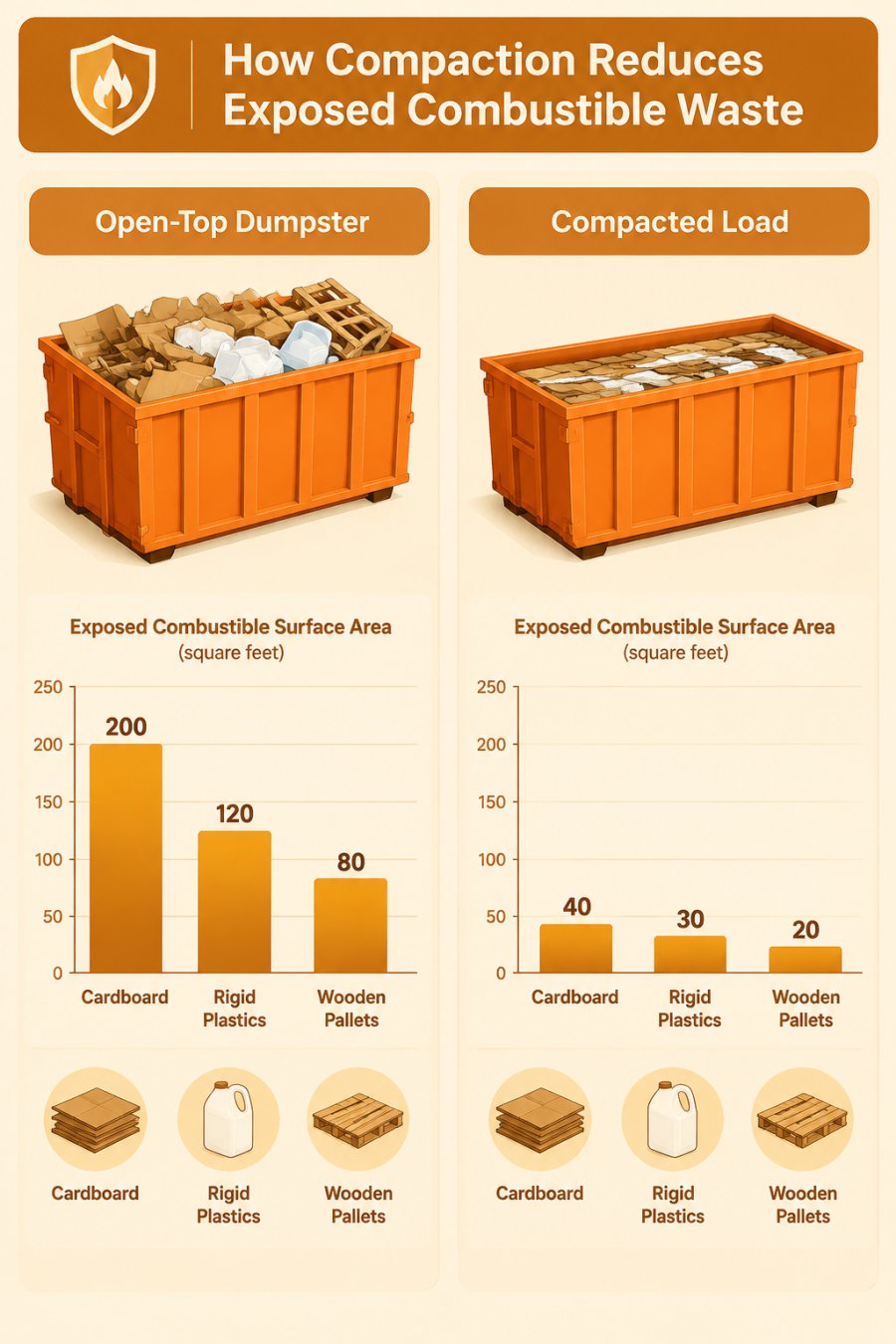
Fires in dumpsters usually start where combustible material sits exposed to air and heat, which is why waste compaction fire risk is a concern for many facilities. Loose cardboard, rigid plastics and wooden pallets leave surface area and gaps for oxygen.
Industrial Dumpster Fire Prevention Checklist for Compacted Waste
Good housekeeping and inspection remain essential alongside any compaction program. If you are getting quotes, guidance on comparing per-bin and per-visit pricing on equal terms is available.
Waste Stream Separation and Load Checks
- Separate reactive or heat-generating materials before compaction. Batteries (especially lithium-ion), oily rags, solvent-soaked absorbents, and unreacted chemical wastes can self-heat or ignite under pressure; keep these out of the compactor.
- Screen incoming loads for smoldering material. Watch for steam, heat, or a burnt odor; compacting a load with hot ashes can trap heat inside the dense block.
- Match compaction to the waste stream. Cardboard and rigid plastics compact well; wood and pallets can create voids that harbor heat.
Compactor and Container Placement
- Maintain clearance from structures and ignition sources. Keep compactors and dumpsters away from building walls, doorways, fuel storage, and hot-work areas; a common guideline is at least 10 feet, but verify local fire-code requirements.
- Provide emergency access. Keep fire lanes and access paths clear; do not block hydrants or sprinkler connections.
- Control ignition sources nearby. Prohibit smoking, hot work, and electrical equipment near waste containers.
Inspection and Maintenance
- Inspect the compactor regularly for damage, leaks, and hydraulic issues. A damaged unit can create sparks or heat; follow the manufacturer's maintenance schedule and document inspections.
- Check for waste buildup around the unit. Clean loose debris, spills, and pallets daily.
- Verify safety interlocks and emergency stops per the manufacturer's instructions.
Training and Emergency Response
- Train staff to recognize warning signs. Smoke, heat, odor, or unusual noises should be reported immediately.
- Establish an isolation procedure. If a fire is suspected, stop the compactor, do not open the container, evacuate, and contact emergency services; do not attempt to fight a deep-seated fire.
- Coordinate with your fire marshal and insurer and confirm expectations in writing.
For a deeper look at compaction costs and savings, see how much dumpster compaction saves, or test whether a mobile crusher pays off against your own volumes. If you want to compare quotes, our dumpster compaction service page explains what to ask for, and our dumpster rentals cover 20 and 25 yard options.
The checklist below groups the main fire-prevention steps by category, with the key action for each.
| Area | Key action | Note |
|---|---|---|
| Waste stream separation | Keep batteries, oily rags, solvent-soaked absorbents and unreacted chemicals out of the compactor | These can self-heat or ignite under pressure |
| Load screening | Watch for steam, heat or burnt odor before compacting | Hot ashes trapped in a dense block can ignite |
| Container placement | Keep compactors at least 10 feet from structures and ignition sources | Verify local fire-code requirements |
| Emergency access | Keep fire lanes and access paths clear | Do not block hydrants or sprinkler connections |
| Inspection | Inspect the compactor regularly for damage, leaks and hydraulic issues | Follow the manufacturer's maintenance schedule |
| Housekeeping | Clean loose debris, spills and pallets around the unit daily | Waste buildup around the unit adds fuel |
| Interlocks | Verify safety interlocks and emergency stops per manufacturer instructions | Document inspections |
| Isolation | Stop the compactor, do not open the container, evacuate and call emergency services | Do not attempt to fight a deep-seated fire |
Where Compaction Can Increase Fire Risk and What to Do About It
Compaction is not universally protective; under certain conditions it can create or worsen fire risk.
Heat-Generating and Reactive Materials
- Batteries, especially lithium-ion. Damaged batteries can short-circuit and ignite under pressure. Keep batteries out of the compactor and route them to a certified recycler.
- Oily rags and solvent-soaked absorbents. These can self-heat through oxidation, and compaction can concentrate heat. Store separately in approved containers.
- Hot ashes or smoldering material. Embers trapped in a dense block can smolder and ignite surrounding material. Screen loads for heat and odor.
Waste-Stream-Specific Guidance
- Cardboard and paper. Generally safe to compact; keep dry to prevent mold and spontaneous heating.
- Plastics. Most rigid plastics compact well, but avoid plastics that contacted flammable liquids.
- Wood and pallets. Compaction can create voids that harbor heat; ensure no hot work debris is present.
Compactor-Specific Risks
- Hydraulic leaks and overheating. A malfunctioning compactor can generate heat or sparks; regular maintenance is critical.
- Improper operation. Overloading or bypassing safety interlocks creates hazards; train operators thoroughly.
What to Do
- Implement a waste acceptance and screening process and train staff to reject hazardous materials.
- Segregate at the source with clearly labeled containers.
- Consult your waste provider and fire marshal and verify local requirements in writing.
- Monitor compacted loads. If a load is suspected of containing hot material, isolate it and monitor for heat or smoke.
Before choosing an approach, talk with your waste provider and your local fire marshal about the requirements that apply to your site. If you want to compare quotes, our dumpster compaction service page explains what to ask for, and our dumpster rentals cover 20 and 25 yard options.
Compaction lowers fire risk by reducing exposed combustible waste and airflow, but it works best with good housekeeping and regular equipment checks. Junk Crusher can help your facility assess its waste volume and compaction options. Book a crush to see what mobile compaction could mean for your yard.
Frequently Asked Questions
Does compacting industrial waste reduce fire risks?
Compacting can reduce fire risk for dry combustible waste such as cardboard, rigid plastics, and wooden pallets because it lowers the amount of exposed material and limits the air pockets that feed a fire. Manufacturers and compactor suppliers describe this benefit, but the effect depends on waste type, how the load is handled, and whether the compactor is maintained. Compaction is one control within a broader fire-prevention program, not a replacement for it. Operators should still separate ignition sources, keep combustible waste away from heat, and confirm requirements with their local fire marshal or insurer.
Can a waste compactor cause a fire?
A compactor can become a fire hazard if it holds hot ash, smoldering material, or lithium batteries, or if oil, dust, or debris builds up around the hydraulic and electrical components. Compaction packs material tightly, so a fire inside the load can be harder to detect and reach. Regular inspection, cleaning, and a clear policy on what can go into the unit lower this risk. Staff should know how to report smoke or heat at once and where the nearest extinguisher and shutoff are located.
What should workers do if a compactor or dumpster catches fire?
Workers should stay clear of the unit, call emergency services, and avoid opening the compactor or dumpster lid, because fresh air can intensify a fire. Shut down the compactor's power if it can be done safely from outside. Keep the area clear of vehicles and other waste containers. Report the incident to a supervisor and your insurer, and have the unit inspected before it returns to service. Training staff on this sequence before an event happens makes the response faster and safer.


