Roll-Off Dumpster vs Permanent Container: Which to Choose
Last Updated: November 18, 2026
Quick Summary
A roll-off dumpster is a temporary, open-top container hauled away when your project ends, while a permanent container is a front-load unit that stays on site and is emptied on a set schedule. Choose a roll-off dumpster for one-time cleanouts and renovation debris, and a permanent container for steady waste streams.
- A roll-off dumpster typically holds 10-40 cubic yards; a permanent front-load container holds 2-8 cubic yards.
- Match the container to your waste stream, not your project's square footage.
- A 20-yard roll-off dumpster holds 20 cubic yards, and a 25-yard container is also available.
- Every roll-off rental includes a weight allowance, so ask about tonnage and overweight charges.
- On-site compaction can reduce roll-off volume by up to 70% and cut the number of hauls.
Table of Contents
- Roll-Off Dumpster vs Permanent Container: Key Differences
- Roll-Off Dumpster vs. Front-Load Dumpster: Matching Container to Waste Stream
- 20-Yard Dumpster Capacity and What It Holds
- Frequently Asked Questions
Roll-Off Dumpster vs Permanent Container: Key Differences
A roll-off dumpster is a temporary, open-top container hauled away when your project ends. A permanent container is a front-load unit that stays on site and gets emptied on a set schedule.
This is not a size decision, a roll-off dumpster and a permanent container solve two different problems.
| Factor | Roll-Off Dumpster | Permanent Front-Load Container |
|---|---|---|
| Typical capacity | 10-40 cubic yards | 2-8 cubic yards |
| Service model | Delivered, filled, hauled away | Scheduled collection, stays in place |
| Best for | One-time cleanouts, renovation and construction debris | Steady commercial and residential waste streams |
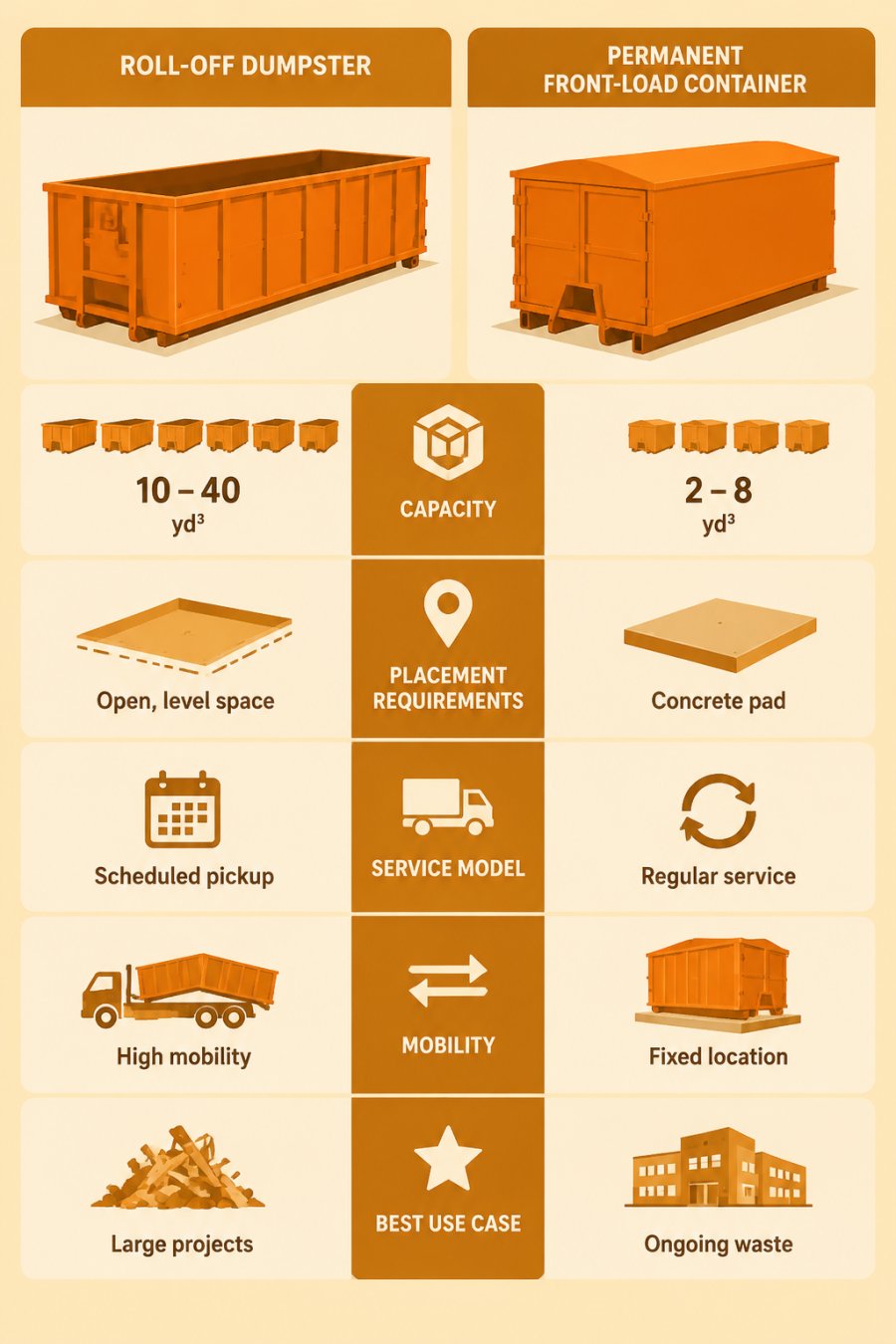
A permanent container handles a steady trickle of trash; a roll-off container handles a burst of demolition debris, shingles, concrete, or a garage cleanout. A roll-off container needs a clear path for the delivery truck and level ground, if your gate is narrow, check clearance before you book with our guide on whether a 20- or 25-yard dumpster fits through your gate.
Roll-Off Dumpster vs. Front-Load Dumpster: Matching Container to Waste Stream
Match the container to the waste stream, not the project's square footage.
First-time renters can read our walkthrough on understanding the quote and delivery plan. If your waste stream is steady but containers keep overflowing, compaction is often cheaper than adding a second container, covered in our comparison of compaction versus extra rentals.
20-Yard Dumpster Capacity and What It Holds
A 20-yard roll-off dumpster holds 20 cubic yards. A 25-yard container is also available.
Volume is only half the story: every roll-off rental includes a weight allowance, and heavy materials like concrete, brick, and shingles can hit that limit while the container looks half empty. Ask what tonnage is included and what the overweight charge is; our guide on dumpster weight limits for 20 and 25 yard renters explains how volume and weight interact. Our breakdown of what drives dumpster rental cost shows which line items to compare before you commit.
Choosing between a roll-off dumpster and a permanent container comes down to one question: is your waste a project or a habit? If it is a habit, the real savings come from fitting more waste into every haul. That is what our mobile on-site compaction service at Junk Crusher is designed for. It crushes dumpster waste where it sits, reducing roll-off volume by up to 70% and cutting the number of hauls your site needs. It is built for construction sites, distribution centers, and manufacturing facilities tired of paying to haul empty space. Book a Crush to see how many pickups you can take off your schedule.
Frequently Asked Questions
When should a business choose a roll-off dumpster over a permanent container?
A roll-off dumpster fits short-term, high-volume work such as construction, renovation, or demolition, where bulky debris builds up fast and the container leaves when the job ends. A permanent front-load container suits steady, predictable household or commercial trash that needs scheduled pickup. If your waste volume swings by project, the roll-off gives you capacity without a long-term service commitment, and pairing it with on-site compaction can stretch each haul further.
How much waste can a 20-yard roll-off dumpster hold?
A 20-yard roll-off holds 20 cubic yards of volume. Actual weight limits vary by hauler and material, so heavy items like concrete, brick, or shingles fill the container by weight well before volume. Confirm the weight allowance before loading dense construction and demolition waste, since overloading can trigger extra charges or a refused pickup.
Can a business use both a roll-off dumpster and a permanent container?
Yes, and many commercial sites do. A permanent front-load container handles routine office or breakroom trash on a scheduled route, while a roll-off sits on the job site for bulky construction debris or seasonal cleanouts. Keeping the two streams separate helps keep each container's waste type consistent. Match each container to the waste type it handles best.


