
Warehouse Waste Management Cost Benchmarks
Table of Contents
- Understanding Warehouse Waste Management Cost Benchmarks
- Waste Management Cost Per Ton: What You Should Know
- Dumpster Pickup Frequency and Its Impact on Expenses
- Waste Compaction for Warehouses: A Cost-Reduction Strategy
- Conducting a Waste Audit Checklist for Warehouses
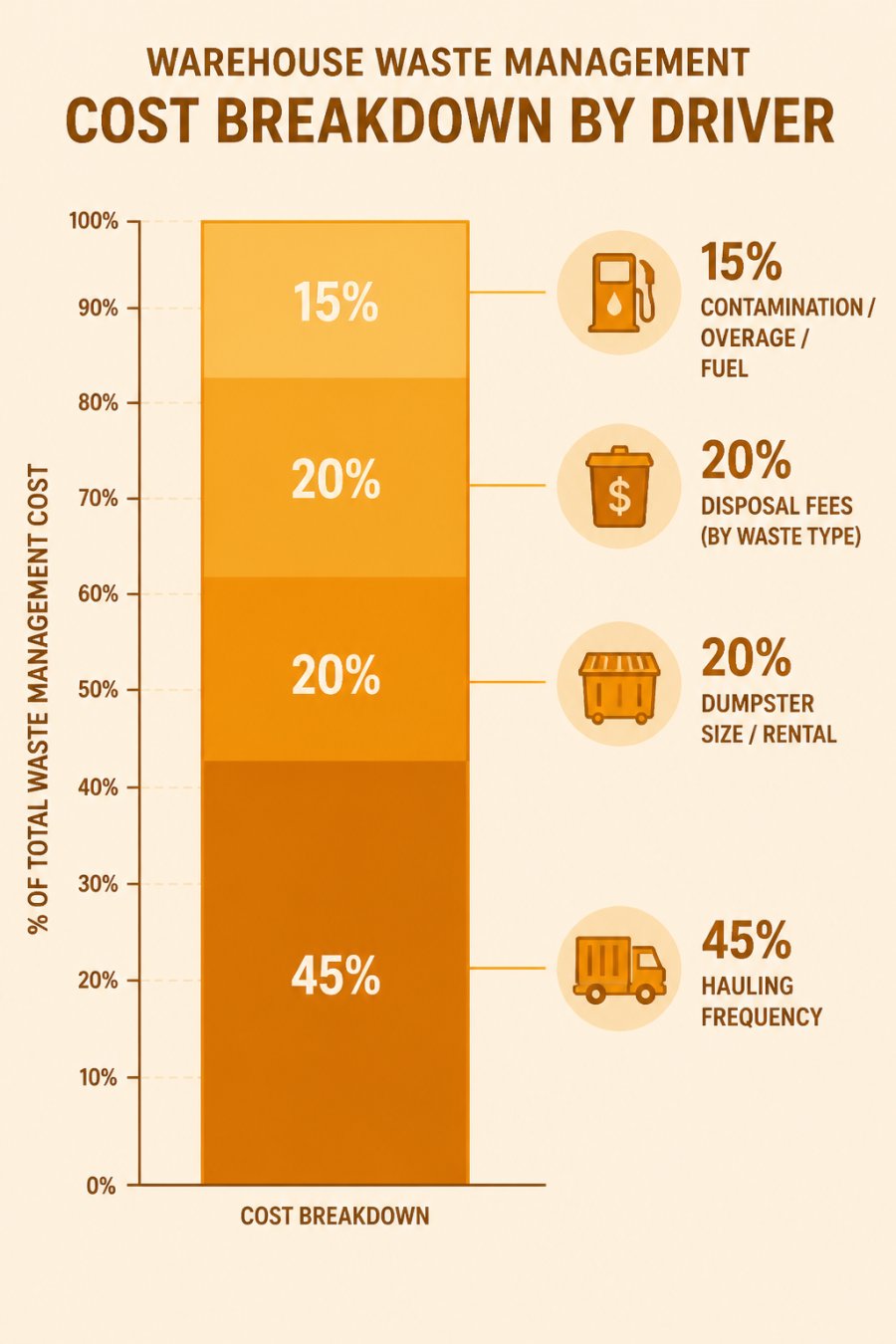
- Key Cost Drivers in Warehouse Waste Management
- Reducing Warehouse Waste Expenses: Practical Strategies
- Frequently Asked Questions
Last Updated: October 11, 2026
Understanding Warehouse Waste Management Cost Benchmarks
Warehouse waste management costs represent a significant operational expense many facilities overlook. Understanding warehouse waste management cost benchmarks helps operations managers and facility directors make informed decisions about waste disposal strategy. Junk Crusher works with manufacturing plants, distribution centers, and construction firms across Western Pennsylvania to identify where waste spending can be reduced without sacrificing operational efficiency.
Hidden charges, contamination fines, overage fees, fuel surcharges, and extra-trip penalties, often inflate invoices beyond base hauling costs. Understanding what drives these expenses lets you benchmark your spending against industry norms and identify which cost reduction strategies deliver the biggest return.
Waste Management Cost Per Ton: What You Should Know
Waste management cost per ton varies by waste type, disposal method, and region. However, per-ton pricing alone doesn't tell the full story, you need benchmarks tied to facility characteristics to compare fairly.
Warehouse-Specific Cost Benchmarks by Facility Size
- Small warehouses (5,000-15,000 sq ft): Generate 5-15 tons monthly. Per-pickup charges ($75-$150) often exceed per-ton disposal fees.
- Mid-size distribution centers (15,000-50,000 sq ft): Generate 15-50 tons monthly.
- Large fulfillment facilities (50,000+ sq ft): Generate 50-150+ tons monthly.
Transparent Cost Breakdown: What's Actually in Your Invoice
Your waste invoice typically contains four line items:
- Disposal/tipping fees: $25-$65 per ton. Cardboard and pallets cost less; mixed refuse and contaminated loads cost more.
- Per-haul transportation charge: $75-$200 per pickup, fixed regardless of dumpster fullness.
- Container rental: $15-$40 per month for a 20-yard dumpster; $20-$50 for a 25-yard.
- Contamination and overage fees: $50-$300+ per incident. A single contaminated load can spike your bill by 10-20%.
Cost Per Unit Comparisons for Benchmarking
Calculate your cost using these metrics:
- Cost per square foot:
- Cost per employee:
- Cost per ton generated: Your effective rate after all fees. Track monthly and benchmark against baseline.
- Cost per pickup:
How Waste Composition Affects Per-Ton Costs
Waste disposal costs vary by type:
- Cardboard and pallets: $15-$35 per ton.
- Mixed refuse: $40-$65 per ton.
- Stretch film and plastic: $50-$80 per ton.
- Food waste: $60-$100 per ton.
- Contaminated or hazardous waste: $150-$500+ per ton.
Segregating high-volume, low-cost streams from mixed refuse typically reduces blended per-ton cost by 15-25%.
Regional and Distance Variation
Proximity to disposal infrastructure impacts costs. Rural facilities often pay more due to limited disposal capacity. Account for this when benchmarking.
Dumpster Pickup Frequency and Its Impact on Expenses
Pickup frequency directly affects your total bill. More frequent pickups mean higher service charges; infrequent pickups require larger capacity to avoid overage fees. Optimal frequency depends on waste generation rate and yard space.
Consolidating waste streams and compacting materials before pickup reduces required frequency. Moving from weekly to every-10-days service saves approximately 4-5 pickup fees annually while maintaining operational flow.
Waste Compaction for Warehouses: A Cost-Reduction Strategy
Waste compaction addresses a major hidden cost: paying to haul empty space. Mobile on-site compaction reduces volume by up to 70 percent, meaning fewer pickups, lower per-haul charges, and reduced truck trips. Since most contracts charge by pickup, not weight, compaction often cuts dumpster fees by more than half. Fitting three weeks of material into one dumpster extends service intervals without sacrificing space.
Junk Crusher's mobile compaction service reduces roll-off dumpster volume by up to 70 percent, delivering fewer hauls, lower monthly expenses, and reduced environmental impact.
Conducting a Waste Audit Checklist for Warehouses
A waste audit creates a baseline for benchmarking and identifies cost reduction opportunities. Collect three months of invoices and document pickup frequency, dumpster size, and charges. Calculate average monthly cost and cost per pickup. Then measure actual waste volume and composition. Facilities often discover their waste composition doesn't match their service contract.
Document yard space constraints, loading dock operations, and pickup schedules. Note operational disruptions caused by waste management. Calculate waste generation rate in tons per month and cost per ton, then compare to industry benchmarks for your facility size and waste type.
Key Cost Drivers in Warehouse Waste Management
Several factors control your warehouse waste management cost. Understanding each helps you prioritize changes and benchmark against similar facilities.
1. Hauling Frequency (Typically 40-50% of Total Cost)
Each pickup carries a fixed service charge regardless of dumpster fullness. Shifting to less frequent service can lead to significant annual savings. Calculate optimal frequency by dividing monthly waste volume (cubic yards) by dumpster capacity, then multiply by 4.3 weeks.
2. Dumpster Size (Typically 15-25% of Total Cost)
Dumpster rental cost and the frequency required both depend on container size. Right-sizing requires accurate volume data.
- We offer 20 and 25 yard dumpsters, and their rental costs vary.
- An undersized dumpster (one that reaches capacity in 3-4 days) forces more frequent pickups, inflating per-haul charges and creating operational bottlenecks.
- An oversized dumpster (one that's 40-50% empty at pickup) wastes money on unused capacity and inflates your monthly rental cost.
- To right-size: measure your actual waste volume over two weeks, then select a dumpster that reaches 75-85% capacity at your target pickup interval. For a facility generating 12 cubic yards per week with weekly pickups, a 20-yard dumpster is appropriate; a 30-yard is oversized.
3. Waste Composition (Typically 20-30% of Total Cost)
What you throw away determines disposal fees. Segregating waste streams can reduce your blended disposal cost significantly.
- Cardboard and pallets (low-cost streams): $15-$35 per ton. If these represent 40-60% of your volume, segregating them can reduce your blended rate by 10-20%.
- Mixed refuse (standard rate): $40-$65 per ton.
- Stretch film and plastic (high-cost streams): $50-$80 per ton. These are often landfilled because recycling infrastructure is limited.
- Contaminated waste (premium cost): $150-$500+ per ton. A single contaminated load can cost $200-$500 in disposal fees plus fines.
Facilities that implement source separation (separate dumpsters for cardboard, pallets, and mixed refuse) typically reduce their effective per-ton disposal cost by 15-25% without reducing total waste volume.
4. Distance to Disposal Facility (Typically 10-20% of Total Cost)
Per-mile hauling charges are built into your service fee. Geography directly impacts your cost.
- A facility closer to a landfill or processing facility typically pays less per pickup.
- A facility further away pays more per pickup for the same dumpster size and waste type.
- Rural facilities often pay more per ton than urban facilities due to longer haul distances.
When benchmarking your costs, always account for your proximity to disposal infrastructure. A facility 50 miles from the nearest landfill cannot fairly compare its per-ton cost to one 10 miles away.
5. Contamination and Overage Charges (Typically 5-15% of Total Cost, but Highly Variable)
These are hidden cost multipliers that can spike a single month's bill by 20-50%.
- Contamination fines: $50-$300+ per load. Common causes include hazardous materials in general waste, food waste in cardboard dumpsters, or liquids in dry-waste containers. A single contaminated load can exceed the cost of a normal pickup.
- Overage fees: $50-$150+ per incident. Overfilled dumpsters may be refused for pickup or charged an additional fee. This also creates safety hazards and operational delays.
- Fuel surcharges: $10-$30 per pickup, depending on diesel prices. These are often passed through directly to customers and fluctuate monthly.
Prevention is far cheaper than remediation. Staff training on what can and cannot go in each dumpster typically prevents 80-90% of contamination incidents.
Measuring Your Cost Drivers: A Benchmarking Framework
To identify which cost drivers are inflating your bill, collect three months of invoices and calculate:
- Total monthly cost ÷ number of pickups = cost per haul (should be $75-$200 for a 20-yard dumpster).
- Total monthly cost ÷ tons generated = effective cost per ton (should be $50-$85 for mid-size facilities).
- Total monthly cost ÷ facility square footage = cost per sq ft (should be $0.05-$0.15 for warehouses).
- Contamination and overage charges ÷ total cost = % of bill from preventable fees (should be less than 5%).
Compare each metric to the benchmarks above for your facility size. Gaps larger than 20% indicate a specific cost driver that's inflating your bill. For example:
- If your cost per haul is 40% above the range, you're either paying premium rates or using an oversized dumpster.
- If your cost per ton is 30% above the range, your waste composition may include high-cost streams (contaminated or hazardous material) that should be segregated.
- If contamination fees exceed 10% of your bill, staff training and process changes will deliver immediate ROI.
Reducing Warehouse Waste Expenses: Practical Strategies
Reducing warehouse waste expenses requires a combination of operational changes and service optimization. The most effective strategies address multiple cost drivers simultaneously.
Consolidate pickups. Review your current schedule and waste generation data. Many facilities can shift from weekly to every-10-days or every-two-weeks service without operational impact. This single change often saves 20-30 percent annually.
Right-size your dumpster. Match container size to your actual volume, not your peak volume. A 20-yard dumpster that reaches capacity in six days is better than a 30-yard dumpster that's half-full at pickup.
Implement waste compaction. On-site compaction reduces volume by up to 70 percent, which extends service intervals and cuts hauling frequency. For high-volume waste streams, this delivers the fastest ROI.
Segregate recyclables and hazardous waste. Mixed waste disposal costs more than separated streams. Cardboard, pallets, and metals often have resale or lower-cost processing paths.
Negotiate based on data. Armed with three months of invoices and accurate volume measurements, you can shop your waste contract to competing haulers. Most facilities find they can reduce rates by 15-25 percent through competitive bidding.
Monitor contamination. Train staff on what can and cannot go in each dumpster. A single contaminated load can cost hundreds in fines, prevention is far cheaper than remediation.
Reducing your warehouse waste management costs starts with understanding what you're currently paying and why. Most facilities discover they're overspending through some combination of oversized dumpsters, excessive pickup frequency, or hidden contamination and overage charges. By conducting a waste audit, benchmarking your costs against industry standards, and implementing targeted cost-reduction strategies, you can typically cut waste expenses without sacrificing operational efficiency.
Junk Crusher helps warehouses, distribution centers, and manufacturing facilities across Western Pennsylvania optimize their waste management through mobile on-site compaction. Our service reduces roll-off dumpster volume by up to 70 percent, which means fewer required hauls, lower monthly dumpster fees, and a reduced carbon footprint. If you're generating consistent high-volume waste and looking to improve both your bottom line and your environmental impact, Book a Crush to see how compaction can transform your waste management economics.
Frequently Asked Questions
What factors affect warehouse waste management costs?
Warehouse waste management costs depend on waste volume, disposal method (landfill vs. recycling), pickup frequency, facility size, and waste stream composition. Contamination fines, fuel surcharges, and overage fees also contribute significantly. Regional disposal rates and hauler competition influence pricing. Facilities that track these variables can identify cost-reduction opportunities and negotiate better service terms with waste providers.
How can waste compaction for warehouses reduce my total expenses?
Waste compaction reduces the volume of material in dumpsters by up to 70%, which directly lowers hauling frequency and disposal fees. Fewer pickups mean reduced labor disruption, lower fuel surcharges, and decreased environmental impact. By compacting waste on-site, warehouses eliminate paying for hauling empty space and can extend time between collections, improving operational flow and profitability.
What should I include in a waste audit checklist for warehouses?
A waste audit should document current waste streams by type (cardboard, plastics, pallets, hazardous materials), measure volume and weight, review invoices for all charges, identify contamination issues, and track pickup frequency. Record facility size, operational hours, and peak waste-generation periods. Compare your baseline against industry standards and peer facilities. This data reveals inefficiencies and justifies investments in waste reduction or compaction technologies.
How do I calculate waste management cost per ton for my warehouse?
Divide your total annual waste management expenses (hauling, disposal, fees, surcharges) by the total tons of waste disposed annually. This metric allows comparison across facilities and time periods. Track costs separately for different waste streams (recyclables, landfill, hazardous) to identify which streams drive the highest expenses. Benchmarking cost per ton against similar-size warehouses reveals negotiation leverage and improvement priorities.


