
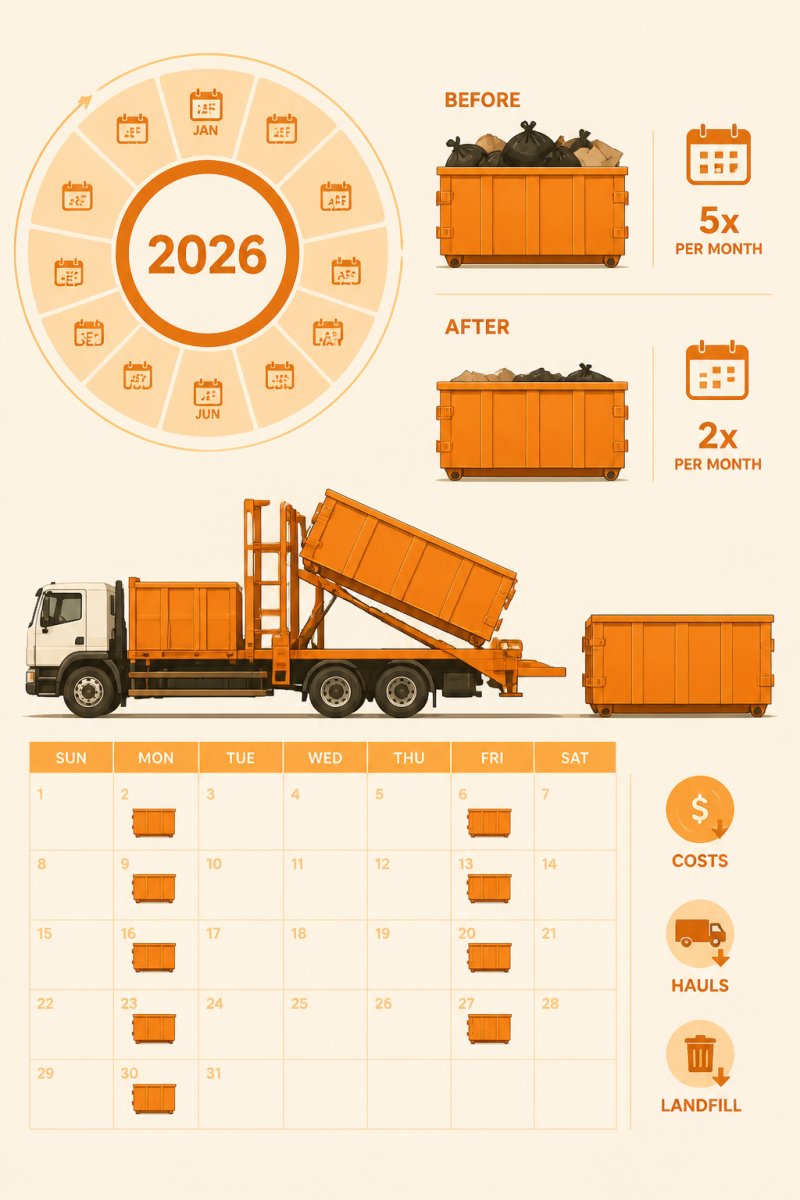
Service Schedule for Mobile Waste Compaction: 2026 Guide
Table of Contents
- What You'll Need Before You Build a Compaction Schedule
- How Mobile Waste Compaction Works On Site
- Step 1: Run a Waste Audit to Size Your Service Interval
- Step 2: Match On-Demand vs. Recurring Service to Your Waste Stream
- Step 3: Calculate Dumpster Hauling Frequency Reduction
- Step 4: Integrate Compaction With Your Existing Hauler
- Step 5: Lock In Commercial Waste Management Efficiency
- Best Smash My Trash Alternatives for Scheduled Compaction
- Frequently Asked Questions
Last Updated: September 20, 2026
What You'll Need Before You Build a Compaction Schedule
A service schedule for mobile waste compaction is a written plan that sets when a compaction truck visits each site, how long it stays, and which dumpsters get crushed. Get it right and you stop paying to haul air.
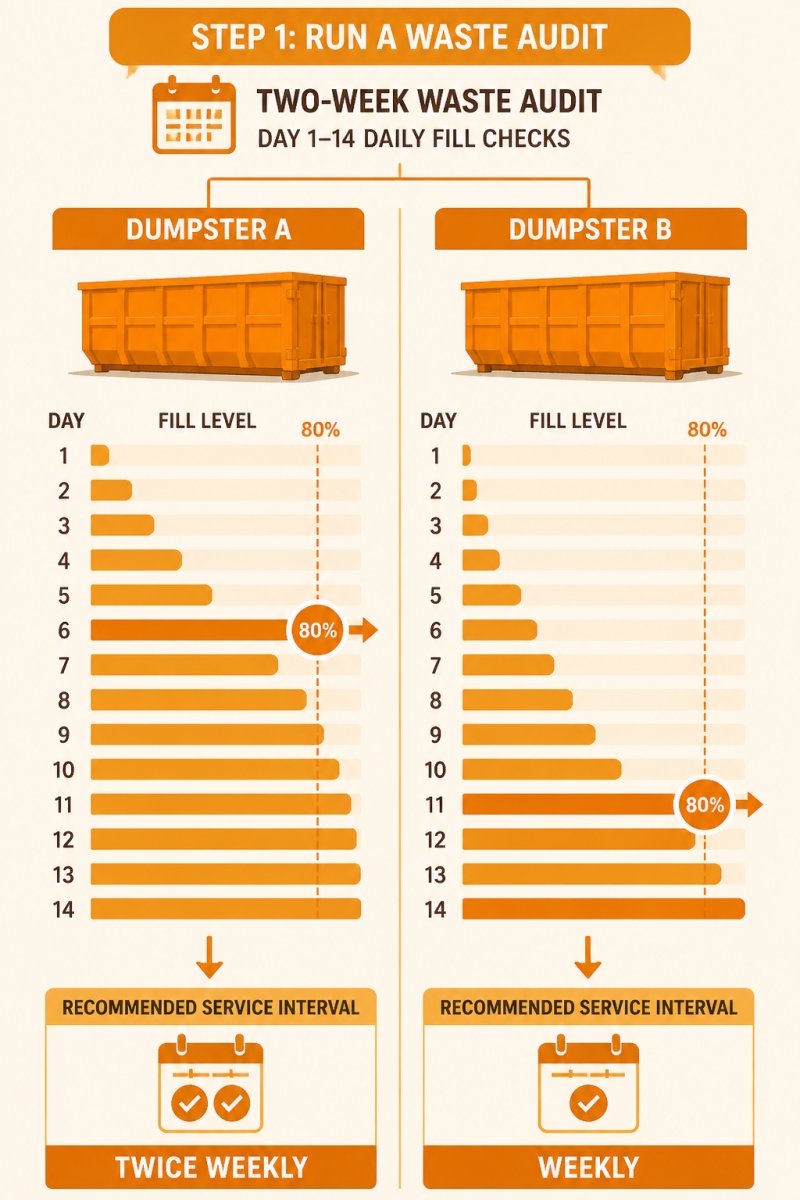
- A waste audit covering at least two weeks of normal operations
- Dumpster inventory with sizes, locations, and current fill rates
- Your hauler contract, including pickup frequency and disposal fees
- Site access notes on gate widths, turning room, and overhead clearance
How Mobile Waste Compaction Works On Site
Mobile waste compaction is the process of crushing dumpster contents on site with a purpose-built vehicle, which reduces waste volume so each container holds more material before it needs hauling.
The Compaction Cycle, Start to Finish
A single compaction cycle typically runs in this order:
- Position the truck beside the dumpster and confirm clearance
- Lower the compaction head into the container
- Press the load down in repeated passes
- Repeat across every dumpster on the route
- Log the visit and note any container damage
Most stops take only a few minutes per dumpster, so production and loading schedules rarely need to shift around the visit.
Step 1: Run a Waste Audit to Size Your Service Interval
Look at what you're throwing away, too:
- Heavy debris like shingles, pallets, and cardboard compacts well
- Bulky items like furniture or foam need different handling
- Wet or loose material can shift weight limits even after crushing
Step 2: Match On-Demand vs. Recurring Service to Your Waste Stream
On-demand service works best for sites with unpredictable debris, while recurring service fits operations with steady, high-volume waste.
Here's the trade-off in plain terms:
| Service Model | Best For | Scheduling Basis | Main Drawback |
|---|---|---|---|
| On-demand | Demolition, one-off cleanouts | You call when full | Short notice may delay a visit |
| Recurring | Manufacturing, warehouses | Fixed weekly or biweekly slot | You pay for visits even in slow weeks |
| Hybrid | Mixed sites, multiple locations | Recurring base plus call-ins | Needs active coordination |
Step 3: Calculate Dumpster Hauling Frequency Reduction
Hauling frequency reduction is the drop in the number of times your dumpster gets pulled and emptied, and it's the number that drives your savings. Most guides stop at "compaction saves money" without showing you how to prove it for your own site. Here's a framework you can run in about ten minutes.
The Core Formula
The math is simple. If a dumpster fills in five days at current volume, and compaction cuts that volume by a meaningful factor, the same container now lasts proportionally longer. Hauls drop from weekly to every two to three weeks.
Run the numbers on your own site:
- Count current hauls per month per dumpster
- Estimate the volume reduction compaction delivers on your waste type
- Divide hauls by that reduction factor
- Multiply the new haul count by your per-haul disposal fee
That last figure is your monthly saving.
Worked Example: A Manufacturing Plant
Suppose a plant has four 30-yard roll-offs, each pulled once a week, 16 hauls per month. The waste stream is mixed cardboard, pallets, and shrink wrap, which compacts well. A common pattern is 50-70% volume reduction on this type of material.
Adjusting for Your Waste Type
Not every stream compacts the same. Use these rough ranges as a starting point, then refine with your own audit data:
| Waste Type | Typical Volume Reduction | Notes |
|---|---|---|
| Cardboard, pallets, shrink wrap | 50-70% | Compacts well; watch weight caps |
| Mixed construction debris | 40-60% | Depends on ratio of wood to drywall |
| Shingles, concrete chunks | 20-40% | Heavy; tonnage limits hit fast |
| Furniture, foam, bulky items | 30-50% | Irregular shapes reduce efficiency |
| Wet or loose material | 10-30% | Weight shifts; unpredictable |
The Weight-Limit Trap
Volume reduction and weight reduction are not the same thing. A dumpster that looks half full after compaction can already be at its tonnage cap. If your hauler charges overweight fees, a densely packed container can cost more to haul than two lighter ones. Always check the tonnage rating on your container and compare it to the actual weight of a compacted load before you lock in a schedule.
A Simple ROI Check
Once you have your monthly haul reduction, compare it to the cost of the compaction service itself. If the service costs less than the disposal savings, the schedule pays for itself. If it doesn't, either your waste stream doesn't compact well enough or your service interval is too frequent. Adjust the interval first, that's the lever with the most impact.
Step 4: Integrate Compaction With Your Existing Hauler
You don't have to fire your hauler to add compaction. In most cases, you shouldn't. The two services solve different problems: your hauler moves material off site, and compaction reduces how often that needs to happen. Most haulers are fine with this because it means fewer trips for the same account, but the integration has to be deliberate.
Sequence Crushes Before Pickups
The single most important rule: compaction visits must happen before hauler pickups, not after. If a hauler pulls a container that hasn't been crushed, you've paid for a haul that could have waited. If a hauler arrives and the container is already at its weight cap from a recent crush, you may trigger an overweight fee.
Read the Contract Before You Cut Frequency
Check your hauler agreement for minimum pickup clauses before you reduce service. Some contracts set a floor on monthly pulls, and going below it can trigger a fee or force a renegotiation. Look for:
- Minimum monthly pulls, the most common restriction
- Fuel surcharges, often tied to haul frequency, not volume
- Container rental fees, some haulers charge monthly regardless of use
- Termination or modification notice, typically 30-90 days
Coordinate Site Access
Both the compaction truck and the hauler need to reach the same containers. If your site has tight gates, low overhead clearance, or limited turning room, share those constraints with both parties in writing. A compaction truck that can't reach a dumpster is a wasted visit, and a hauler that can't get in will charge a dry run.
Handle Liability and Damage
Compaction puts stress on containers. Dumpsters that are already dented, rusted, or past their service life can fail under the compaction head. Before you start a schedule, inspect each container and document its condition. If a container is damaged during compaction, you need to know whether it was pre-existing or caused by the service.
Review Quarterly
Hauler contracts, disposal fees, and waste streams change. Review the combined schedule every quarter with both your hauler and your compaction provider. If your hauler raises rates or changes pickup windows, your compaction schedule may need to shift with it. The goal is a single coordinated rhythm, not two schedules that happen to coexist.
Step 5: Lock In Commercial Waste Management Efficiency
Commercial waste management efficiency comes down to three things working together: the right container size, the right compaction interval, and the right pickup frequency.
Nail all three and you get:
- Fewer trucks on site, which means less yard congestion
- Less loading downtime waiting on empty containers
- Lower carbon footprint from fewer hauling trips
- Predictable monthly waste costs instead of spikes
Best Smash My Trash Alternatives for Scheduled Compaction
If you're comparing mobile compaction providers, the best Smash My Trash alternatives are services built around scheduled, on-site crushing with clear reporting.
Here's how the main options stack up:
| Provider | Service Model | Scheduling | Best For |
|---|---|---|---|
| Junk Crusher | Mobile on-site compaction | Custom recurring or on-demand | Construction, manufacturing, warehouses |
| MashedCo | Mobile compaction, per-mash fee | Customized commercial schedules | Budget-focused waste programs |
| WM Compactor Services | Stationary and mobile-compatible | Contract-based | Large industrial sites |
| Gradeall | Maintenance and service guides | Planned maintenance cycles | Facilities with owned equipment |
| HD Outdoor Facilities | Smart waste ROI consulting | Consultation-based | Facilities planning a waste upgrade |
Frequently Asked Questions
How often should mobile waste compaction services visit a commercial site?
Visit frequency depends on how fast your dumpsters fill. A roofing crew generating heavy shingle debris may need service two or three times a week, while a distribution center with mostly cardboard might schedule weekly or biweekly visits. Start with a waste audit to measure daily volume, then adjust the service interval after the first month. Because mobile waste compaction reduces dumpster volume by up to 70%, most sites find they can stretch the gap between visits without overflowing.
Can a compaction schedule reduce my dumpster hauling frequency reduction costs?
Yes. When waste is crushed on site, each roll-off dumpster holds far more material, so fewer hauls are needed to move the same tonnage. Junk Crusher reports up to a 56% reduction in dumpster fees and up to 70% volume reduction. Pair that with a service interval matched to your actual fill rate, and you stop paying to haul empty air. Review your hauler invoices quarterly to confirm the savings hold as your waste stream changes.
How do I coordinate mobile compaction with my existing waste hauler?
Keep your hauler for transport and add compaction as an on-site processing step. Tell your hauler the new pickup cadence so they do not arrive to half-empty containers, and confirm they can service the compacted weight. Most haulers adjust fine because heavier, fuller loads mean fewer stops for them too. Put the compaction schedule and haul schedule in one shared calendar so facility management, the hauler, and the compaction provider all work from the same dates.
What factors influence how often a mobile waste compaction service visits?
Four factors drive the service interval: waste volume per day, debris density (shingles and concrete pack tighter than cardboard), dumpster size, and site accessibility for the compaction truck. A 20-yard dumpster at a tight jobsite may need more frequent visits than a 25-yard unit with clear truck access. Seasonal spikes in construction or manufacturing output also shift the schedule. Recheck these factors each quarter so the service interval still matches real conditions.
Waste costs creep up quietly, one extra haul at a time, until they're a line item nobody wants to explain. Junk Crusher helps operations managers across Western Pennsylvania fix that with mobile on-site compaction that cuts roll-off volume by up to 70%, reduces hauling frequency, and works alongside your current hauler instead of replacing them. Book a crush with Junk Crusher and put your waste schedule on a footing you can actually forecast.
