
Reduce Carbon Footprint for Logistics Warehouses
Table of Contents
- Why Logistics Warehouses Are Under Pressure to Cut Emissions
- Industrial Waste Management Strategies That Cut Both Costs and Carbon
- The Benefits of On-Site Waste Compaction for Logistics Facilities
- Warehouse Energy Efficiency Best Practices: Lighting, HVAC, and Controls
- Route Optimization, Fleet Renewal, and Smarter Transportation Modes
- Retrofitting vs. New Construction: Where the Emissions Wins Actually Are
- Regulatory Compliance, Carbon Accounting, and Employee Culture
- Frequently Asked Questions
Last Updated: September 15, 2026
Why Logistics Warehouses Are Under Pressure to Cut Emissions
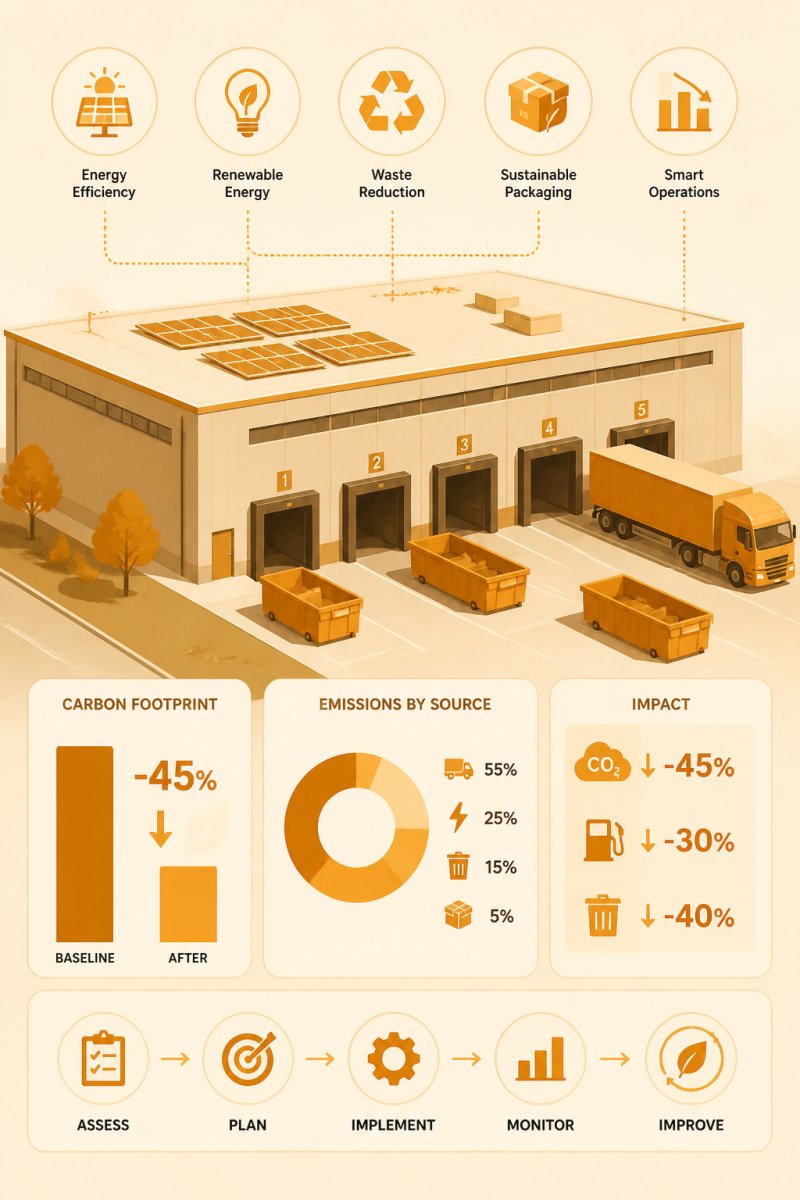
Warehouse operators are discovering that the cheapest ton of carbon is the one they never haul. To reduce carbon footprint for logistics warehouses, the highest-use moves are usually the least glamorous: compacting waste before it leaves the dock, switching to LED lighting, and tightening route density. This guide from Junk Crusher covers the operational changes that cut emissions and cost at the same time.
The pressure is real and it comes from several directions. Retailers and manufacturers are being asked by their customers to report supply chain emissions, and warehousing sits squarely inside that reporting boundary. Meanwhile, fuel and electricity costs keep climbing, which means every unnecessary truck trip and every oversized, half-empty dumpster shows up twice: once on the invoice, and once in the emissions inventory.
Most sustainability guides for logistics stay at the strategy level. Fewer explain what a facility manager can actually change this quarter. Below, we walk through the tactics that deliver measurable reductions in carbon output without a capital project the size of a new building.
Industrial Waste Management Strategies That Cut Both Costs and Carbon
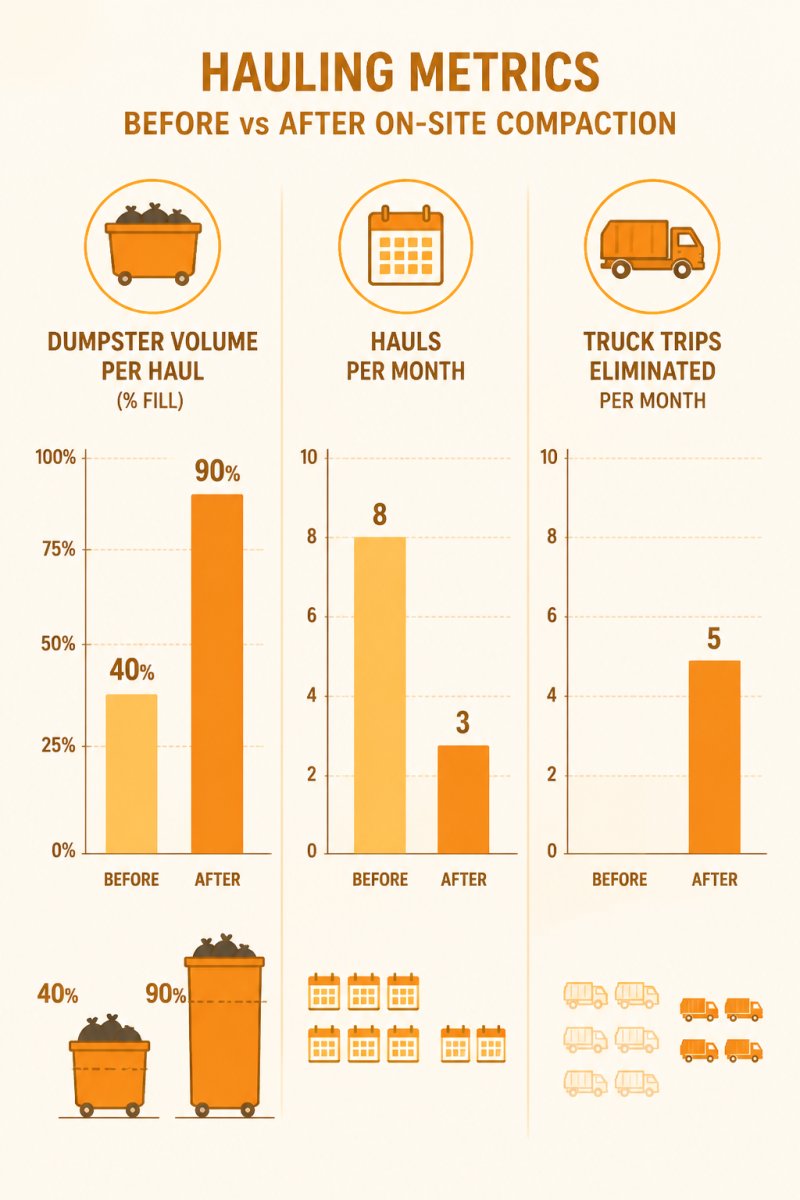
Industrial waste management strategies deliver the fastest carbon wins in most warehouses because they attack the most visible inefficiency: hauling air. A roll-off dumpster filled to 40 percent capacity still requires a full truck, a full diesel burn, and a full tipping fee (the EPA). Fixing that math is the single most direct way to reduce carbon footprint for logistics warehouses.
Right-Sizing Dumpster Capacity to Eliminate Empty-Space Hauls
The most common mistake is ordering capacity by habit rather than by volume. A facility that has rented the same size container for years rarely revisits whether that size still matches its waste stream. Walk your dock for one week and note how full each container actually is on pickup day. If containers are routinely half empty, you are paying to transport air, and every one of those trips adds carbon output for zero benefit. If your facility needs a container sized to its actual volume, dumpster rental is available in 20 and 25 yard sizes, which can help match capacity to the waste you actually generate.
Segregating Waste Streams for Higher Recovery Rates
Mixing cardboard, film plastic, and general refuse in one container guarantees that recoverable material ends up in a landfill. Separating streams at the point of generation takes floor space and discipline, but it raises recovery rates and reduces the weight of what you pay to dispose of. Start with the two streams your facility generates most, usually corrugated cardboard and stretch film, and add streams only once the first two run cleanly.
The Benefits of On-Site Waste Compaction for Logistics Facilities
On-site waste compaction is the practice of crushing dumpster contents in place so each container holds more material before it needs to be hauled. For a distribution center, the effect compounds: fewer hauls per month, fewer truck trips on local roads, and lower fuel consumption tied to waste movement. Junk Crusher provides mobile compaction that reduces roll-off dumpster volume by up to 70 percent, which directly reduces the number of required hauls.
How Mobile Compaction Reduces Truck Trips and Fuel Consumption
Mobile compaction works by bringing the crushing equipment to the container rather than the container to a processing site. A typical sequence looks like this:
- Stage full roll-off containers in a designated compaction zone
- Bring the mobile crusher alongside the container
- Crush contents in place to maximize density
- Continue filling until the container reaches practical capacity
- Schedule hauling only when containers are genuinely full
The carbon arithmetic is straightforward. Fewer hauls mean fewer diesel truck miles, and diesel truck miles are one of the largest controllable components of a warehouse's Scope 3 waste footprint. A facility that cuts monthly hauls from eight to three removes five truck trips from its carbon accounting every month, before counting the fuel savings.
Warehouse Energy Efficiency Best Practices: Lighting, HVAC, and Controls
Warehouse energy efficiency best practices start with the two systems that dominate a facility's electricity bill: lighting and climate control. A warehouse is an energy-intensive building type because it combines large floor area with high ceilings and constant operation. The U.S. Department of Energy's Better Buildings program has documented that lighting and HVAC together can account for the majority of a distribution center's electricity use, which is why these two systems are where efficiency work pays back fastest (Clean Energy Resources to Meet Data Center Electricity Demand). Reducing demand in both lowers operating cost and the emissions tied to purchased electricity.
LED Retrofits and Automated Heating and Cooling
LED lighting retrofits are usually the first project because the payback is measurable and the disruption is minimal. High-bay LED fixtures use a fraction of the power of legacy metal halide or fluorescent systems and last far longer, which cuts both energy demand and maintenance labor. The mechanism matters: metal halide lamps lose lumen output over their life and degrade in cold storage, while LEDs hold output and start instantly at low temperatures. Pairing the retrofit with occupancy sensors and daylight harvesting means lights run only where and when they are needed, and in a racked aisle that is often a 30 to 50 percent reduction in lighting hours.
Automated heating and cooling follows the same logic, but the levers are different. Zoned controls, programmable setbacks, and demand-based ventilation keep conditioned air where people actually work instead of tempering the entire cube. Dock doors are a particular culprit; high-speed doors and vestibules reduce the load that heating and cooling systems have to overcome. A common pattern is that dock doors left open during loading account for a disproportionate share of heating and cooling loss, and a door interlock or a simple dock-management rule captures that loss without any capital project.
Solar Panels and On-Site Renewable Energy Sources
On-site generation changes the emissions profile of everything the facility does. Rooftop solar is the most common option because warehouse roofs offer large, unobstructed area, and the electricity generated offsets grid power during operating hours. The practical constraint is structural: not every older roof was engineered for the added dead load of a ballasted or penetrating array, so a structural review comes before a solar quote, not after. Where roof structure or shading limits solar, some operators explore battery storage to shift load away from peak grid hours, though storage economics vary widely by utility rate structure.
Renewable energy sources do not eliminate the need for efficiency work, but they multiply its effect.
Route Optimization, Fleet Renewal, and Smarter Transportation Modes
Retrofitting vs. New Construction: Where the Emissions Wins Actually Are
Regulatory Compliance, Carbon Accounting, and Employee Culture
Employee Behavior and Culture as a Decarbonization Lever
Circular Economy in Warehousing
Frequently Asked Questions
How can logistics warehouses improve energy efficiency to reduce their carbon footprint?
Start with an energy audit to identify the biggest loads, then retrofit to LED lighting with occupancy sensors, install programmable or automated heating and cooling controls, and seal dock doors and building envelopes to stop conditioned air loss. These steps cut energy demand from the most energy-intensive systems first. Adding solar panels on the roof offsets remaining grid draw. Track kilowatt-hours per square foot monthly so you can see whether each change is actually moving your carbon output down.
What role does waste management play in warehouse sustainability?
Waste hauling is a hidden piece of a facility's carbon footprint. Every roll-off truck trip burns diesel, and if dumpsters leave only partially full, you are paying for and emitting on empty space. Right-sizing container capacity, segregating recyclables, and compacting waste on site all reduce the number of hauls required. Fewer hauls mean lower fuel consumption, less carbon output, and a measurable improvement you can report in your carbon accounting alongside energy and transportation data.
How does on-site waste compaction help logistics facilities meet environmental goals?
Mobile compaction crushes waste inside the dumpster before it is hauled, so each container holds far more material by weight and volume. That directly reduces the number of truck trips to the landfill or transfer station. Fewer trips translate into lower fossil fuel dependency and a smaller carbon footprint for the same amount of waste generated. It also frees yard space, cuts dumpster-related fees tied to haul frequency, and gives operations managers a concrete number to report against internal emissions-reduction targets.
How can optimizing shipping and hauling frequency lower a facility's carbon output?
Consolidating loads and scheduling hauls only when containers are genuinely full removes wasted trips from your logistics network. Pair that with route optimization for outbound freight and you reduce miles driven per ton shipped. For waste specifically, on-site compaction lets you stretch the interval between hauls without overflowing containers. The combined effect is fewer diesel trucks on the road, lower fuel consumption per unit of material moved, and a smaller environmental impact across both inbound and outbound logistics operations.
