
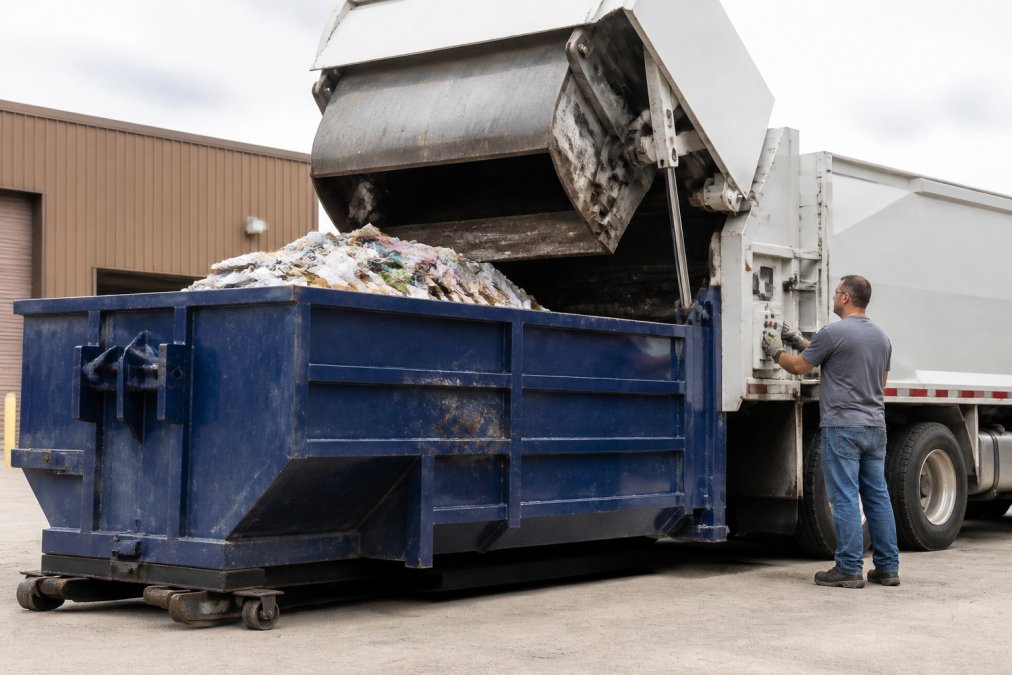
Mobile Dumpster Compaction for Industrial Facilities
Table of Contents
- What Is Mobile Dumpster Compaction and How It Works
- Industrial Waste Hauling Cost Reduction Through On-Site Compaction
- Dumpster Compaction ROI: Measuring Your Return on Investment
- Environmental Impact and Sustainability Benefits
- Regulatory Compliance and Safety Considerations
- Choosing the Right Waste Streams for Mobile Compaction
- Getting Started With Mobile Dumpster Compaction
- Frequently Asked Questions
Last Updated: September 3, 2026
What Is Mobile Dumpster Compaction and How It Works
Mobile dumpster compaction for industrial facilities is an on-site waste reduction service that crushes trash and debris directly into open-top roll-off dumpsters, significantly reducing the volume of material that needs hauling. The process uses hydraulic compaction technology mounted on a mobile truck that arrives at your facility, compresses waste down by up to 70%, and leaves you with far fewer trips to the landfill (peer-reviewed research).
Your team fills a standard dumpster as usual. The mobile compaction truck arrives and crushes everything inside, reducing volume by up to 70%. You continue filling the same container before it needs hauling, eliminating the overhead of managing multiple dumpsters and reducing haul frequency significantly.
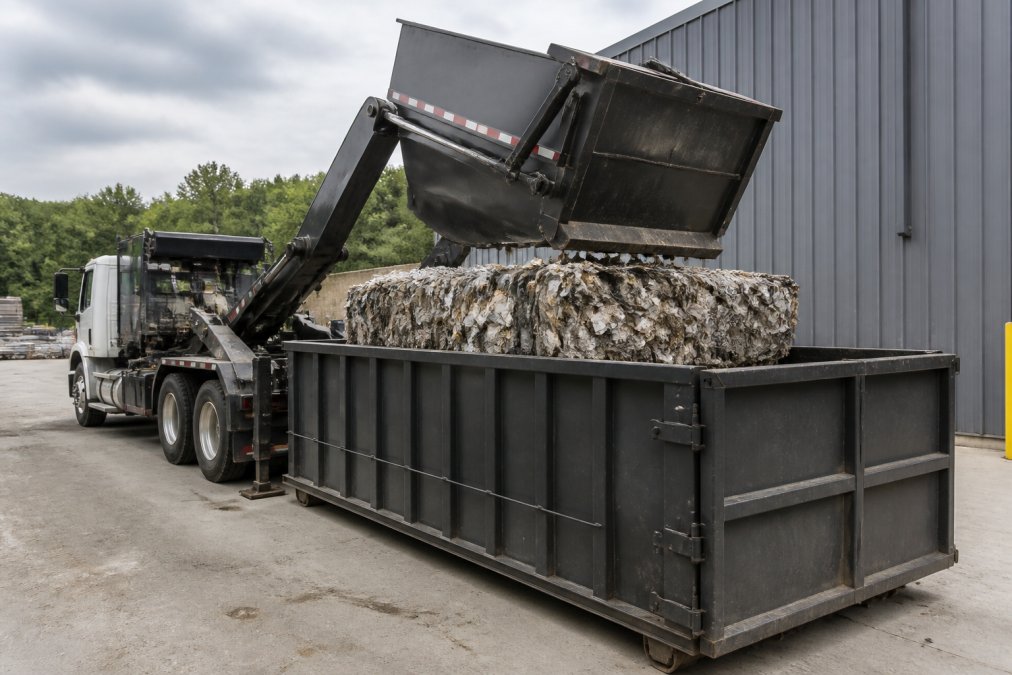
Hydraulic compaction systems apply extreme pressure to compress waste, allowing more material to fit in the same container. For facilities managing construction debris, manufacturing scrap, roofing shingles, or commercial waste, this means fewer containers and haul-aways, one container with multiple compaction cycles instead of three or four separate pickups.
Industrial Waste Hauling Cost Reduction Through On-Site Compaction
The primary driver behind mobile dumpster compaction adoption is cost. Waste hauling fees accumulate quickly with multiple dumpsters or frequent pickups. By reducing haul frequency through on-site compaction, you directly cut disposal costs and logistics overhead.
Without compaction, consistent waste fills containers faster, forcing frequent pickups and associated fees. With mobile dumpster compaction, the same waste volume is compressed, extending time between pickups. Fewer trucks on your property means lower disposal costs and reduced operational disruption.
A standard roll-off dumpster costs the same whether half-full or completely full. Compaction maximizes what you put into each container before paying for removal, so every dumpster that leaves your site is dense with compressed waste, eliminating wasted hauling capacity.
Dumpster Compaction ROI: Measuring Your Return on Investment
Measuring ROI requires tracking three metrics: hauls eliminated, cost per haul, and compaction service frequency. The calculation is straightforward once you have these numbers.
Document your baseline: current dumpster count, monthly pickup frequency, and per-pickup cost. Then project implementation: fewer dumpsters, fewer pickups per month, same waste volume distributed across longer intervals.
Financial impact appears immediately in reduced hauling fees. Compaction reduces hauls, and fewer hauls means lower total waste management expenses.
Secondary ROI factors include reduced jobsite downtime from fewer truck visits, improved yard space use, and operational efficiency gains from simplified waste management workflows.
Environmental Impact and Sustainability Benefits
Mobile dumpster compaction reduces waste hauling trucks on the road, lowering fuel consumption, carbon emissions, and traffic congestion. For companies tracking carbon footprint or sustainability goals, compaction is a concrete action item that improves environmental metrics.
By compacting waste on-site, you maximize load density sent to disposal facilities, meaning fewer landfill trips for the same waste volume. Over a year, a facility might eliminate dozens of unnecessary truck trips, reducing transportation-related emissions measurably.
ESG reporting requires documentation of waste reduction efforts. Mobile dumpster compaction provides clear data: haul frequency reduction, waste density improvements, and carbon footprint metrics that support sustainability commitments and strengthen environmental credentials.
Regulatory Compliance and Safety Considerations
Industrial waste management operates under a layered regulatory framework varying by facility type, waste classification, and state jurisdiction. Mobile dumpster compaction does not exempt your facility from these requirements but creates operational advantages in meeting them.
OSHA and Workplace Safety Standards
OSHA regulations (29 CFR 1910 Subpart H) govern walking-working surfaces and hazard recognition (osha.gov). Overfilled dumpsters create tripping hazards and pinch points. Mobile compaction reduces these risks by maintaining proper fill levels and minimizing dumpster count, resulting in clearer yard layouts and fewer worker incidents.
Compaction service records create an audit trail demonstrating active waste volume management and safe disposal conditions, supporting your safety program during OSHA inspections.
EPA and State Waste Disposal Regulations
The EPA's Resource Conservation and Recovery Act (RCRA) establishes baseline standards for solid waste management (the EPA). Most industrial facilities must properly characterize waste, manage containers, and document disposal. State agencies often impose stricter requirements.
Many states require containers to remain closed when not actively filled and not overflow. Compaction extends time between fills and reduces overflow risk. Some states impose surcharges on partially-filled containers; compaction maximizes density, reducing wasted hauling fees.
Local Municipal Codes
City and county ordinances specify container placement, removal frequency, and on-site storage conditions. Compaction extends the operational window for each container, helping facilities comply with local removal schedules while managing higher waste volumes and avoiding fines for overfilled or expired containers.
Waste Stream Segregation and Hazardous Material Handling
Hazardous waste cannot be compacted with general waste and requires separate handling under EPA and DOT regulations. Recyclable streams may have separate compaction considerations depending on your recycling partner's equipment. Conduct a waste stream audit to identify compaction-suitable materials and segregation requirements, ensuring compliance and maximizing cost savings.
Documentation and Audit Readiness
Mobile dumpster compaction creates clear records of service visits, waste volumes, container utilization, and haul schedules. This documentation demonstrates compliance with container management standards and supports regulatory inquiries and third-party audits.
Verify that your compaction provider maintains compliance documentation and can supply records for regulatory review, ensuring your waste management program remains audit-ready.
Choosing the Right Waste Streams for Mobile Compaction
Not all waste streams benefit equally from mobile dumpster compaction. A strategic waste stream analysis ensures you're investing where it delivers the strongest ROI.
High-Compaction Waste Streams (Best ROI)
Construction and demolition (C&D) debris represents the strongest use case, compressing to 60-70% of original volume. Roofing shingles compact exceptionally well; a typical roofing project generating 4-6 dumpsters of loose shingles fits into 1-2 containers with compaction. Cost savings are immediate and substantial.
Manufacturing scrap and production byproducts compact well, especially metal shavings, plastic trim, foam offcuts, and cardboard cores. Predictable compaction ratios allow scheduling aligned with production cycles, making ROI projections accurate.
General commercial waste compacts to 50-65% of original volume. High-volume retailers, distribution centers, and warehouses benefit significantly because waste generation is continuous and predictable, allowing scheduling around operational patterns.
Moderate-Compaction Waste Streams (Good ROI with Conditions)
Wood pallets and dimensional lumber compact moderately (40-50% reduction) but require assessment of your facility's equipment. Some mobile compaction systems are optimized for loose debris; others handle bulky items more effectively. If your facility generates significant pallet waste, confirm that your compaction provider's equipment can process that material type efficiently.
Plastics and foam materials vary widely in compaction suitability. Rigid plastics and foam sheets compress well; flexible films and bags may jam compaction equipment. Before committing to compaction for plastic waste streams, test the material with your provider's equipment to ensure compatibility and confirm the actual compaction ratio you'll achieve.
Mixed demolition debris (concrete, brick, drywall, wood, metal) compacts unevenly because different materials compress at different rates. Concrete and brick compress minimally; wood and drywall compress significantly. If your demolition waste is heavily weighted toward concrete or masonry, compaction savings will be lower than for mixed debris with higher proportions of compressible materials. Analyze your specific debris composition before assuming standard C&D compaction ratios.
Low-Compaction or Unsuitable Waste Streams (Avoid or Segregate)
Hazardous waste, including oils, solvents, batteries, and regulated chemicals, cannot be compacted with general waste. These materials require separate handling under EPA and DOT regulations. Compaction can damage containers or create safety hazards when hazardous materials are involved. Segregate hazardous streams into dedicated containers managed through specialized disposal channels.
Liquids and wet waste (food waste, grease, contaminated materials) are unsuitable for compaction. Liquids leak from containers during compaction, creating environmental and safety hazards. If your facility generates significant wet waste, manage it through separate disposal streams.
Metal scrap and ferrous materials present a mixed picture. Loose metal shavings and small offcuts compact well. Large metal pieces, structural steel, or machinery parts do not compress and may damage compaction equipment. If your facility generates both types of metal waste, segregate bulky metal into a separate stream and compact only small shavings and offcuts.
Asbestos-containing materials and other regulated hazardous building materials cannot be compacted and require specialized disposal. If your facility handles demolition or renovation work involving older buildings, identify and segregate regulated materials before compaction begins.
Conducting a Waste Stream Audit
Before implementing mobile dumpster compaction, perform a detailed waste stream analysis: (1) Categorize by material type; (2) Measure volume and frequency; (3) Assess compaction suitability and request provider estimates; (4) Identify segregation requirements; (5) Calculate stream-specific ROI by comparing current haul costs against projected savings; (6) Discuss mixed waste handling with your provider.
Recycling and Waste Stream Separation
Compaction can enhance recycling programs by reducing recyclable material volume before pickup. Compacted cardboard bales take up less space, extending intervals between pickups and reducing costs. Confirm with your recycling partner that compacted materials meet their equipment specifications and baling standards.
For facilities pursuing LEED certification or corporate sustainability goals, compaction of waste streams reduces the overall waste volume sent to landfills, supporting waste diversion metrics. Document compaction records and waste density improvements to substantiate sustainability reporting and ESG disclosures.
Getting Started With Mobile Dumpster Compaction
Implementing mobile dumpster compaction begins with a facility assessment. Document your current waste volumes, dumpster count, and hauling frequency. Contact Junk Crusher to discuss your waste management needs and facility layout. Our team evaluates compaction suitability and projects realistic cost reductions.
Scheduling is straightforward. Junk Crusher coordinates compaction visits based on your waste generation patterns, weekly or bi-weekly for high-volume operations, monthly for smaller facilities. Frequency adjusts to your actual needs.
The transition requires minimal operational changes. Your team continues filling dumpsters as usual. The compaction truck arrives on schedule, processes waste, and departs. You may reduce on-site dumpsters, freeing yard space and simplifying logistics while watching disposal costs decline.
| Metric | Baseline | With Compaction |
|---|---|---|
| Dumpsters on-site | 3-4 | 1-2 |
| Monthly haul frequency | 8-12 | 2-4 |
| Operational disruption | High | Low |
| Waste density per haul | Standard | Maximized |
| Yard space use | Constrained | Optimized |
Mobile dumpster compaction solves a real problem for industrial facilities: waste management costs that consume operational budgets without adding value. Junk Crusher's mobile dumpster compaction service compresses waste on-site, reduces haul frequency, and cuts your disposal expenses significantly. If your facility manages construction debris, manufacturing scrap, or high-volume commercial waste, compaction delivers measurable ROI within weeks. Book a Crush with Junk Crusher today to analyze your waste streams and see exactly how much you can save.
Frequently Asked Questions
How much can mobile dumpster compaction actually reduce my waste hauling costs?
Mobile dumpster compaction reduces waste volume by up to 70%, which directly decreases haul frequency and disposal costs. Most industrial facilities see significant cost reductions depending on their waste stream composition, facility size, and current hauling schedule. The actual savings depend on your baseline hauling frequency, container capacity utilization, and the types of waste you generate. A facility manager should request a waste stream analysis to determine realistic ROI for their specific operation.
What types of industrial waste are suitable for mobile dumpster compaction?
Mobile compaction works effectively on construction debris, roofing materials, demolition waste, manufacturing scrap, cardboard, and general commercial waste. Heavy, dense materials like shingles, metal, and concrete compress well and benefit most from compaction. Hazardous waste, liquids, and regulated materials should not be compacted. Facilities should verify that their specific waste streams comply with local waste management regulations before implementing compaction services.
How does mobile dumpster compaction reduce my facility's carbon footprint?
By reducing waste volume by up to 70%, compaction directly cuts the number of hauling truck trips required to remove waste. Fewer truck trips mean lower fuel consumption and reduced greenhouse gas emissions from your waste management logistics. This reduction also supports ESG reporting goals and demonstrates environmental commitment to stakeholders and regulators.
How long does the mobile compaction process take, and will it disrupt operations?
On-site compaction typically takes 30-60 minutes depending on dumpster fill level and waste density. The process is designed to minimize operational downtime, compaction occurs while your facility continues normal operations. Equipment is positioned to avoid blocking access roads or critical work areas. Facility managers should coordinate scheduling during off-peak hours or planned breaks to eliminate any perceived impact on productivity and maximize the efficiency gains.
This article was written using GrandRanker


