
Managing Shingle Debris at Roofing Sites: A How-To
Table of Contents
- Why Managing Shingle Debris Matters
- Safety Protocols for Roofing Work Zones
- Tools and Equipment for Efficient Debris Removal
- Step-by-Step Debris Removal Process
- Roofing Waste Disposal Regulations and Compliance
- Dumpster Rental for Roofing Projects
- Construction Site Debris Management Best Practices
- Common Mistakes to Avoid
- Frequently Asked Questions
Last Updated: September 19, 2026
Why Managing Shingle Debris Matters
Managing shingle debris at roofing sites is more than just cleanup, it's about protecting your team, your property, and your bottom line. When asphalt shingles are torn off during roof replacement or repair, they don't disappear. Protective granules scatter across gutters, downspouts, and landscaping. Debris accumulates on the ground. If left unmanaged, this creates safety hazards, damages surrounding structures, and invites costly disposal problems down the road.
The real cost of poor debris management goes beyond what you see on the surface. Shingle deterioration debris contains materials that require proper handling. Water drainage gets blocked when gutters clog with granules and fragments. Your team wastes hours picking up scattered pieces instead of focusing on the actual roofing work. Worse, improper disposal can trigger regulatory violations that hit your bottom line hard.
For roofing contractors, realizing the true cost of poor debris management can be an eye-opener. The contractors who get this right see faster job completion, fewer property damage claims, and simpler compliance with disposal standards.
Safety Protocols for Roofing Work Zones
Roofing safety protocols exist for one reason: people get hurt when debris isn't managed properly. Loose shingles and sharp fragments create slip hazards on the roof itself. Falling debris injures workers below. Unsecured debris piles collapse, trapping equipment or people underneath.
Your work zone safety starts with drop zones. Establish a clear area directly below where shingles will be removed. Keep workers and equipment out of this zone. Use spotters to watch for falling debris and alert the team. If your site is near property lines or neighboring buildings, extend your drop zone planning to account for wind and debris scatter.
Protective tarps matter more than most contractors realize. A heavy-duty tarp placed strategically catches falling shingles and contains granule loss. It protects landscaping below and prevents debris from spreading across the entire property. Secure tarps with rope or weights, wind will tear loose tarps and defeat the whole purpose.
Personal protective equipment (PPE) is non-negotiable. Workers handling roofing debris should wear:
- Heavy gloves (shingles have sharp edges)
- Safety glasses (granules and fragments fly)
- Dust masks (granule particles are an inhalation hazard)
- Steel-toed boots (dropped shingles are heavy)
Tools and Equipment for Efficient Debris Removal
The right tools make debris removal faster and safer. You don't need expensive equipment, you need the right equipment for the job.
A soft broom is your first line of defense. Use it to sweep loose granules and small fragments into piles rather than blasting them with high pressure. A leaf blower works well for moving lighter debris into staging areas, but avoid power washing the roof surface itself, it strips protective granules and damages shingles you're trying to keep.
For larger debris removal, a shovel and wheelbarrow are basics. They're simple, reliable, and work on any site. A hand truck or dolly speeds up transport when you're moving heavy loads of shingles to the staging area. For bigger jobs, a dumpster makes sense, and this is where efficient planning saves money.
Containment equipment prevents debris spread. Heavy-duty plastic sheeting or canvas tarps catch falling debris. Plywood boards create barriers that protect landscaping and prevent debris from rolling into unwanted areas. Rope, bungee cords, and stakes secure everything in place.
For sites with significant debris volume, a debris chute or temporary containment bin speeds up collection and staging. These tools reduce the time workers spend picking up scattered pieces and let them focus on the actual roofing work.
| Tool | Best Use | Why It Matters |
|---|---|---|
| Soft broom | Sweeping roof and gutters | Preserves protective granules |
| Leaf blower | Moving debris to staging areas | Fast, low effort |
| Shovel and wheelbarrow | Moving debris to dumpster | Simple and reliable |
| Heavy tarps | Catching falling debris | Protects property below |
| Hand truck | Transporting heavy loads | Reduces worker strain |
| Dumpster | Containing and staging debris | Organized disposal |
Step-by-Step Debris Removal Process
The process of managing shingle debris follows a logical sequence. Each step builds on the previous one. Skip steps or rush through them, and debris management becomes chaotic.
Step 1: Clear the Roof Surface
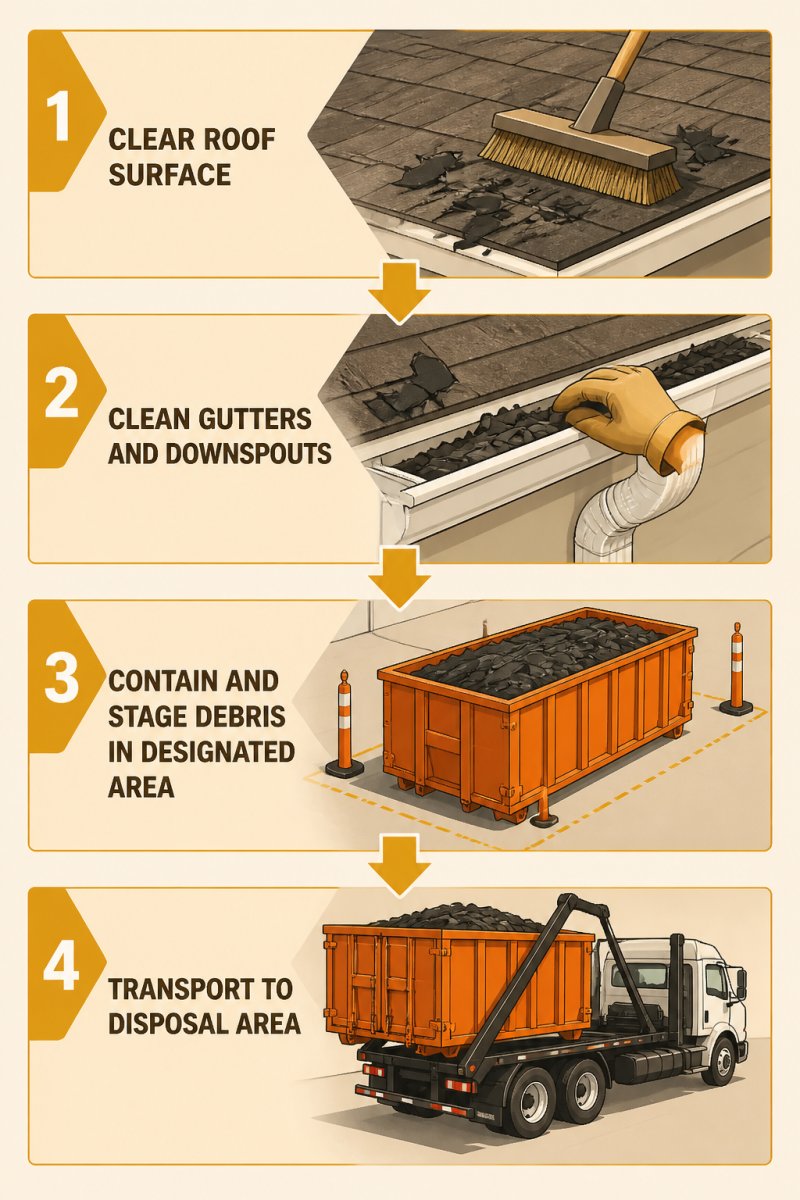
Start at the top and work methodically. Use a soft broom to sweep loose granules and small shingle fragments into piles on the roof. Work from the high points toward gutters and edges. Don't rush this step, thorough clearing prevents debris from washing into gutters later.
For larger shingle pieces, hand-load them into a wheelbarrow or debris chute. Avoid dragging shingles across the roof surface, which damages protective granules on remaining shingles and creates unnecessary wear. If you're removing an entire roof section, work in zones so you're not managing debris from the whole roof at once.
Clear the roof surface completely before moving to the next step. Debris left on the roof will migrate into gutters during rain or wind, creating more work downstream.
Step 2: Clean Gutters and Downspouts
Gutters are debris magnets. Granules, fragments, and small shingle pieces settle there during removal. Clogged gutters prevent water drainage, which damages fascia boards and creates water damage to the structure below.
Use a gutter scoop or small shovel to remove accumulated debris. Bag it separately from larger shingle pieces, fine granule debris may require different disposal handling. Flush gutters with water to clear remaining granule particles. Check downspouts for blockages and clear them too.
This step takes time but prevents expensive water damage claims later. A gutter full of shingle debris is a liability waiting to happen.
Step 3: Contain and Stage Debris
Create a designated staging area away from the work zone. Use tarps or plywood to contain debris and prevent it from spreading across the property. Keep the staging area accessible for transport but away from foot traffic and neighboring properties.
Stack shingles neatly rather than piling them randomly. Organized staging makes transport easier and safer. If you're renting a dumpster, position it near the staging area to minimize transport distance.
Separate debris by type if your disposal method requires it. Large shingle pieces go one place, granule-heavy debris another. This organization saves time during transport and disposal.
Step 4: Transport to Disposal Area
Move debris to your disposal location in a logical sequence. Start with the heaviest material and work toward lighter debris. Use appropriate equipment, a wheelbarrow for smaller volumes, a hand truck for heavier loads.
If you're using a dumpster, load it efficiently. Break up large shingle bundles if needed to maximize space. Don't overfill, a properly filled dumpster is safer and more cost-effective.
Document what goes into the disposal container, especially if you have multiple waste streams. This documentation helps with compliance and cost tracking.
Roofing Waste Disposal Regulations and Compliance
Roofing waste disposal isn't a free-for-all. Regulations govern how asphalt shingles and roofing debris must be handled. Non-compliance triggers fines and liability issues.
Most jurisdictions classify asphalt shingles as construction and demolition (C&D) waste. This means they cannot go into regular municipal waste streams. They must be taken to designated C&D landfills or recycling facilities. Some regions allow asphalt shingles in specific landfills but prohibit them elsewhere.
Check your local regulations before the job starts. Contact your county waste management office or your state's environmental agency. They'll tell you where roofing debris can legally go. Some facilities accept only shingles; others accept mixed roofing materials.
Hazmat considerations matter if your roof contains older materials.
Dumpster Rental for Roofing Projects
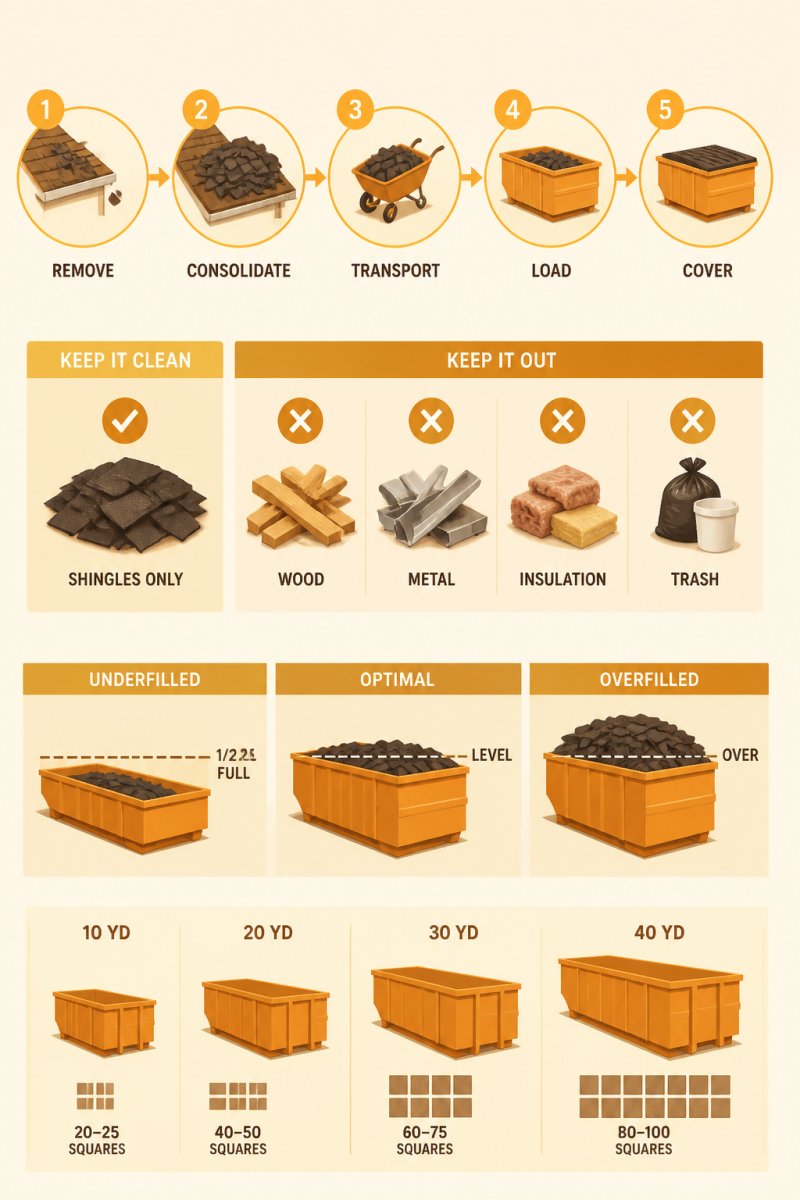
A dumpster is often the most practical solution for managing shingle debris at roofing sites. Dumpsters provide a contained, organized way to stage and transport debris without creating property damage or compliance headaches.
Construction Site Debris Management Best Practices
Roofing debris is just one part of overall construction site debris management. Best practices that work for roofing work for other debris too.
Common Mistakes to Avoid
Most debris management problems stem from predictable mistakes. Knowing what goes wrong helps you avoid it.
Frequently Asked Questions
What is the gritty stuff on shingles called, and why does it matter when managing shingle debris?
The gritty substance is protective granules, a crucial component of asphalt shingles that protects them from UV damage and weather exposure. When managing shingle debris, it's important to avoid power washing or aggressive removal methods that strip these granules, as granule loss accelerates shingle deterioration and shortens roof life. Gentle removal techniques preserve the integrity of remaining shingles on the roof.
Are asphalt shingles considered hazardous waste under EPA guidelines?
Asphalt shingles are not classified as hazardous waste by the EPA and do not require special hazardous materials handling. However, they must be disposed of according to local waste management regulations. Many landfills accept roofing shingles, and some recycling facilities now process them for use in road asphalt or other applications. Always verify your local disposal standards before choosing a disposal method.
How can contractors reduce the volume of roofing waste on-site during managing shingle debris operations?
Contractors can reduce waste volume by separating recyclable materials, staging debris efficiently in designated zones, and using compaction services to crush accumulated waste before hauling. Proper staging in drop zones prevents scattered debris and makes collection faster. On-site compaction can significantly reduce the number of hauls needed, lowering disposal costs and minimizing jobsite downtime while improving site organization.
What are the best tools for efficient shingle debris removal?
Essential tools include soft brooms (to avoid granule loss), leaf blowers for lightweight debris, shovels for heavier material, and tarps to contain and stage debris. For larger jobs, dumpsters and debris chutes speed collection. Safety equipment such as spotters, harnesses, and protective gear are non-negotiable for roofing work zones. The right tool combination depends on job size, roof pitch, and debris volume.
