
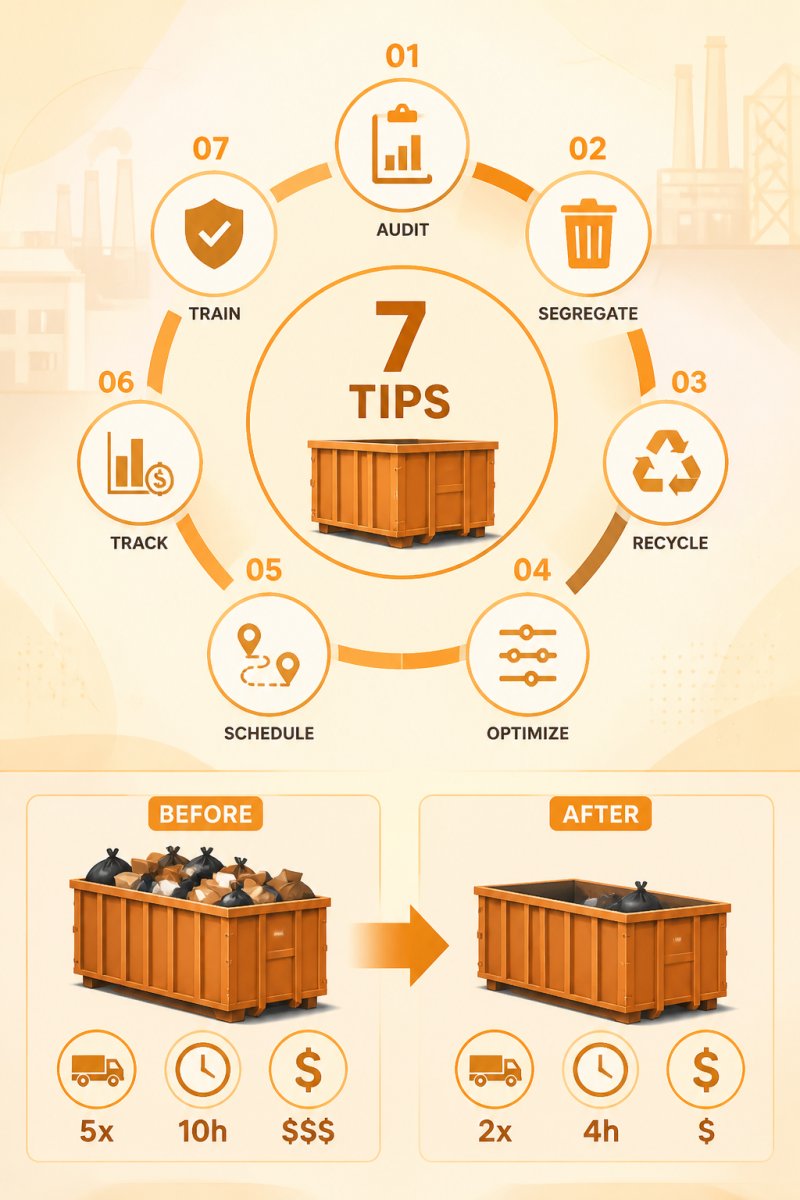
Industrial Waste Management Efficiency: 7 Proven Tips
Table of Contents
- 1. Conduct an Industrial Waste Audit Checklist
- 2. Implement Material Segregation at Source
- 3. Apply the 3Rs: Reduce, Reuse, Recycle
- 4. Reduce Waste Hauling Cost Through On-Site Compaction
- 5. Understand On-Site Waste Compaction Benefits
- 6. Ensure Regulatory Compliance and Waste Handler Verification
- 7. Train Employees and Track Performance Metrics
- Optimizing Industrial Waste Management for Long-Term Savings
- Frequently Asked Questions
Last Updated: September 19, 2026
Industrial Waste Management Efficiency: 7 Proven Tips
Industrial waste management efficiency is essential for operations managers, facility directors, and logistics teams looking to reduce costs while minimizing environmental impact. At Junk Crusher, we work with manufacturing plants, construction sites, and distribution centers across Western Pennsylvania to optimize waste streams and cut hauling expenses. The challenge most facilities face isn't a lack of awareness about waste problems, it's knowing which concrete steps actually move the needle on both costs and sustainability metrics.
This guide covers seven actionable strategies that address the real bottlenecks in industrial waste management efficiency. These aren't theoretical best practices; they're approaches that directly reduce disposal costs, improve yard space use, and lower your carbon footprint by minimizing unnecessary truck trips. Below, we'll show you exactly how to audit your waste stream, implement material segregation, and use on-site compaction to transform how your facility handles waste.
1. Conduct an Industrial Waste Audit Checklist
An industrial waste audit is your foundation for improvement. Without understanding what you're throwing away, how often you're paying to haul it, and where inefficiencies hide, you're making decisions in the dark.
Start by documenting every waste stream your facility generates. Walk your site with a clipboard and photograph or list each dumpster, roll-off container, and waste pile. Note what goes into each one: construction debris, cardboard, metal scrap, hazardous materials, general refuse. This inventory becomes your baseline.
What to measure in your waste stream
Track the material types and volumes in each waste stream. Are you paying for a 30-yard dumpster that's only half full? Are multiple waste types mixed together when they could be segregated for better recovery value? Document the frequency of pickups, weekly, twice weekly, daily? Note which materials might have resale or recycling value versus true disposal-only waste.
The waste audit checklist should include:
- Dumpster size and current fill rate (percentage full at pickup)
- Pickup frequency and cost per haul
- Waste stream composition by material type
- Estimated weight or volume per pickup cycle
- Current disposal method (landfill, recycling, waste-to-energy)
- Hazardous waste identification and handling protocols
Tracking disposal costs and hauling frequency
Document your current hauling expenses. Pull invoices from the last six months and calculate cost per pickup, cost per ton (if available), and total monthly waste management spend. This number becomes your benchmark for measuring improvement.
Note the frequency of each pickup. If a dumpster is picked up twice weekly but averages 60% full, you're paying for empty space. This is where efficiency gains often hide, not in choosing better disposal methods, but in reducing the number of hauls through better volume management.
2. Implement Material Segregation at Source
Material segregation at source is one of the highest-ROI changes a facility can make. When waste streams are mixed, nothing can be recovered or recycled, everything goes to landfill at full disposal cost. When materials are separated from the point of generation, you unlock recovery value and reduce total waste volume.
The principle is simple: keep cardboard separate from general refuse, metals separate from construction debris, and hazardous materials isolated entirely. This requires clear signage, accessible collection points, and employee buy-in.
Start with your highest-volume waste streams. If your facility generates large quantities of cardboard, metal, or wood, dedicate separate containers for each. Train crews to sort at the source rather than mixing everything into one dumpster. Many facilities find that segregation reduces their total waste volume by 20-30% within the first month, simply because recyclable materials no longer occupy paid disposal space.
Hazardous waste requires special attention. Oils, solvents, paints, and batteries must be segregated and handled according to regulatory requirements. Mixing hazardous materials with general waste creates compliance violations and forces the entire load to be treated as hazardous, multiplying disposal costs.
3. Apply the 3Rs: Reduce, Reuse, Recycle
The 3Rs approach provides a hierarchy for waste management that reduces both volume and cost. Reduction comes first, it's the most effective strategy. Reuse comes second. Recycling comes third.
Reduce means generating less waste in the first place. Review your procurement practices. Can you source materials in bulk to reduce packaging waste? Can you switch to suppliers who use minimal packaging? Can you redesign processes to eliminate waste steps? A manufacturing facility that reduces incoming packaging waste by 15% sees immediate hauling savings without changing any other systems.
Reuse means finding second uses for materials before they become waste. Wooden pallets, plastic bins, and cardboard boxes often have value to other businesses. Construction sites can reuse lumber, concrete forms, and scaffolding across multiple projects. Distribution centers can refurbish and reuse packaging materials. Reuse eliminates disposal costs entirely and often generates small revenue.
Recycle is the final step in the hierarchy. After you've reduced and reused, recycling captures value from remaining materials. Cardboard, metals, plastics, and paper all have established recycling markets. The key is ensuring these materials are clean, properly sorted, and delivered to facilities that can process them.
4. Reduce Waste Hauling Cost Through On-Site Compaction
On-site waste compaction directly addresses the core inefficiency in traditional waste management: you're paying to haul mostly empty space. A standard 30-yard dumpster, even when full, contains significant air gaps between materials. Compaction removes that air, allowing you to fit 2-3 times more waste into the same container footprint.
Mobile compaction services bring equipment to your site and crush waste in place, reducing volume significantly.
5. Understand On-Site Waste Compaction Benefits
On-site waste compaction offers benefits beyond simple cost reduction. Understanding these advantages helps justify the investment and identify where compaction delivers the most value for your operation.
Volume reduction and hauling frequency
Compaction reduces waste volume by up to 70%, depending on material type. Bulky materials like cardboard, construction debris, and demolition waste compress particularly well. This means a dumpster that normally requires weekly pickup might now require pickup every two to three weeks. Over a year, that's a substantial reduction in hauling trips and associated costs.
Operational efficiency and yard space optimization
Compaction frees up physical space on your site. Instead of managing multiple dumpsters or waiting for pickups, you maintain one or two containers and compress waste as needed. This is particularly valuable for distribution centers, manufacturing plants, and construction sites where yard space is constrained. Dumpster Rental options like 20 and 25 yard dumpsters provide flexible capacity for different operation sizes, and when paired with compaction, they maximize your space efficiency.
6. Ensure Regulatory Compliance and Waste Handler Verification
Regulatory compliance in industrial waste management isn't optional, it's a legal requirement with real consequences for non-compliance. Your facility must understand which regulations apply to your waste streams and verify that your waste handlers meet all requirements.
7. Train Employees and Track Performance Metrics
Employee training transforms waste management from a facility cost center into an efficiency operation. Workers who understand proper waste segregation, hazardous material handling, and compaction procedures generate less waste, reduce safety risks, and support sustainability goals.
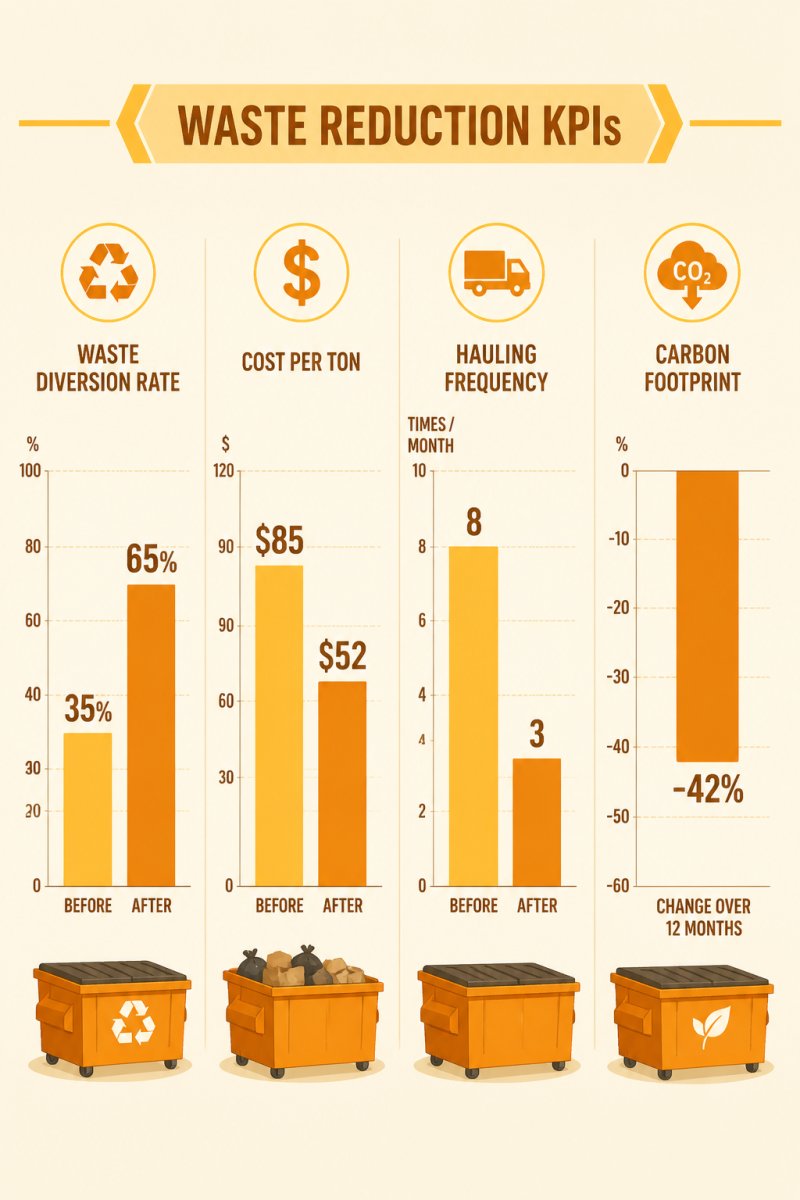
Optimizing Industrial Waste Management for Long-Term Savings
Industrial waste management efficiency isn't a one-time project, it's an ongoing operational discipline. The seven strategies covered here address the core inefficiencies most facilities face: unclear waste streams, mixed materials, wasted hauling capacity, and employee practices that don't support waste reduction.
Frequently Asked Questions
What are the most effective industrial waste minimization strategies?
The most effective strategies combine a waste audit, material segregation, and the 3Rs approach. Start by measuring your current waste stream and disposal costs. Segregate materials at the source to enable recycling and resource recovery. Reduce unnecessary packaging in procurement, reuse containers and pallets, and recycle high-volume materials. On-site compaction of bulky items like construction debris and shingles significantly reduces hauling frequency, cutting both costs and carbon footprint.
How can manufacturing facilities reduce waste hauling costs?
Reduce waste hauling cost by implementing on-site compaction to crush bulky waste before pickup, which can lower the volume requiring transport by up to 70%. Consolidate waste pickups to fewer, fuller loads rather than frequent partial hauls. Audit your waste stream to identify high-volume, low-value materials that can be recycled or diverted. Verify waste contractor credentials and negotiate service schedules that align with your actual generation rates rather than fixed calendars.
What are the environmental benefits of optimizing industrial waste management?
Optimizing industrial waste management reduces your carbon footprint by minimizing truck trips needed for hauling. Diverting waste from landfills through recycling and resource recovery supports circular economy principles. Compacting waste on-site eliminates empty space in dumpsters, meaning fewer vehicles on the road per ton of material disposed. These practices also reduce operational emissions and demonstrate environmental responsibility to customers and regulators.
How does on-site waste compaction improve operational efficiency?
On-site waste compaction benefits include reduced dumpster volume, which means fewer hauls and lower disposal costs. Compaction frees up valuable yard space on jobsites and at facilities, improving workflow and material staging areas. Fewer truck visits mean less jobsite downtime, faster project turnaround, and reduced disruption to operations. The result is streamlined waste management that directly supports productivity and profitability.
What should be included in an industrial waste audit checklist?
An industrial waste audit checklist should document: current waste streams by type (construction debris, scrap metal, cardboard, hazardous waste), volume generated per week or month, current disposal methods and costs, hauling frequency and contractor details, regulatory compliance status, and opportunities for segregation and recycling. Measure baseline metrics like cost per ton and waste diversion rate. Review purchasing practices to identify packaging waste. This data forms the foundation for targeted efficiency improvements.
Why is material segregation important in industrial waste management?
Material segregation at source enables resource recovery and reduces disposal costs. Separating recyclables like metal, cardboard, and plastic from general waste allows them to be sold or reused rather than hauled to landfill. Hazardous materials must be segregated for safe, compliant handling. Mixed waste streams cost more to dispose of and generate lower recovery value. Proper segregation also simplifies compliance reporting and supports sustainability metrics and zero waste to landfill goals.
Ready to reduce your waste hauling costs and optimize your facility's environmental performance? Junk Crusher's on-site compaction service helps operations managers, facility directors, and logistics teams across Western Pennsylvania cut waste disposal expenses while supporting sustainability goals. Book a Crush with our team to discuss your specific waste challenges and see how compaction can work for your operation.
