Industrial Waste Disposal Regulations: What Operators Need
Quick Summary
Industrial waste disposal is governed by federal, state, and local rules, and the applicable rules depend on what your facility generates. Most rules start by asking whether the waste is hazardous or non-hazardous, which determines your generator category and disposal pathway. Characterize each waste stream before it leaves the site.
- Confirm whether each waste stream is hazardous or non-hazardous before it leaves the site.
- Hazardous waste is defined either by listing or by characteristic: ignitability, corrosivity, reactivity, or toxicity.
- Generators must track accumulation time, keep containers closed and labeled, and maintain disposal records.
- Write down disposal procedures and follow them the same way every time.
- Review wastewater discharge permit terms and confirm them with the issuing agency before changing a process.
Table of Contents
- How Industrial Waste Disposal Regulations Are Structured
- Hazardous Waste Examples and Generator Requirements
- Hazardous Waste Disposal Procedures and Industrial Wastewater Discharge Rules
- Frequently Asked Questions
Industrial Waste Disposal Regulations: What Operators Need
Last Updated: November 19, 2026
Industrial waste disposal is governed by federal, state, and local rules, and the rules that apply depend on what your facility generates. This guide walks through how the regulations are structured and what your team should check first.
How Industrial Waste Disposal Regulations Are Structured
Most industrial waste rules start with one question: is the waste hazardous or non-hazardous? The answer determines which generator category your facility falls into and which disposal pathway applies. The EPA Regulatory and Guidance Information by Topic: Waste collects federal rules covering household, industrial, and manufacturing solid and hazardous wastes under the Resource Conservation and Recovery Act (RCRA).
Classification comes first. Your team should characterize each waste stream before it leaves the site. The EPA's Guide for Industrial Waste Management describes methods for characterizing waste constituents and considerations for siting waste management units.
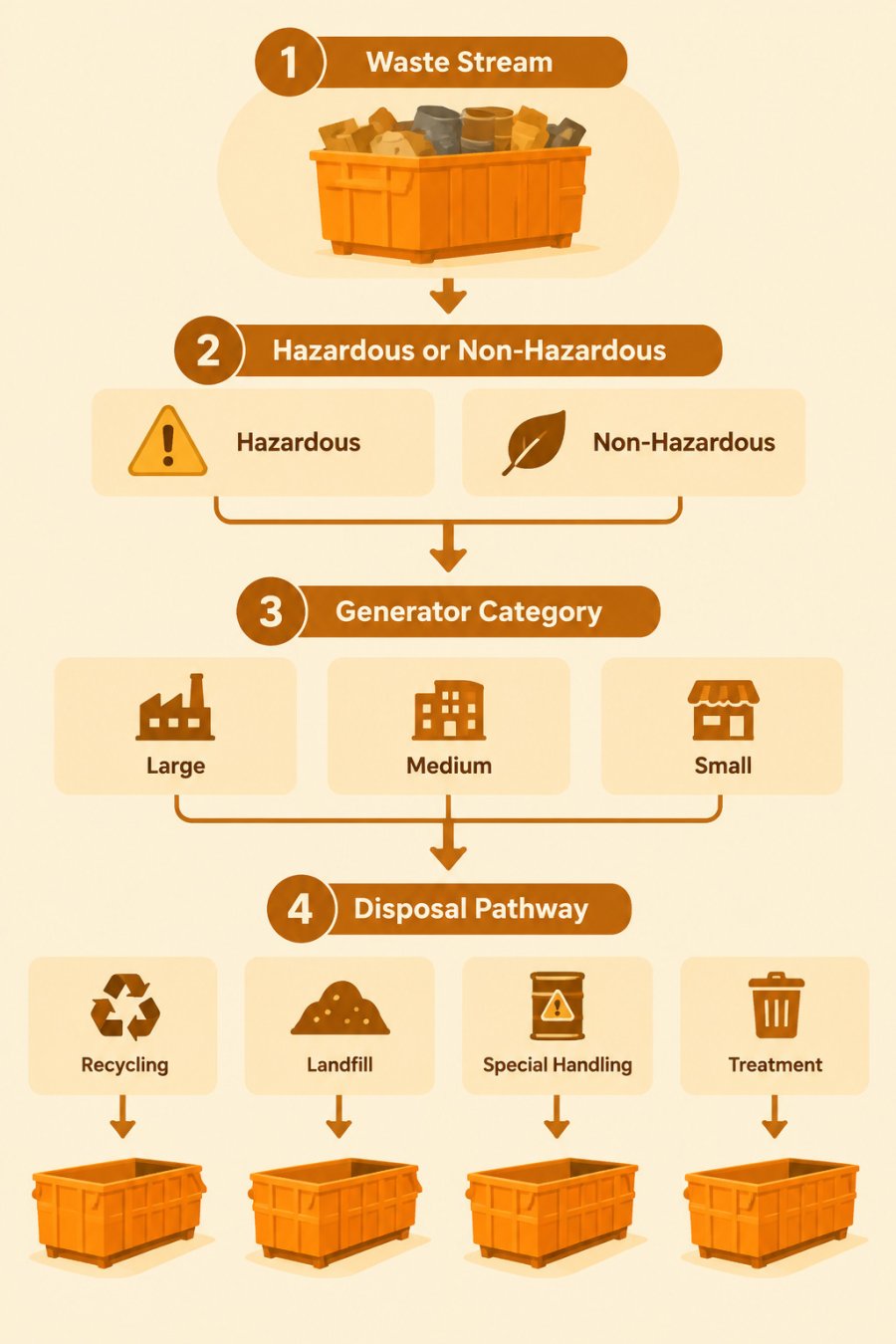
Once a waste is classified, the generator category sets the obligations. Storage time limits, labeling, manifests, and recordkeeping all change with that category. Compliance guides such as 10 Waste Management FAQs for 2026 cover generator categories, storage limits, and manifests in more detail.
Hazardous Waste Examples and Generator Requirements
Hazardous waste is defined by listing or by characteristic. Listed wastes appear on EPA lists, while characteristic wastes show ignitability, corrosivity, reactivity, or toxicity. Common industrial examples include spent solvents, paint residues, and certain sludges, though the exact status depends on the process that created them.
Generator requirements follow the waste. Generators must track accumulation time, keep containers closed and labeled, and maintain records of where waste goes. Treat these as ongoing duties, not a one-time filing. A 2026 RCRA and Waste Look Ahead outlines recent developments in RCRA and waste policy worth tracking each year.
Non-hazardous industrial waste still carries rules. Disposal methods and costs differ by category, so separating streams at the source saves money and avoids mixing hazardous material into a lower-cost stream.
Hazardous Waste Disposal Procedures and Industrial Wastewater Discharge Rules
Disposal procedures should be written down and followed the same way every time. A practical sequence looks like this:
- Confirm the waste classification and generator category.
- Label containers with the contents and hazard information.
- Store waste in closed, compatible containers within accumulation limits.
- Use a licensed hauler and a permitted treatment, storage, or disposal facility.
- Keep manifests and inspection records for the required retention period.
Wastewater is handled separately. Discharges to sewers or surface water often require permits, and the rules vary by discharge point and by state. Review your permit terms and confirm them with the agency that issued them before changing a process.
For bulk non-hazardous debris, the right container matters too. Junk Crusher offers Dumpster Rental in 20 and 25 yard sizes, and our Dumpster Compaction service can reduce hauling volume and trip frequency on jobs with heavy, bulky loads. Pricing depends on quantity, dates, and delivery, so request a quote for current figures.
Regulations change, and the details above are a starting point, not legal advice. Check current requirements with your state environmental agency and your environmental compliance advisor before making changes. If your team needs help planning bulk waste capacity for a job site or plant, book a Junk Crusher consultation to compare container options for your project.
Frequently Asked Questions
What regulates industrial waste disposal in the United States?
The Resource Conservation and Recovery Act (RCRA) is the main federal law governing solid and hazardous waste, administered by the U.S. Environmental Protection Agency. It sets the framework for identifying hazardous waste, tracking it from generation to disposal, and licensing treatment, storage, and disposal facilities. Many states run their own hazardous waste programs under RCRA authority, and those state rules can be stricter than the federal baseline. Industrial facilities should check both federal and state requirements before setting up their waste handling process.
How do you determine whether industrial waste is hazardous?
A waste is hazardous if it is specifically listed by EPA or if it exhibits one of four characteristics: ignitability, corrosivity, reactivity, or toxicity. Generators make this determination by reviewing their process knowledge, safety data sheets, and, where needed, laboratory testing. Each determination should be documented, because it controls which generator category applies and which disposal rules follow. When a waste is uncertain, treating it as hazardous until tested is the safer course.
What records should a facility keep for hazardous waste disposal?
Facilities generally keep waste determination records, hazardous waste manifests, inspection logs for storage areas, training records for staff who handle waste, and reports required by their generator category. Retention periods are set by federal and state rules, and they commonly run several years, so confirm the exact period for your state. Keeping these records organized makes an inspection far easier and shows regulators a documented compliance process.


