How to Make Mobile Waste Compaction Work for Your Facility
Last Updated: October 28, 2026
Quick Summary
Yes, mobile waste compaction works by crushing waste inside your container on site, so you haul material instead of empty space. A mobile dumpster compactor travels to your container, reducing hauling volume and frequency for facilities with steady, bulky waste streams.
- On-site compaction crushes waste inside your container so you haul material, not empty space.
- Compaction works best on bulky, loose, low-density material like cardboard, pallets, and wood scrap.
- It works less well on already-dense loads like concrete rubble, dirt, or full drums.
- Compare the service fee against avoided hauling charges, container fees, and labor hours.
- Skip compaction for low waste volumes, tight access, or dense or hazardous material.
Table of Contents
- How Mobile Waste Compaction Works on Site
- Mobile Dumpster Compactor vs Stationary Systems
- Waste Compaction Benefits and Dumpster Compaction Safety
- Frequently Asked Questions
How Mobile Waste Compaction Works on Site
On-site compaction crushes waste inside your container so you haul material, not empty space. When you are ready to schedule, see the on-site dumpster compaction booking guide.
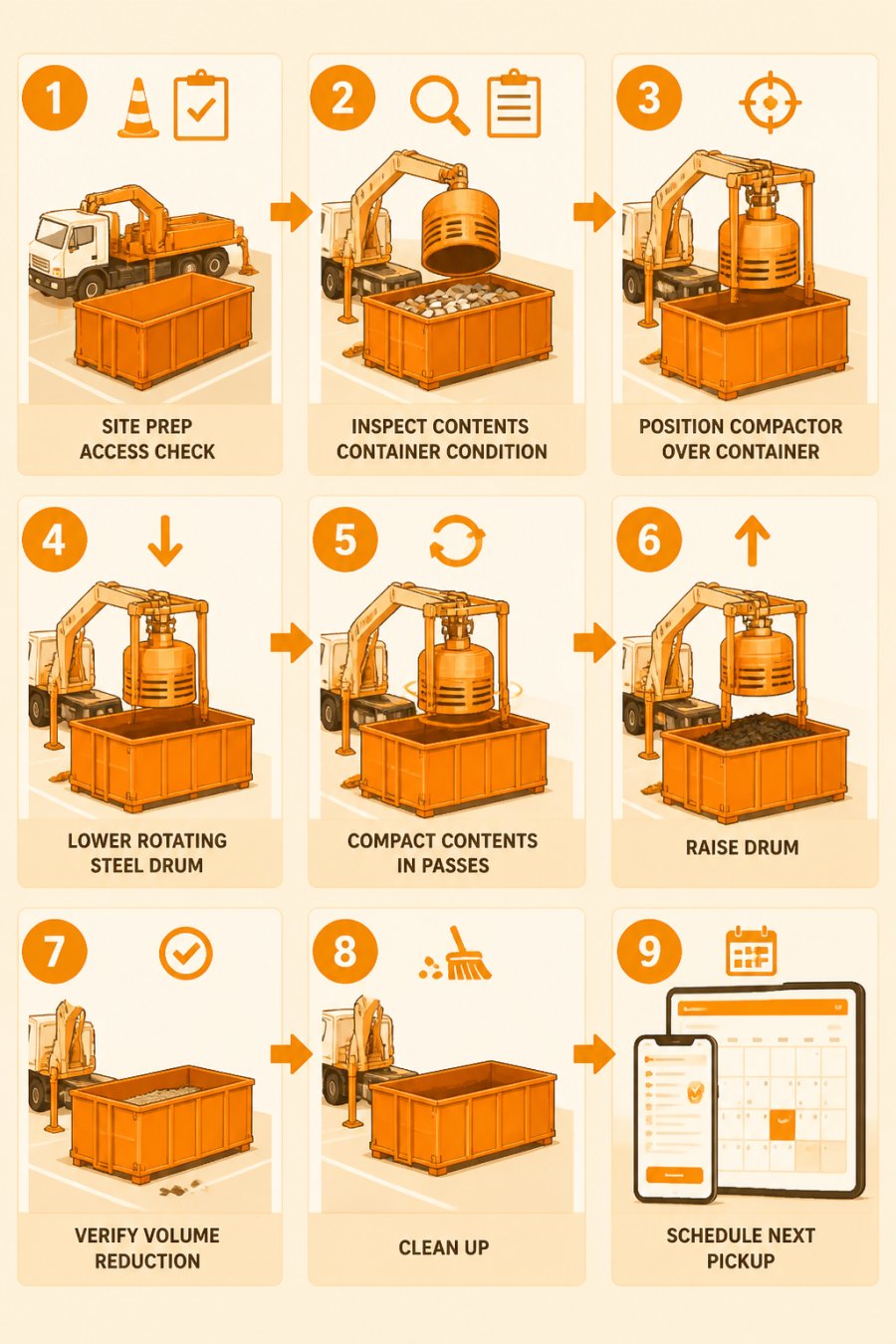
Here is what a service visit looks like:
- Site preparation and access check. Confirm firm, level ground, overhead clearance, and a straight approach path. Flag gates or tight alleys in advance.
Mobile Dumpster Compactor vs Stationary Systems
A mobile dumpster compactor travels to your container.
For a deeper comparison, read our breakdown of mobile vs stationary waste compaction for manufacturing.
Waste Compaction Benefits and Dumpster Compaction Safety
Waste compaction benefits come down to fewer hauls and more container capacity. By crushing dumpster waste on-site, Junk Crusher reduces hauling volume and frequency.
What can and cannot be compacted
Compaction works best on bulky, loose, low-density material: cardboard, pallets, wood scrap, packaging film, paper, and mixed construction debris. It works less well on already-dense loads like concrete rubble, dirt, or full drums.
The cost-benefit math
To judge whether compaction pays, compare the service fee against what you avoid: hauling charges per pickup, container rental or delivery fees per swap, and labor hours coordinating pickups. Facilities with steady, bulky waste streams see the clearest savings; low-volume sites may not generate enough avoided hauls.
When mobile compaction is not worthwhile
Compaction is not a fit for every site. Low waste volumes, containers already full at pickup, tight access with no room to position equipment, and waste streams dominated by dense or hazardous material are all reasons to skip it.
Safety and site requirements
Two guides cover this in more depth: waste compaction benefits explained and is waste compaction safe for dumpsters.
Here is a quick look at what compacts well, what does not, and when mobile compaction is worth it.
| Item | Works well | Note |
|---|---|---|
| Cardboard, pallets, wood scrap | Yes | Bulky, loose, low-density material |
| Packaging film, paper, mixed construction debris | Yes | Bulky, loose, low-density material |
| Concrete rubble, dirt, full drums | No | Already-dense loads compact less well |
| Low waste volumes | Skip | Not enough avoided hauls to pay off |
| Containers already full at pickup | Skip | Reason to skip compaction |
| Tight access, no room to position equipment | Skip | Reason to skip compaction |
| Waste dominated by dense or hazardous material | Skip | Reason to skip compaction |
Frequently Asked Questions
How much can mobile waste compaction reduce dumpster volume?
Junk Crusher reports volume reductions of up to 70% on roll-off dumpsters. On-site compaction reduces hauling volume and frequency.
What types of waste can and cannot be compacted in a dumpster?
Most commercial and industrial waste compacts well: cardboard, wood, packaging, roofing shingles, demolition debris, and general construction waste. Do not compact hazardous waste, liquids, food waste, or items that are already dense and rigid. Ask your provider to review your waste stream before the first visit. A quick walkthrough prevents damage to the mobile dumpster compactor and keeps dumpster compaction safety intact for your crew.
Is mobile dumpster compaction safe for our crew and site?
Yes, when the work is done by trained operators and your team keeps a clear distance. The compactor runs from outside the container, so no one enters the dumpster. Keep the area around the container clear, never load the dumpster while the compactor is running, and follow the operator's instructions. Dumpster compaction safety also means matching the service to your waste type and site layout, which Junk Crusher reviews before the first crush.


