
How to Design Functional Garden Zones in Your Yard
Quick Summary
Good garden zones start with a clear look at your yard as it is today. Sketch the property, mark sun exposure, drainage, existing structures and traffic paths, then give each zone one main job, such as dining, lounging, playing or planting. Place each zone where its sun, space and soil suit it.
- Mark which areas get full sun, partial shade, and deep shade.
- Place the dining zone near the kitchen, with partial shade and room for a table.
- Keep the play zone visible from the house and on level, safe ground.
- Make paths at least 3 feet wide so two people can pass comfortably.
- Clear old structures and debris first, then build paths, then plant.
Table of Contents
- Assess Your Yard Before You Plan Any Zones
- Divide Your Garden Into Functional Zones
- Connect Zones With Paths and Apply Garden Design Principles
- Frequently Asked Questions
Assess Your Yard Before You Plan Any Zones
Last Updated: November 7, 2026
Good garden zones start with a clear look at your yard as it is today. A seasonal yard cleanup dumpster guide covers branches, decor, and other outdoor clutter you may find. Before you plan a dining area or a play space, walk the property and note what you have. Clearing out old materials before a redesign often reveals debris that needs a plan.
Start with a simple sketch. Mark the house, fences, trees, sheds, and any existing patios or beds. Then note how the sun moves across the yard, which spots stay wet after rain, and where you walk most.
- Sun exposure: Mark which areas get full sun, partial shade, and deep shade.
- Drainage: Note low spots and areas that hold water after a storm.
- Existing structures: List decks, sheds, or play equipment you might keep or remove.
- Traffic paths: Show where people already walk to reach the garage, gate, or back door.
Old decks, sheds, or play structures can hide rot or damaged footings. Inspect them carefully before you plan around them.
Divide Your Garden Into Functional Zones
Creating garden zones means splitting the yard into areas that each serve one main purpose. Common zones include dining, relaxing, playing, and growing vegetables or flowers. Each zone should suit the sun, space, and soil it gets.
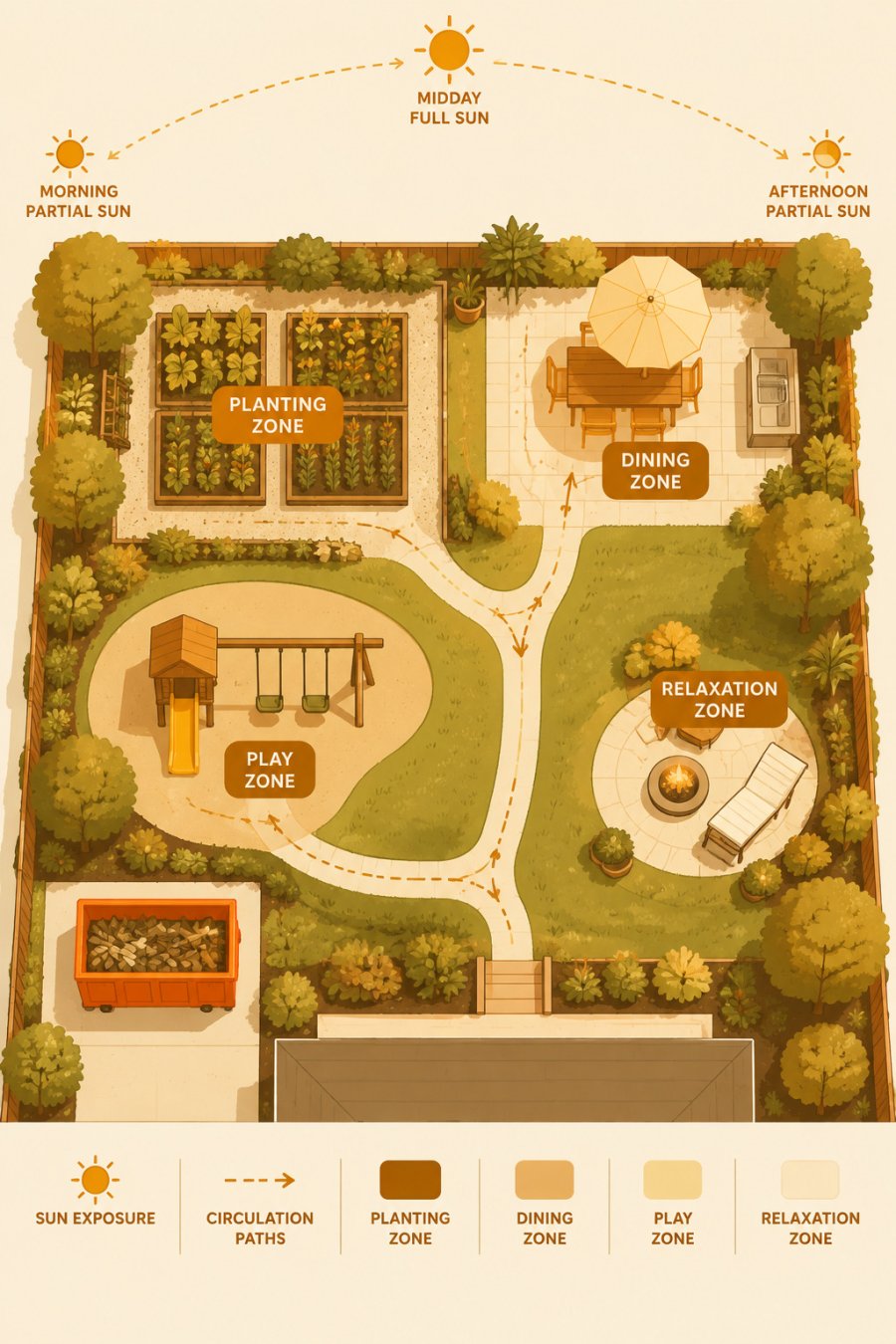
Give each zone a clear job. Then size it to fit how you will use it.
- Dining zone: Place near the kitchen, with partial shade and room for a table.
- Lounge zone: Choose a quiet, shaded spot away from heavy foot traffic.
- Play zone: Keep it visible from the house and on level, safe ground.
- Planting zone: Pick the sunniest area, with easy access to water.
If you are clearing an older play area or deck to make room, plan for the debris. Our playground removal dumpster guide covers sorting plastic, lumber, and anchors. Sort wood, plastic, and metal, and check whether a dumpster will hold the load. Heavy flooring or footing material weighs more than its volume suggests, so ask about weight limits when you call.
The article's zones and their placement can be summarised at a glance:
| Zone | Best placement | Key requirement |
|---|---|---|
| Dining zone | Near the kitchen | Partial shade and room for a table |
| Lounge zone | Quiet, shaded spot | Away from heavy foot traffic |
| Play zone | Visible from the house | Level, safe ground |
| Planting zone | Sunniest area | Easy access to water |
Connect Zones With Paths and Apply Garden Design Principles
Paths link your zones and keep traffic flowing. Use widths of at least 3 feet so two people can pass comfortably. Choose materials that match the look of your home and hold up in wet weather.
Apply a few basic design principles to tie the yard together. Repeat colors and plant types across zones. Balance large features on both sides of the yard. Keep the layout simple so each area feels intentional.
Plan the order of work too. Clear old structures and debris first, then build paths, then plant. If an old deck is in the way, see our deck removal dumpster planning guide for separating wood from footings. Once you have a site plan, you can book a dumpster rental with Junk Crusher. Use this dumpster rental call checklist to cover address, debris, size, and schedule. Pricing depends on quantity, dates, and delivery, so visit junkcrusher.com for current pricing or a quote.
Your next step: Sketch your yard, mark your zones, and contact Junk Crusher to plan removal for any old materials standing in the way.
Frequently Asked Questions
How do you divide a garden into functional zones?
Start by listing the activities you want, such as dining, lounging, play, and growing vegetables. Then sketch your yard to scale and mark sun, shade, and drainage. Group activities that share similar conditions into one zone. Place high-traffic zones such as dining near the house and quieter zones such as lounging farther away. Keep each zone's footprint realistic for its use, and check that paths connect them without forcing people through planting beds.
How do you make a small garden feel like it has separate zones?
In a small garden, use visual boundaries rather than walls. Low hedges, planting beds, a change in paving material, or a trellis can mark a zone without taking up much space. Use one shared focal point, such as a container planting or a bench, to tie zones together. Keep each zone to one or two main activities so the space does not feel crowded, and use shade structures or privacy plants to separate the dining and lounging areas.
How do you plan garden zones for sun, shade, and privacy?
Track sun exposure across a full day, ideally at morning, midday, and late afternoon, and note which spots stay shaded. Place vegetable beds and seating that need sun in the brightest areas, and put lounging or reading spaces in partial shade. For privacy, position taller plants, a fence, or a pergola along the sides facing neighbors or the street, keeping the dining area near the house for easy access.


