
Efficient Waste Disposal for Roofing Contractors in 2026
Table of Contents
- Why Roofing Contractors Waste Money on Every Tear-Off
- Construction Site Debris Management: Sorting at the Source
- How Mobile Dumpster Compacting Services Change the Math
- Reducing Construction Waste Hauling Frequency Without Delaying the Job
- A Practical Waste Disposal Plan for Roofing Contractors
- Debris Disposal Costs: What to Track and Where to Save
- Common Debris Handling Mistakes That Slow Down Roofing Projects
- simplify Your Next Roofing Project
- Frequently Asked Questions
Last Updated: September 4, 2026
Why Roofing Contractors Waste Money on Every Tear-Off
Most roofing contractors treat waste disposal as an afterthought, but every shingle, nail, and scrap of underlayment that leaves a jobsite in a partially filled container represents money spent on hauling empty space.
At Junk Crusher, we have watched crews lose hours and profit because their disposal plan was built around whatever container was available, rather than what the job actually produced. The problem is usually the frequency of hauls and the lack of a sorting strategy.
Disposal costs are just as controllable as material costs. Below, we show you how to build a waste plan that cuts hauling frequency, keeps the crew productive, and improves your bottom line on every project.
Construction Site Debris Management: Sorting at the Source
Construction site debris management works best when sorting happens at the point of generation, not at the landfill. Roofing debris falls into distinct categories, each with a different disposal path and cost profile.
The most common materials on a tear-off include asphalt shingles, underlayment, felt paper, nails, flashing, and packaging. Asphalt shingles are frequently recyclable into pavement and aggregate, which can lower disposal fees. Clean wood, cardboard, and metals belong in separate streams.
What Goes in Which Container
A simple two-container system handles most roofing projects. One container is dedicated to heavy, recyclable tear-off material, primarily shingles and underlayment. The second holds light construction debris, packaging, and non-recyclable waste.
A common mistake is mixing shingles with metal or large pieces of wood. Shingle recycling facilities often reject contaminated loads, forcing the contractor to pay standard landfill rates for the entire container.
How Mobile Dumpster Compacting Services Change the Math
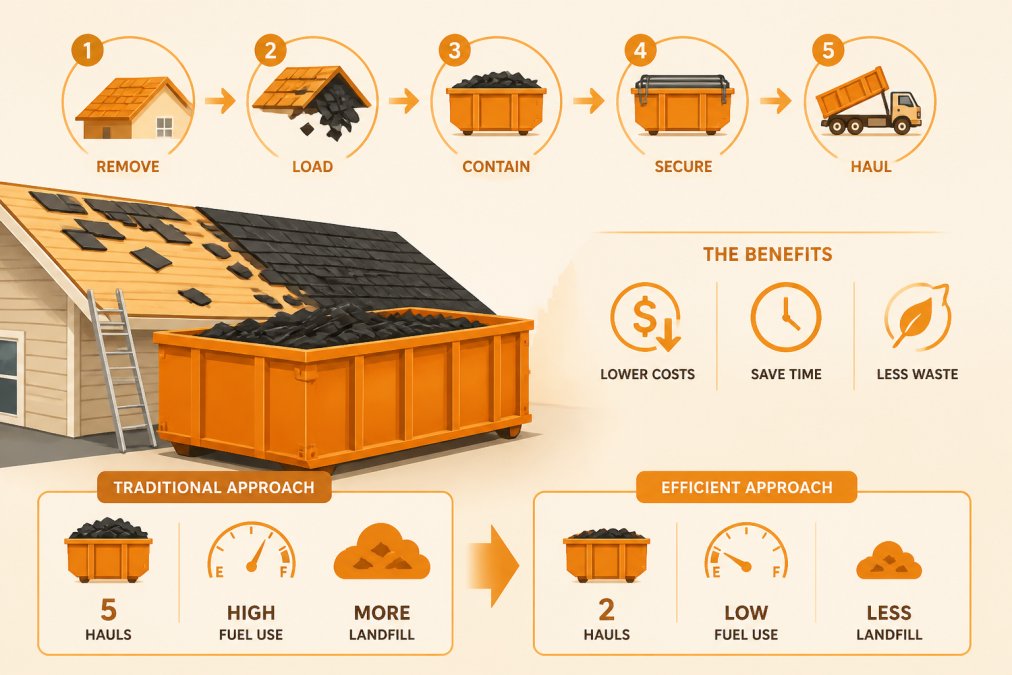
The biggest line item in roofing waste disposal is usually the number of hauls a project requires. Mobile dumpster compacting services change that calculation by crushing debris on site, so the same container holds significantly more material before it needs emptying.
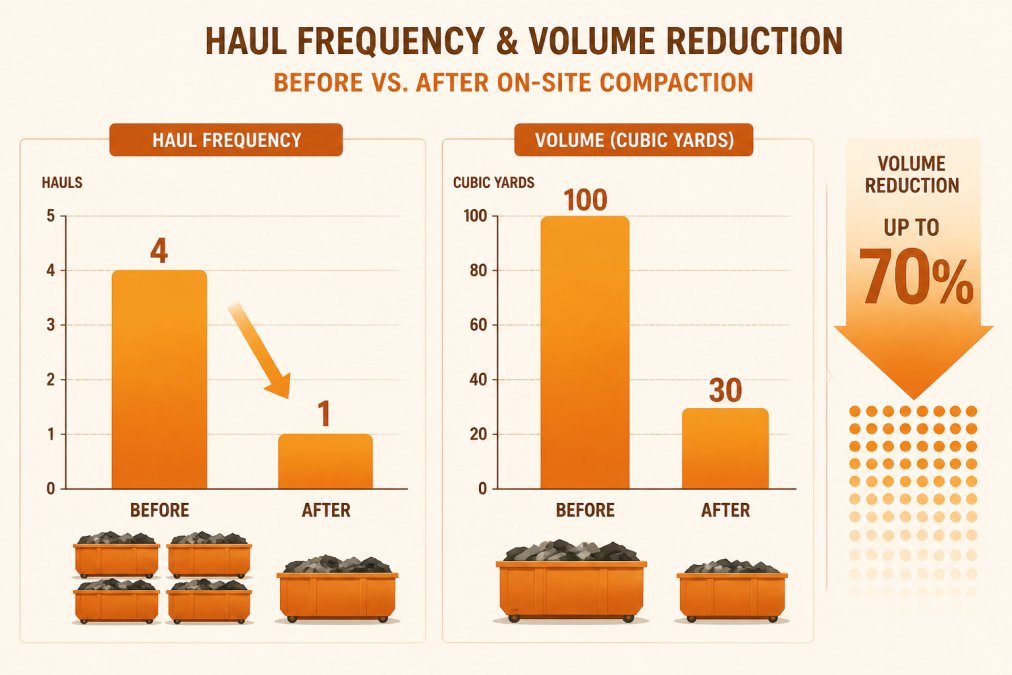
Instead of paying for four separate haul-away trips on a large tear-off, a crew using an on-site compactor might need only one. The service brings a compactor directly to the jobsite, crushes the dumpster's contents, and leaves the container in place for continued use.
For roofing contractors, the advantage is twofold: fewer hauls mean lower hauling frequency and reduced cost-per-load, and the crew does not lose momentum waiting on disposal logistics.
Reducing Construction Waste Hauling Frequency Without Delaying the Job
Reducing construction waste hauling frequency requires a plan that matches container capacity to the pace of the tear-off. A crew that fills a 20-yard dumpster in two days but does not schedule a haul until day four has created a bottleneck.
Contractors who track the rate of debris generation can schedule container swaps before the dumpster reaches capacity, avoiding both overflow and premature hauls.
One practical approach is to coordinate compaction visits with the natural rhythm of the job. If the tear-off happens on day one and the re-roof takes three days, a single on-site compaction mid-project keeps the container available without requiring a full haul.
A Practical Waste Disposal Plan for Roofing Contractors
Efficient waste disposal requires a documented plan the crew follows from the first day. The plan should assign responsibility for container placement, define what material goes in each container, and establish a schedule for compaction and hauling.
Start by estimating the total debris volume from the roof square footage and the type of materials being removed. A standard asphalt shingle roof generates roughly one ton of debris per 10 to 15 squares, though this varies with the number of layers and the condition of the decking (the EPA). Use that estimate to choose between 20 and 25 yard dumpsters and to set the hauling schedule.
The plan should also address jobsite safety. Debris should never be thrown from the roof into an open area where crew members are working. Use chutes to direct material into the container, keep the area around the dumpster clear, and remove nails from any wood that will be recycled.
Debris Disposal Costs: What to Track and Where to Save
Tracking disposal costs requires more than glancing at the hauler's invoice. Contractors who treat disposal as a variable cost line item build accurate bids and protect margins on every tear-off.
The Five Data Points Every Disposal Ledger Needs
A simple spreadsheet or a line in your project management software is enough to start. For each job, record:
- Haul count, the number of times a container is emptied or swapped.
- Load weight, the scaled weight from the disposal facility ticket, not an estimate.
- Material composition, the percentage of shingles, wood, metal, and mixed waste in each load.
- Destination, whether the load went to a landfill, a shingle recycler, or a mixed C&D processor.
- Cost per ton, the total invoice divided by the tonnage, which reveals the true cost of each disposal path.
Most contractors who track these five fields discover that their cost per ton varies by 30% or more between loads on the same project, almost always due to contamination or overweight penalties.
Why Shingle Weight Breaks the Budget
Asphalt shingles are one of the densest materials in the construction waste stream. A standard 20-yard container filled with tear-off shingles from a 30-square roof will typically weigh between 6 and 8 tons. Standard dumpster rental agreements often include a tonnage allowance of 2 to 4 tons, with overage charged per ton. That means a full container of shingles can trigger an overage surcharge of several hundred dollars before the hauler even leaves the driveway.
The fix is not to rent a larger container, a 25-yard dumpster has a higher weight limit but also a higher base price. The fix is to know the weight per square before you choose the container. A single layer of asphalt shingles weighs roughly 250 to 350 pounds per square (asphaltroofing.org). A 40-square tear-off with two layers can easily produce 20,000 to 28,000 pounds of shingle waste alone. Run that number against the container's tonnage allowance before you commit.
The Cost Per Ton Comparison That Changes Bidding
Once you have load-weight data from two or three projects, run a simple comparison:
| Disposal Path | Notes |
|---|---|
| Landfill (mixed C&D) | Contamination accepted, but fees escalate with weight |
| Shingle recycler (clean loads) | Requires separation of nails, metal, and wood |
| Mixed C&D processor | Accepts commingled loads but charges a sorting fee |
A clean load of shingles delivered to a recycler often costs less per ton than the same weight sent to a landfill. On a 10-ton tear-off, that difference can be several hundred dollars. The savings depend entirely on your crew's sorting discipline.
Building Disposal Costs Into the Bid
Contractors who track disposal costs across multiple jobs develop a reliable per-square estimate for waste handling. A common pattern is to budget for disposal on a standard asphalt shingle tear-off. That range covers container rental, hauling fees, and disposal charges, but not crew time spent managing debris.
To capture that labor cost, add a line item for debris handling time. If two crew members spend a combined four hours managing waste, and their loaded labor rate is $75 per hour, that is $300 of soft cost that belongs in the bid.
The Weekly Disposal Review
Set a 15-minute weekly review of disposal data during active projects. Compare the planned haul count against the actual count, note any overweight tickets, and flag any loads rejected at the facility. This review turns disposal from an afterthought into a managed cost center.
Common Debris Handling Mistakes That Slow Down Roofing Projects
Several recurring mistakes turn a straightforward tear-off into a costly, delayed project, and a few create genuine liability exposure. The costliest mistakes trigger insurance claims, property damage disputes, or safety violations.
The Liability Blind Spot: Debris as a Property Risk
When a crew throws shingles, nails, and underlayment from a roof into an open dumpster, the risk is not just a messy jobsite. A single nail on a neighbor's driveway or a shingle carried by wind onto a parked car can create a liability claim.
Most contractors carry general liability insurance, but many do not realize that debris-related claims can affect their premium or trigger a deductible that exceeds the cost of the disposal job itself.
The fix is a debris containment protocol that treats falling material as a hazard. Use enclosed chutes that direct debris into the container, position the container as close to the work area as practical, and install a debris net or barrier near property lines. Never allow crew members to toss material from the roof into an open area.
The Documentation Mistake: No Paper Trail for Disposal
A second liability risk comes from a lack of documentation. If a contractor disposes of roofing waste at an unauthorized site, or if a hauler dumps material illegally, the contractor can be held responsible for the cleanup. This is known as the "cradle to grave" principle under federal solid waste regulations.
Contractors who cannot produce a disposal receipt or weight ticket for every load leave themselves exposed. Require a ticket for every container haul, file it with project records, and keep those records for at least three years. If a hauler cannot provide a ticket, find another hauler.
The Safety Violation Mistake: Ignoring OSHA Housekeeping Rules
Debris that accumulates around a jobsite is not just inefficient, it is a safety violation. OSHA's housekeeping standards require that work areas be kept free of debris and that materials be stored to prevent tripping, falling, or rolling hazards.
The most common injury from poor debris management is a puncture wound from a nail. The fix is a daily debris sweep at the end of each workday. Assign one crew member to walk the perimeter, collect loose nails and fasteners, and sweep around the dumpster. This 10-minute habit prevents injuries and speeds up final cleanup.
The Communication Mistake: No Debris Plan in the Pre-Job Briefing
The final mistake is failing to brief the crew on the debris plan before the job starts. A crew that arrives without knowing which container holds shingles, where the chute goes, and who handles the daily sweep will improvise, leading to contamination, safety hazards, and liability exposure.
A five-minute debris briefing at the start of each project covers container assignments, chute placement, the daily sweep schedule, and who is responsible for disposal documentation. Contractors who run this briefing report fewer contaminated loads, safety incidents, and disputes.
simplify Your Next Roofing Project
The difference between a profitable roofing job and one that bleeds money often comes down to how the debris is handled. Contractors who plan waste disposal, sort materials at the source, and reduce hauling frequency through on-site compaction finish faster with better margins.
The Construction & Demolition Recycling Association resources on shingle recycling confirm that diversion of asphalt shingles from landfills is both environmentally sound and economically beneficial. Roofing contractors who integrate recycling into their disposal plan reduce their environmental impact while lowering costs.
For contractors ready to cut disposal costs and keep crews productive, Junk Crusher offers a mobile dumpster compacting service that reduces hauling volume and frequency on every project. Our on-site compaction cuts dumpster fees, saves jobsite downtime, and lowers your carbon footprint by minimizing truck trips. We also offer 20 and 25 yard dumpsters for projects that need standard rental containers.
Frequently Asked Questions
How can roofing contractors reduce the number of dumpster hauls per project?
The most direct method is on-site compaction. A mobile compactor can reduce waste volume by up to 70%, meaning what used to fill four dumpsters now fits in one. This cuts hauling frequency and the associated disposal fees. It also reduces the time crews spend waiting for a swap, keeping the tear-off phase moving.
What are the best practices for separating roofing debris on-site?
Separate asphalt shingles from other waste like wood, metal, and packaging. Shingles are the heaviest material and drive tonnage limits, so keeping them isolated makes recycling easier. Use a designated area for metal flashing and nails. This level of construction site debris management keeps recyclable material out of the landfill and helps avoid contamination fees at the disposal facility.
What is the most efficient waste disposal method for roofing tear-offs?
A staged plan works best. Start by sorting materials into piles for recycling and landfill. Use a roll-off dumpster sized for the project's peak debris volume, and schedule a mobile dumpster compacting service to crush the waste before the container is full. This approach minimizes the number of hauls, reduces your carbon footprint, and keeps the jobsite cleaner and safer.
Managing roofing waste does not have to be the most frustrating part of the job. The contractors who win bids and protect their margins are the ones who treat disposal as a planned process, not an afterthought. Book a Crush with Junk Crusher and see how on-site compaction simplifies your waste management, reduces your costs, and keeps your next project on schedule.
This article was written using GrandRanker


