
Book On-Site Dumpster Compaction: 2026 How-To Guide
Table of Contents
- What On-Site Dumpster Compaction Actually Does
- Step 1: Audit Your Current Waste Volume and Hauling Frequency
- Step 2: Choose the Right Compaction Unit for Your Job Site
- Step 3: Schedule and Book Your On-Site Compaction Service
- Commercial Waste Management Efficiency: What to Track After You Start
- Best Smash My Trash Alternatives for Western PA Operations
- Common Mistakes When Booking On-Site Compaction
- Frequently Asked Questions
Last Updated: September 13, 2026
What On-Site Dumpster Compaction Actually Does
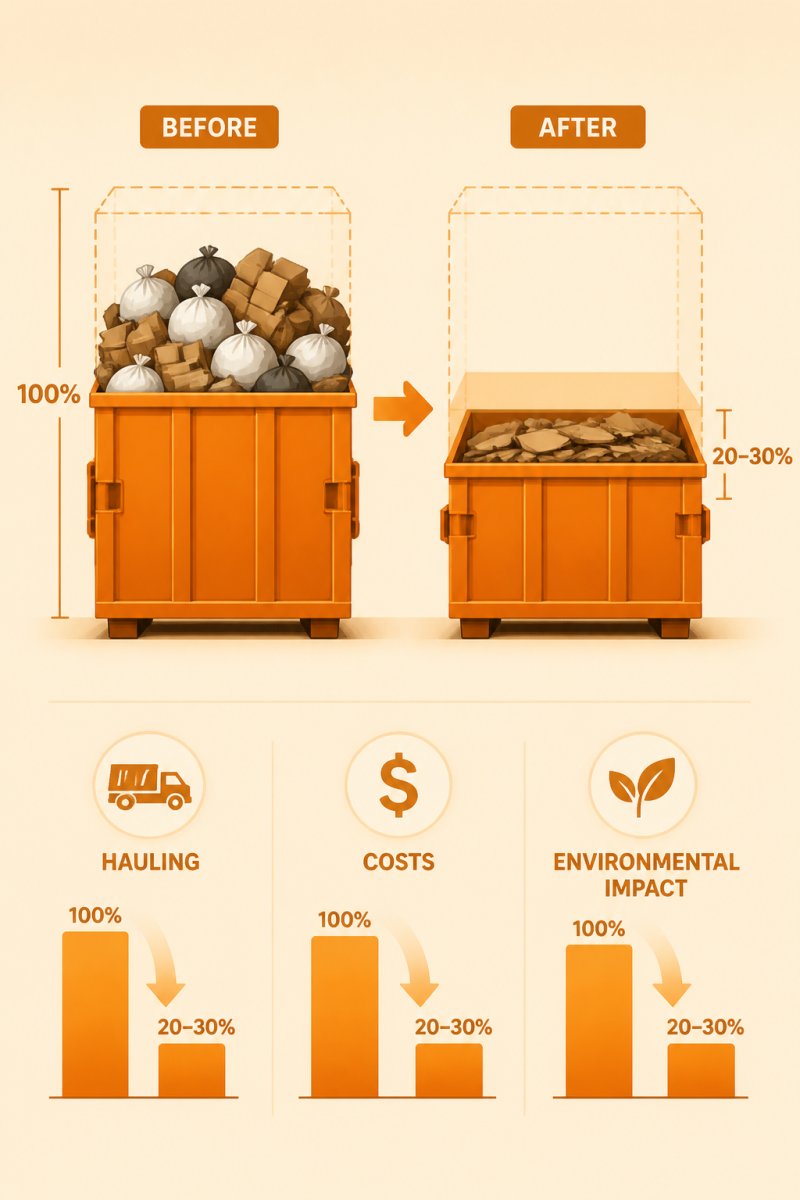
On-site dumpster compaction is the process of crushing waste inside a roll-off container while it sits on your property, using a mobile unit that drives to your location and compresses debris in place. Junk Crusher provides this service to commercial clients across Western Pennsylvania, and the core idea is simple: you stop paying to haul air.
A standard open-top container fills with bulky material long before it hits its weight limit (the EPA). Cardboard, shrink wrap, and wood framing create voids that waste capacity. A compaction unit crushes that material down, so each container holds more and leaves less often.
That single change affects three numbers at once: hauling frequency, container use, and your monthly waste bill. Below, we'll show you exactly how to audit, choose, and book a compaction service, and what to track once it's running.
How Mobile Compaction Works in Practice
A mobile compaction truck arrives at your site on a scheduled or on-demand basis. The crew positions the unit over your open-top container, lowers the compaction plate, and cycles it through the waste until the material stops settling.
The whole process usually takes minutes per container, not hours. You don't need a permanent compactor pad, electrical hookup, or a dedicated operator on staff. That's the practical difference between mobile service and a stationary compactor installation.
Compaction ratio is the number that matters here. It describes how much the original waste volume shrinks after crushing. Bulky, low-density material compresses far more than dense, heavy material, which is why the waste stream you generate determines your results.
Which Waste Streams Compact Well (And Which Don't)
Bulky, low-density debris compacts best (the EPA). Think cardboard, pallets, shrink wrap, wood framing, drywall, roofing shingles, and general construction debris.
Heavy, dense material compacts poorly. Concrete, brick, dirt, gravel, and metal scrap are already near their practical density, so crushing them yields little volume reduction and can stress equipment.
Step 1: Audit Your Current Waste Volume and Hauling Frequency
Start with a waste audit before you talk to any service provider. Pull your last three months of hauler invoices and record four things for each container on site:
- Number of pickups per month
- Container size in cubic yards
- Whether containers were full, partially full, or overflowing at pickup
- Any overweight or overage charges
Walk your site at the end of a shift and look inside each container. If you see large voids, stacked pallets, or loose cardboard filling the top third of a container that isn't close to its weight limit, you have a compaction candidate.
This audit gives you a baseline. Without it, you can't tell whether a compaction service is actually saving you money, because you have nothing to compare against.
Step 2: Choose the Right Compaction Unit for Your Job Site
Match the unit to your container size and site access, not the other way around. A compaction service needs enough clearance to position equipment over the container and enough room for the truck to maneuver.
Ask these questions before you commit:
- What container sizes does the unit handle?
- How much space does the truck need to access the container?
- How long does a compaction cycle take on a container our size?
- What happens if the unit can't reach a container on a tight site?
For sites with limited yard space, the compaction truck itself may be the constraint. Confirm access before scheduling, not on the day of service.
Step 3: Schedule and Book Your On-Site Compaction Service
Booking on-site compaction involves more than picking a date. You need to address regulatory compliance, equipment liability, and maintenance responsibilities before the first service call.
Regulatory and zoning compliance, Equipment maintenance and liability, Clarify who is responsible for damage to the dumpster or site surface during compaction. Your service agreement should specify liability for equipment damage, surface repairs, and downtime. Ask whether the provider carries general liability insurance and whether you need to add them as an additional insured. Also, determine who handles routine maintenance. Confirm this in writing.
Booking process, Here's a step-by-step approach that addresses these concerns:
- Confirm your container sizes and current pickup days.
- Request a site assessment or send photos of container placement and approach paths.
- Review the service agreement for liability, insurance, and maintenance clauses.
- Agree on a service frequency, either recurring or on-demand.
- Schedule compaction for the day before your hauler's pickup.
- Confirm the container is accessible and not blocked by deliveries.
- Review the first service and adjust frequency based on fill rates.
Service area coverage, For operations running multiple locations, ask whether the provider can service all sites on a recurring route. A schedule that only works for one concentrated site creates a logistics problem the moment you add a second location. Confirm route density and whether the provider has equipment stationed near your facilities.
How to book a demo or trial, ## How Dumpster Hauling Frequency Reduction Changes Your Monthly Bill
Hauling frequency reduction is where the money shows up. Every pickup you eliminate removes a tipping fee, a fuel surcharge, and a truck trip from your monthly waste bill.
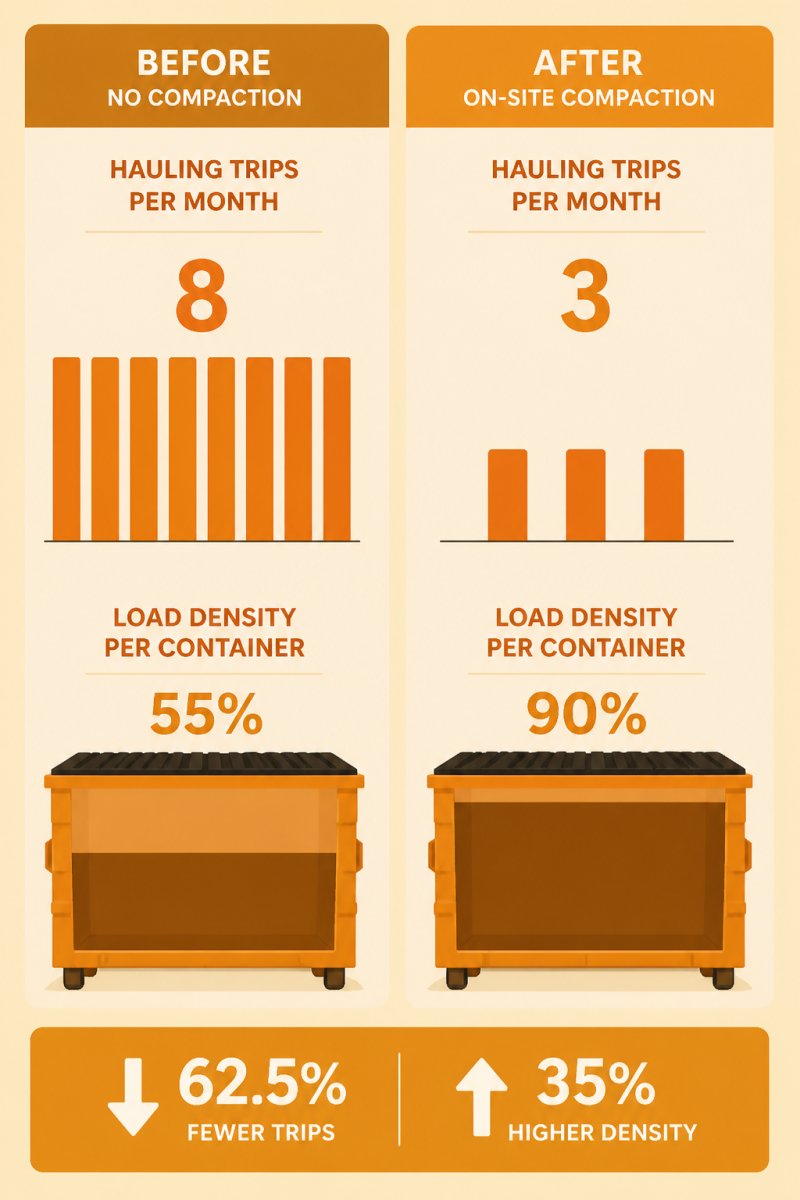
The mechanism is straightforward. If compaction crushes your waste to a fraction of its original volume, the same container holds more material, so it takes longer to fill. Fewer fills means fewer pickups.
Dumpster fees and hauling rates vary by hauler, material type, and location, so the exact savings depend on your contract. What you can control is the volume you're paying to move. Reducing the number of hauls is the lever that changes the bill.
Commercial Waste Management Efficiency: What to Track After You Start
Commercial waste management efficiency is measured with a small set of numbers, tracked monthly. If you don't measure them, you can't prove the service is working.
| Metric | What to Record | Why It Matters |
|---|---|---|
| Pickups per month | Count per container | Direct driver of hauling cost |
| Container fill rate | Full, partial, or overflowing | Shows if frequency is right |
| Overweight charges | Dollar amount per invoice | Flags dense material problems |
| Compaction cycles per container | Count per service visit | Tracks service consistency |
| Yard space freed | Square footage recovered | Operational flow improvement |
Review these monthly for the first quarter after you start. Most adjustments are frequency changes, not equipment changes.
Best Smash My Trash Alternatives for Western PA Operations
If you're comparing mobile compaction providers, evaluate them on coverage, scheduling flexibility, and how they handle your specific waste stream. Junk Crusher serves construction sites, distribution centers, and manufacturing facilities across Western Pennsylvania with mobile on-site compaction.
A few things to weigh when comparing options:
- Service area and route density. A provider with regular routes near your sites can schedule more predictably.
- Waste stream fit. Confirm the unit handles shingles, heavy debris, or whatever your operation generates.
- Scheduling model. Recurring routes suit steady volume; on-demand suits project-based work.
- References. Ask for other plants or construction firms in the region using the service.
Junk Crusher also offers dumpster rental for operations that need containers alongside compaction service.
Common Mistakes When Booking On-Site Compaction
The biggest mistake is booking compaction without auditing your current volume first. You end up guessing at frequency, and you can't prove savings afterward.
Other mistakes that cost real money:
- Compacting dense material. Concrete and brick don't compress meaningfully and can trigger overweight fees.
- Scheduling compaction after pickup instead of before. You lose the volume reduction benefit for that cycle.
- Ignoring site access. A unit that can't reach the container wastes a service call.
- Setting frequency once and never revisiting it. Volume changes with projects and seasons.
- Skipping the maintenance conversation. Ask who is responsible for equipment issues and downtime before you sign.
Book on-site dumpster compaction as a scheduled part of your waste stream management, not a one-time experiment. The operations that see consistent results treat it as a recurring process tied to their hauler schedule.
Managing industrial waste handling gets expensive when you're paying to haul empty space. Junk Crusher's mobile compaction service crushes dumpster waste on site, reducing roll-off volume and cutting the number of required hauls for construction sites, distribution centers, and manufacturing plants across Western Pennsylvania. With mobile on-site compaction, reduced hauling frequency, and a smaller waste footprint, your operation keeps more of its budget and frees up yard space. Book a Crush with Junk Crusher and start cutting your monthly waste bill.
Frequently Asked Questions
How does on-site dumpster compaction work?
A mobile compaction unit travels to your site and crushes waste directly inside your roll-off dumpster. The process typically takes 15 to 30 minutes per container, depending on waste type and volume. Compaction reduces the volume of debris by up to 70%, meaning you fill fewer containers and schedule fewer hauls. The unit leaves once the job is done, and your dumpster is ready for pickup at a much higher load density.
Does on-site compaction reduce the number of dumpster hauls?
Yes. Because compaction increases load density, each roll-off dumpster holds more material before it needs to be swapped. For operations with steady waste generation, this can cut hauling frequency by half or more. Fewer hauls mean lower disposal fees, less truck traffic on site, and reduced operational overhead. Track your pickup schedule before and after to measure the actual reduction for your specific waste stream.
Can mobile compaction services handle all types of waste?
Most construction and commercial debris compacts well, including shingles, wood, drywall, cardboard, and general job site refuse. Some materials, like large metal items, concrete, or hazardous waste, may need separate handling. Before booking, confirm with your provider that your specific waste stream is compatible. A quick waste audit helps identify which materials will benefit most from compaction and which should be diverted.
How do I choose the right dumpster compaction provider?
Look for a provider that services your area regularly, can handle your waste types, and offers flexible scheduling for multiple sites. Ask about equipment maintenance and operator training. Request references from similar operations, such as manufacturing plants or construction firms, and compare how their service model fits your hauling frequency reduction goals. Request a quote based on your actual container usage.
